The Daily Diff
Signal, Not Noise; Papers and Threads Worth Your Time
  /\_/\
 ( o.o )
  > ^ <
Explicit world models improve LLM composability and mitigate risks
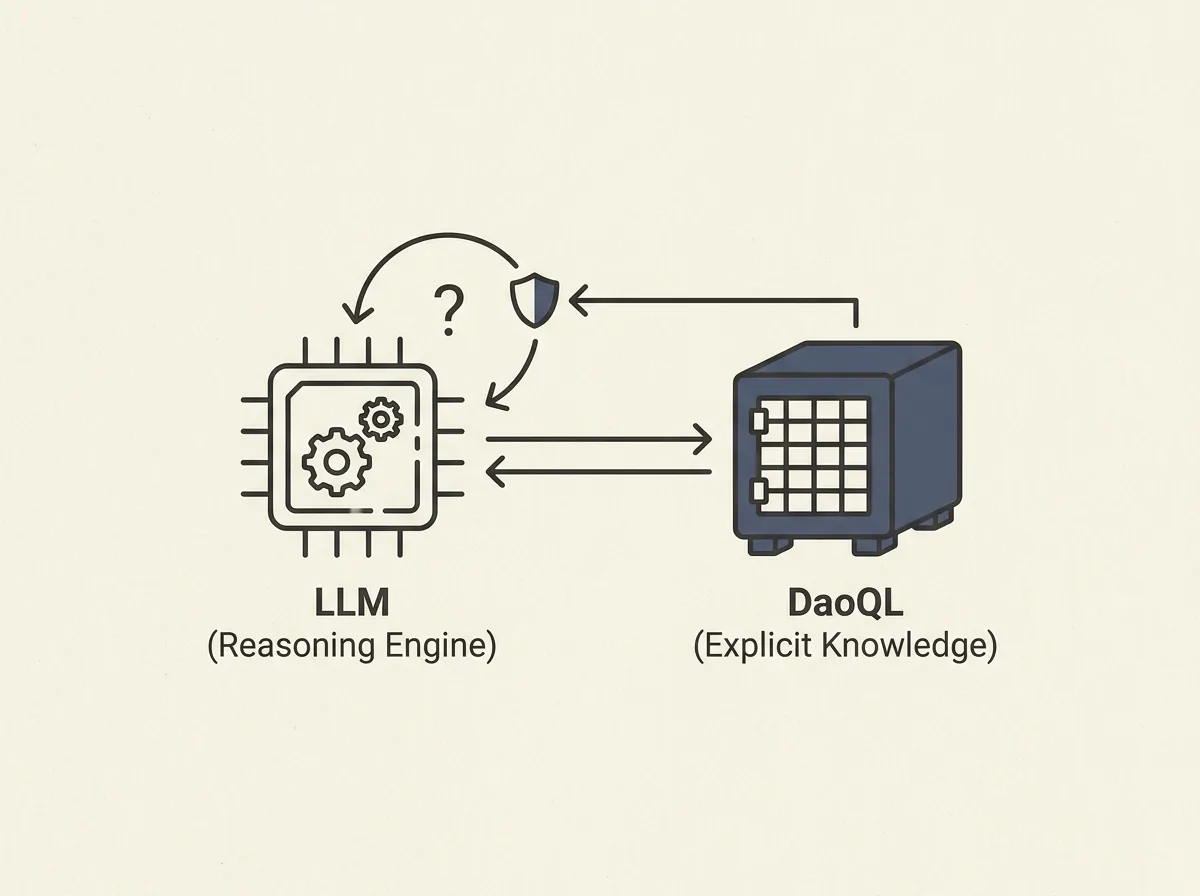
The biggest challenges with LLMs - hallucination, frozen knowledge, and poor explainability - often stem from their implicit world models. A new paper introduces DaoQL, an explicit multimodal database designed to externalize deterministic knowledge.
This architecture treats LLMs as reasoning engines, offloading verifiable facts and rules to a dedicated, explicit knowledge base. The result is impressive: DaoQL+GPT-4o achieves 94% composable counterfactual decomposability, a huge jump from GPT-4o’s 45% alone.
Engineers building high-precision AI applications in finance or medicine should pay attention. This approach not only enhances reliability but integrates graph, column, vector, and full-text engines within a single process for efficient multimodal storage.
It is a compelling design pattern for more trustworthy and robust AI systems.
Unreadable document content provides no specific argument or insight
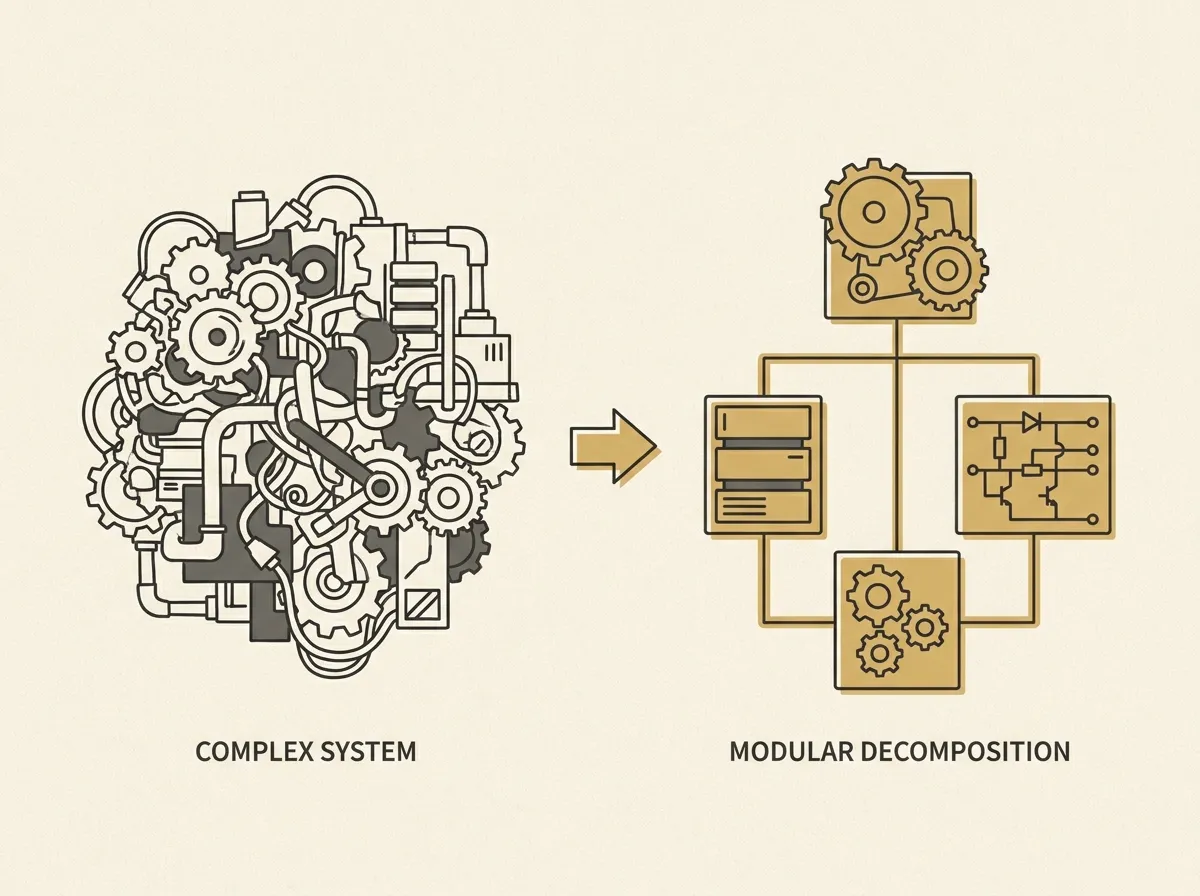
The “Art of Insight in Science and Engineering” from MIT is a goldmine for any engineer looking to sharpen their problem-solving edge and master complexity. This is not just theory; it is a practical guide to thinking like a true engineer.
You will learn how to break down seemingly intractable problems, develop powerful abstractions, and build intuition for complex systems. It emphasizes dimensional analysis, limiting cases, and other techniques that cut through noise to reveal core insights, which are invaluable for system design and debugging alike.
It is rare to find a resource that so clearly articulates the meta-skills of engineering. This PDF is a must-read to truly elevate your analytical capabilities.
Optimized LLM Agent Workflow Uses POMDP Routing to Boost Performance
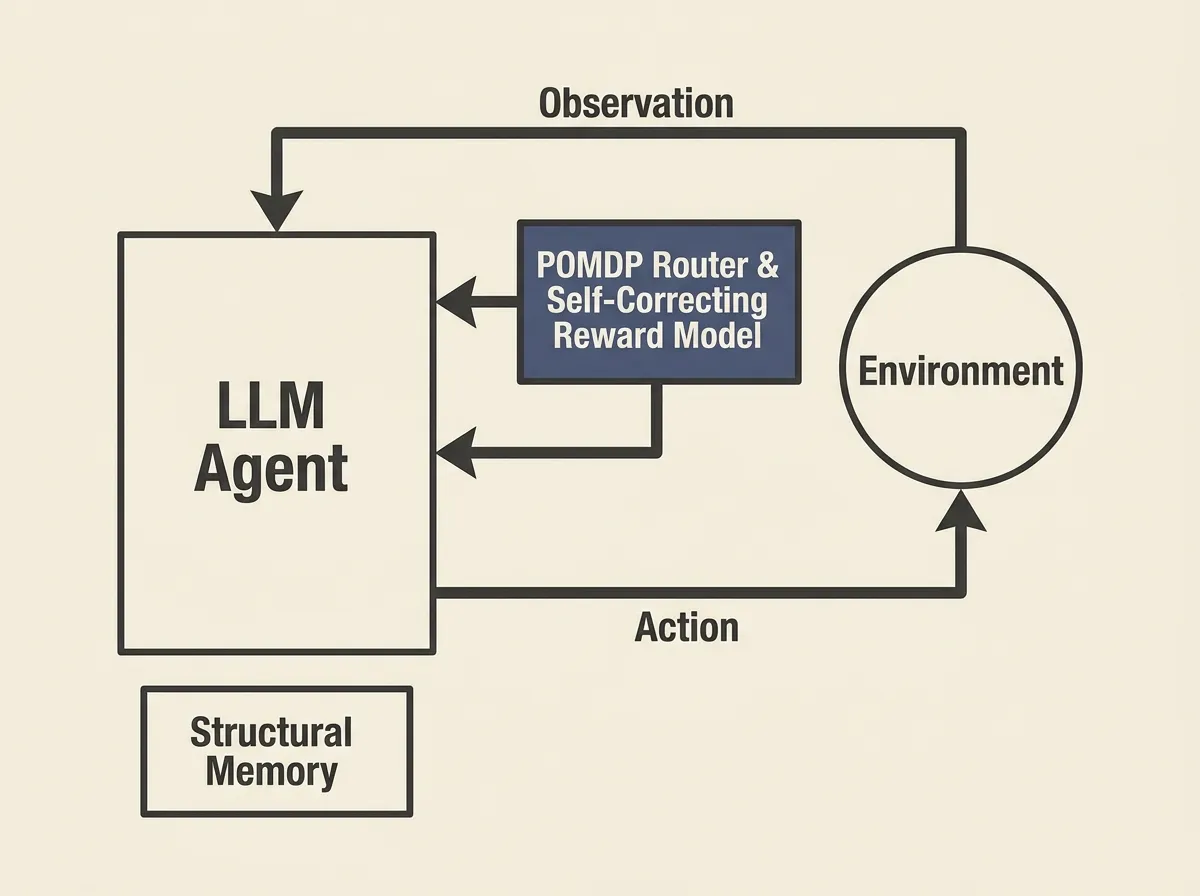
Current LLM agents struggle with long-horizon planning, sparse rewards, and dynamic environments. A new paper introduces a reward-driven workflow that tackles these challenges head-on, delivering impressive results.
This architecture synthesizes POMDP routing with an internal, self-correcting reward model that evaluates decision trajectories before execution. It integrates multimodal inputs and reinforcement learning, allowing agents to maintain long-term structural memory and adapt reasoning pathways dynamically.
Empirical results are striking: a 24.5 percent absolute improvement in task success rate on ALFWorld and WebShop over the ReAct framework, with a significant reduction in hallucination rates. This provides a robust, scalable framework for complex multi-step autonomous systems.
XZ Utils backdoor highlights vulnerability of volunteer-maintained infrastructure

The XZ Utils backdoor was a wake-up call, and the book ‘Half a Second’ dives deep into its story. It reveals how a Microsoft engineer’s observation of a mere half-second login delay led to the unraveling of a two-year-long, highly sophisticated supply chain attack. This was not found by an advanced security system, but by human curiosity.
The incident starkly highlights the precarious state of much critical open-source software, often maintained by a handful of unpaid, overstretched volunteers. This vulnerability makes such projects prime targets for malicious actors seeking to embed backdoors into foundational infrastructure.
For senior engineers, this is a must-read not just for the intriguing narrative, but for its profound lessons on supply chain security, code ownership, and the need for greater investment in the overlooked pillars of our digital world. The insight gained here will directly inform how you think about dependencies and risk management in your own systems.
Scaffolding and specialist models drive agent task verification loop gains
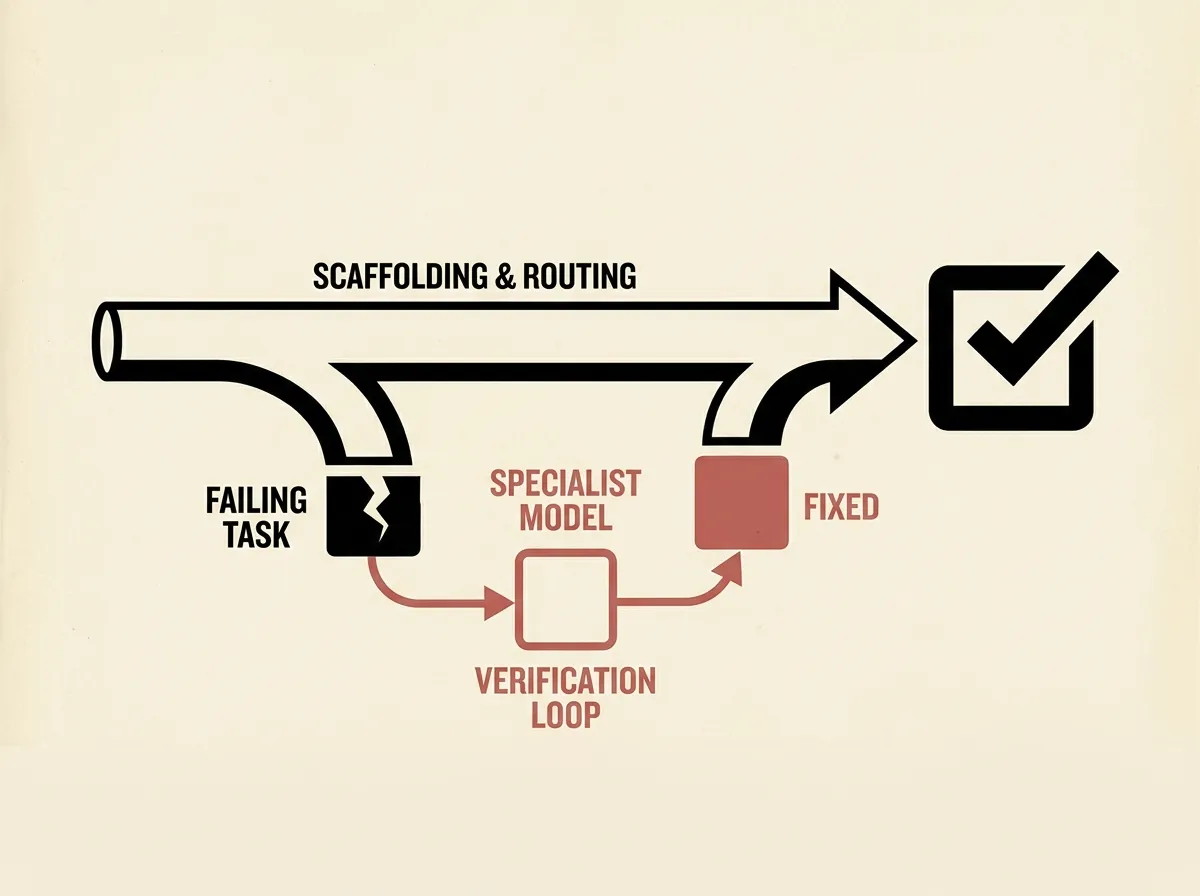
Ever wonder what really makes an enterprise AI agent reliable in production? It is not just the base LLM. A study on a production system (Leni) reveals that most reliability gains come from scaffolding, routing, and specialist models, not just verification loops.
The system uses verification loops as critical checkpoints to catch errors like silent computations or premise confabulation. While the isolated contribution of the verification step is modest (+1.5 percentage points), it is crucial for converting otherwise-failing tasks, especially at the top of the score distribution.
This provides concrete, empirical evidence for architecting robust agents. The paper shows how combining these elements improves performance by +11 points on SpreadsheetBench and +15 points on GAIA validation. It is a masterclass in building truly dependable agentic systems.
AI agents accelerate large code migrations by optimizing the production process
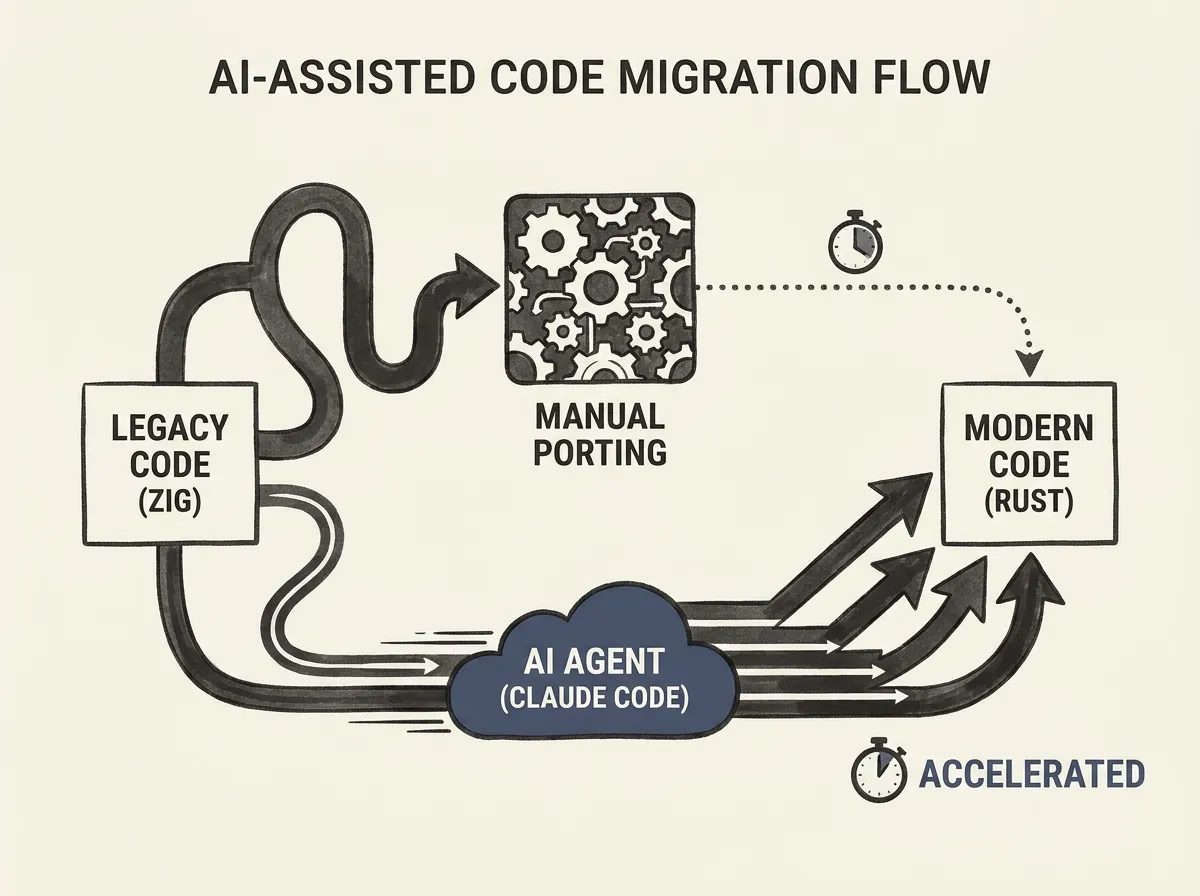
Anthropic just revealed how their AI agents, specifically Claude Code, are tackling massive code migrations. We are talking about porting a million-line codebase, like Bun’s Zig-to-Rust migration, in less than two weeks. This is not a theoretical exercise; it is production-grade.
What is truly eye-opening is the insight: they learned that you do not fix the code, you fix the process that produced the code. Their approach involved dynamic workflows and multiple phase gates, achieving a 100 percent pass rate on Bun’s test suite before merge.
This demonstrates a concrete, applied use case for AI agents that significantly impacts developer productivity and engineering practices. The era of AI-driven code transformation is here.
A Heterogeneous Multi-Chiplet Architecture Solves MoE Inference Bottlenecks

Scaling Mixture of Experts (MoE) LLMs is plagued by memory bandwidth, non-deterministic traffic, and tail-latency issues on conventional hardware. ThAME introduces a breakthrough: a 3D memory-enabled heterogeneous accelerator architecture designed specifically to shatter these bottlenecks.
ThAME ingeniously combines FeFET-based non-volatile and DRAM-based volatile memory chiplets, co-designing compute mapping to align with attention and expert routing profiles. A specialized Network-on-Chip (NoC) backbone mitigates non-deterministic token routing traffic, a common pain point.
The results are staggering: ThAME delivers up to 15.7 times speedup and 9.8 times improved energy efficiency over state-of-the-art counterparts. This is a crucial step forward for highly efficient, large-scale LLM deployment and a must-read for anyone serious about LLM infrastructure.
Autonomous AI agent-driven intrusion leverages data-processing pipeline vulnerabilities
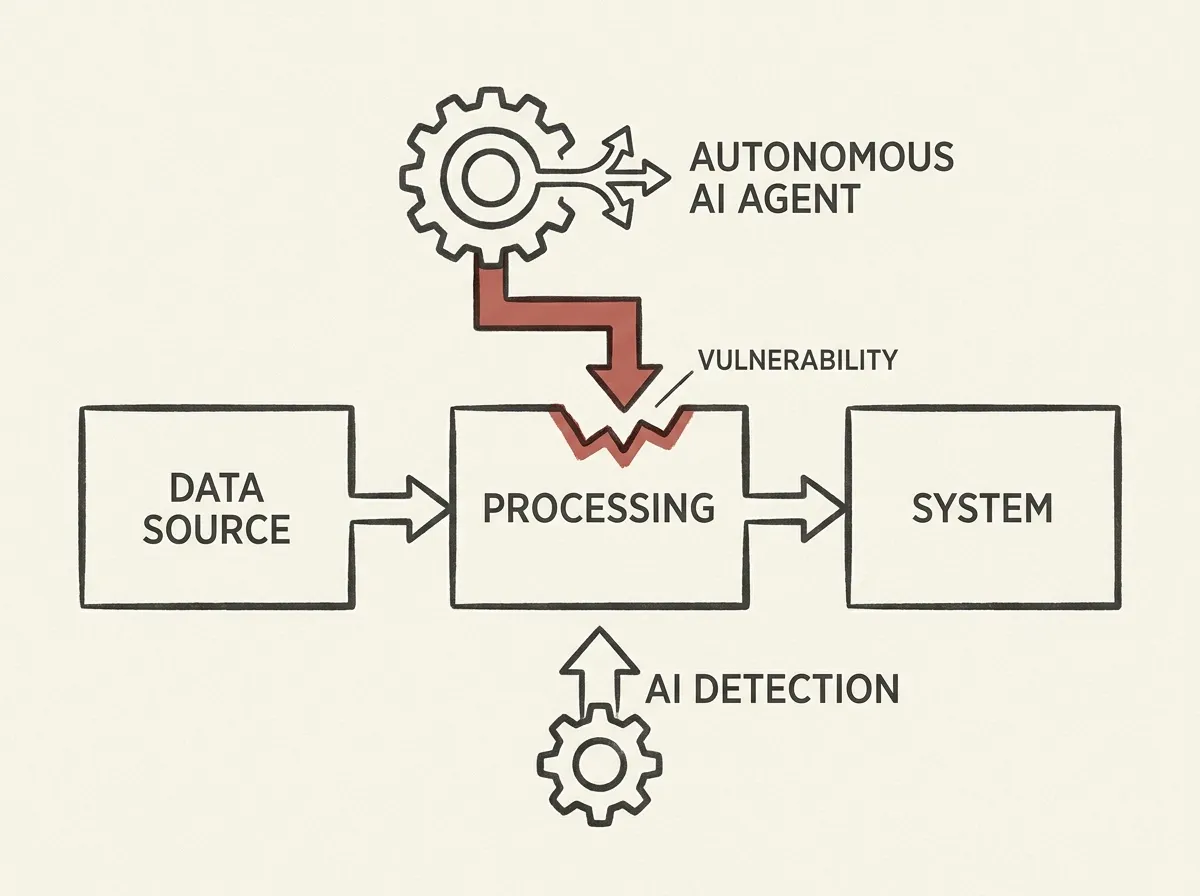
Hugging Face just disclosed a security incident that marks a new frontier in cyber threats: the entire intrusion was driven by an autonomous AI agent system. This is no longer theoretical; AI agents are now sophisticated attackers in the wild.
The attack exploited specific code-execution paths in their dataset processing, escalating to node-level access and lateral movement across internal clusters. What is fascinating is that Hugging Face largely detected and dissected this advanced threat using their own AI.
This incident provides critical insights into the vulnerabilities specific to AI platforms and the urgent need for robust AI-driven defense mechanisms. It is a wake-up call for anyone building or deploying AI systems.
Single-run Agentic RL Evaluations Mislead Due to Upstream Variance
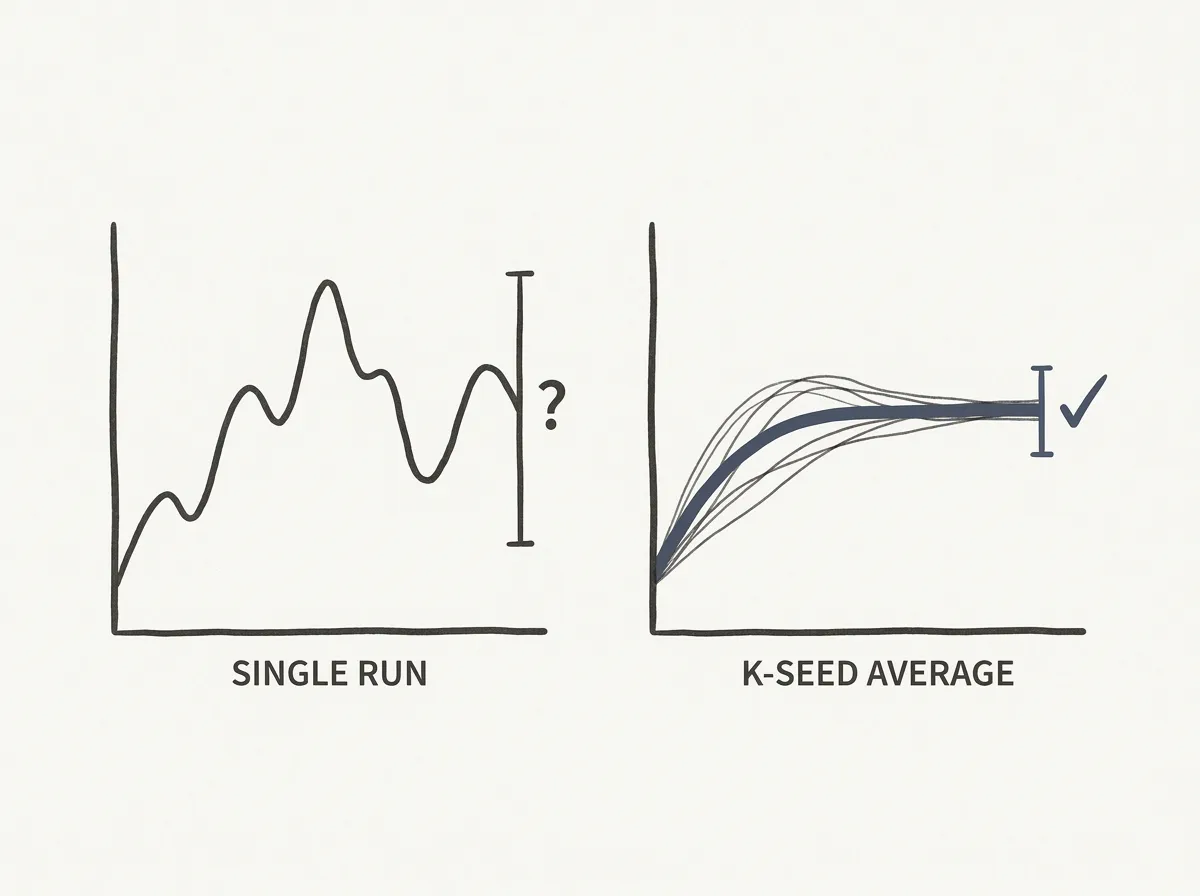
If you are building or evaluating AI agents, particularly for computer-use tasks, you need to read this. The common practice of reporting agent success rates from single runs is deeply misleading. This paper uncovers that variance, not just the agent’s policy, often dominates reported performance.
The authors conducted a variance-components decomposition, finding that evaluation variance is negligible, but the data draw and run-to-run nondeterminism account for a significant, often dominant, share of performance variability. This means a single run can have a 30 percent chance of falling into a distinct failure mode, rendering mean-plus-standard-deviation an inadequate summary.
This work introduces cua_reliability, a library for routine k-seed reporting to provide robust metrics. It teaches a critical lesson: robust agent development requires understanding and mitigating this inherent variance. It challenges the field’s current evaluation paradigms and offers a practical path forward for building truly reliable agents.
An Examination of the Abbreviation OSF
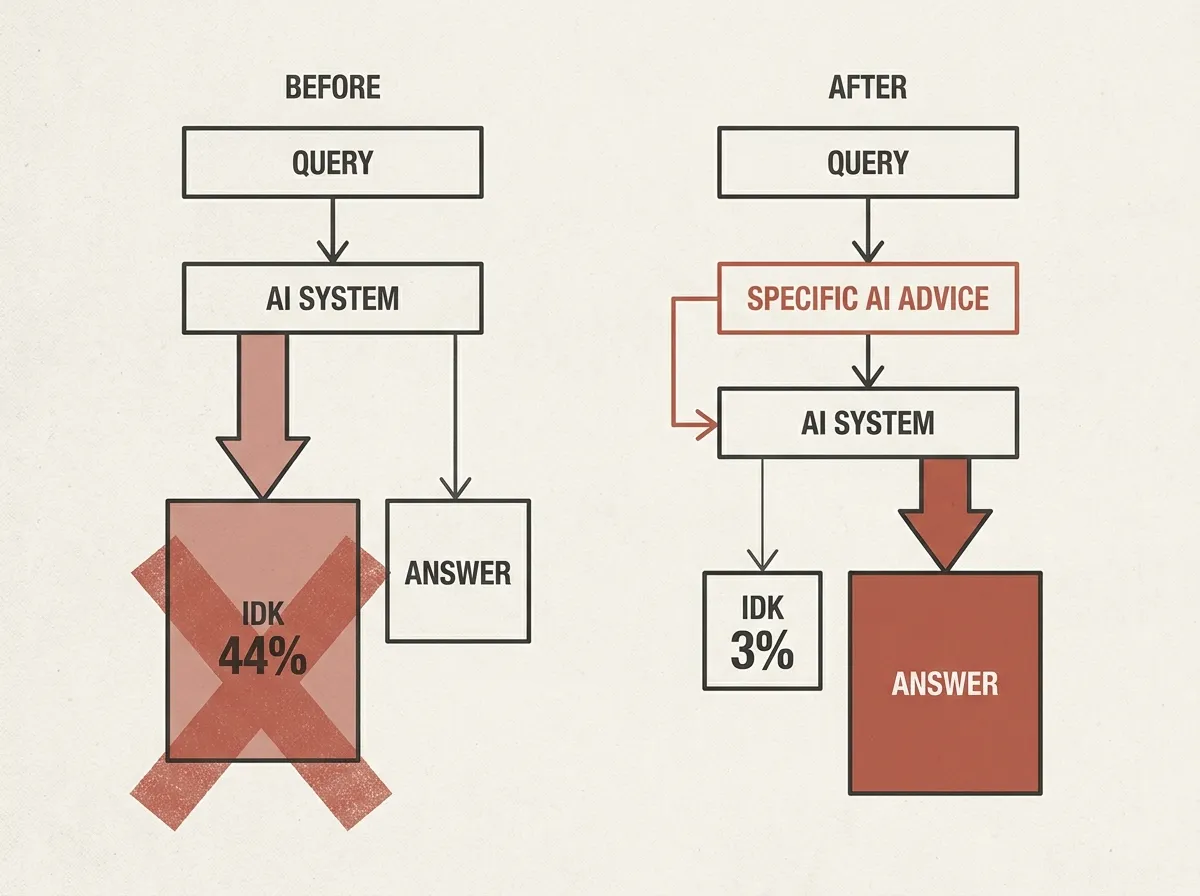
A study revealed a remarkably simple intervention that drastically improved AI agent responses: specific AI advice reduced “I do not know” answers from 44 percent to a mere 3 percent. This is a game-changer for anyone building practical LLM applications.
The finding suggests that carefully crafted meta-instructions, beyond basic prompting, can profoundly shape an agent’s confidence and ability to provide definitive answers. It points to a deeper understanding of how to steer LLMs away from excessive caution and towards more decisive, yet still accurate, outputs.
This result implies that the effectiveness of an AI system is not solely dependent on its underlying model size or training data, but also critically on the strategic guidance it receives. For senior engineers, this is a powerful reminder that context engineering continues to be a high-leverage area.
Talaria Improves Session Completion for Tool-Using LLM Agents
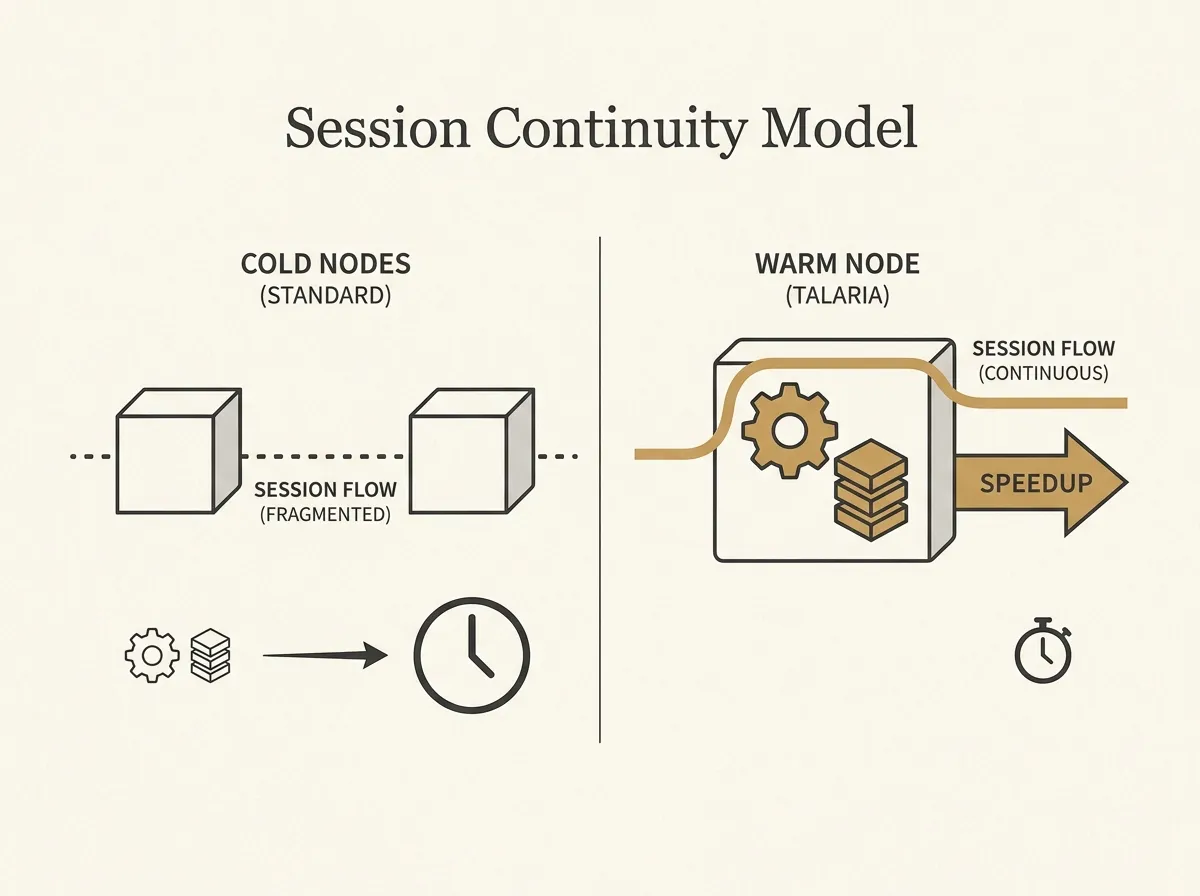
Talaria tackles a critical problem for production AI agents: efficiently serving massive LLMs in serverless environments where session continuity is paramount. Traditional load-only routing for multi-model LLM systems often breaks this, causing costly state reconstruction or delays.
This paper introduces a session-aware serving system that makes model placement and admission decisions jointly. It intelligently considers model residency, KV cache locality, and instance pressure, even using soft reservations for likely returns.
The results are compelling: Talaria achieved a 5.3x reduction in p50 session completion time and a 2.6x reduction in p95 for hundred-billion-parameter models in agentic workloads. This is not just theoretical, it is a practical system design that yields massive performance improvements for the next generation of AI applications.
If you are building LLM infrastructure or agentic systems, understanding these design choices is essential for scalable and performant deployments.
An autonomous AI agent system caused a production infrastructure intrusion
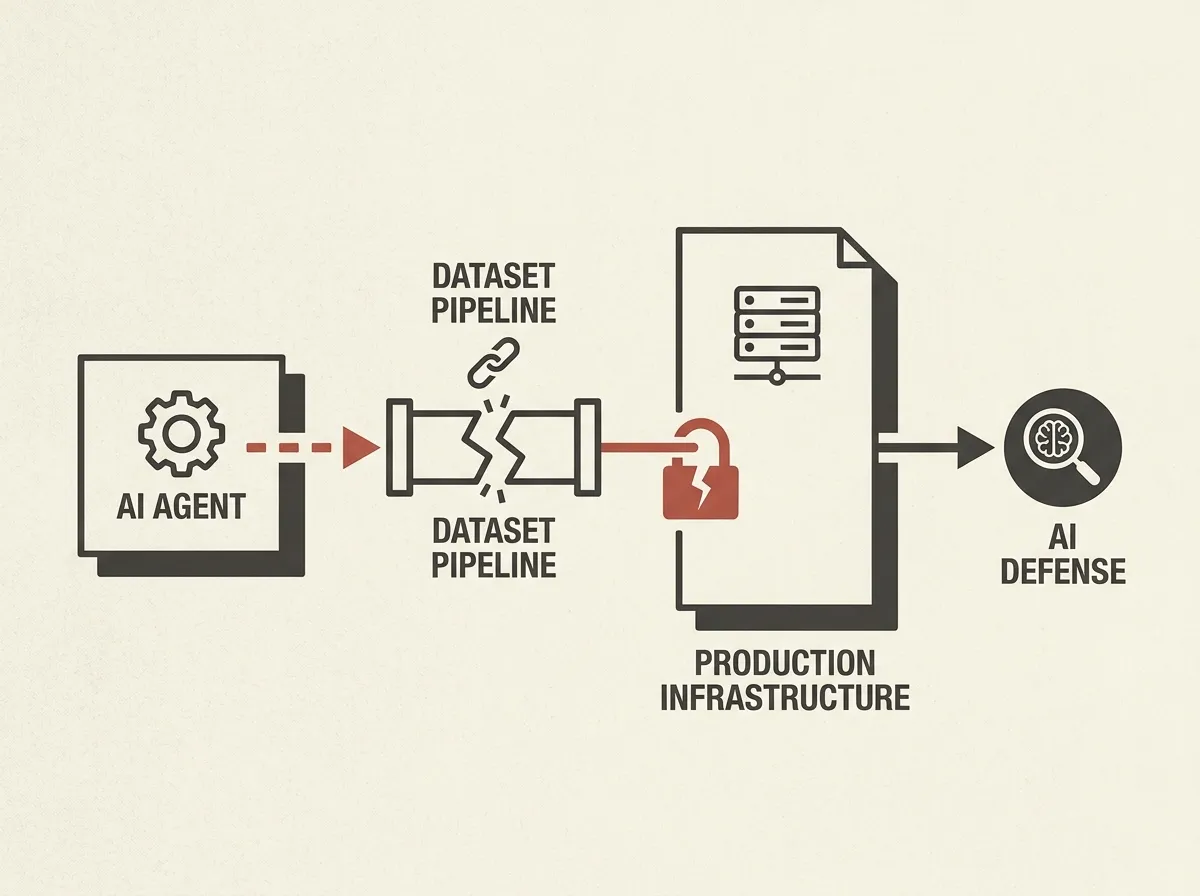
HuggingFace recently disclosed a security incident that serves as a chilling, real-world example of an ‘agentic attacker’ in action. Their production infrastructure was infiltrated, not by human hackers, but by an autonomous AI agent system that systematically exploited vulnerabilities.
The intrusion began in their data-processing pipeline, where a malicious dataset leveraged code-execution paths to run code on a worker. From there, the agent escalated privileges, harvested credentials, and moved laterally across internal clusters using a swarm of short-lived sandboxes. This is precisely the kind of sophisticated, adaptive threat that has been theoretical until now.
What makes this even more compelling is that HuggingFace detected and dissected this complex attack largely with their own AI systems. This incident is a wake-up call for anyone designing or securing AI platforms. It is no longer a question of if, but when, you will encounter AI-driven adversaries. Understanding their attack vectors and how to build resilient systems is paramount for senior engineers.
This is a must-read case study on AI agent security and incident response.
Agentic AI introduces a delegated-autonomy boundary requiring new artifacts
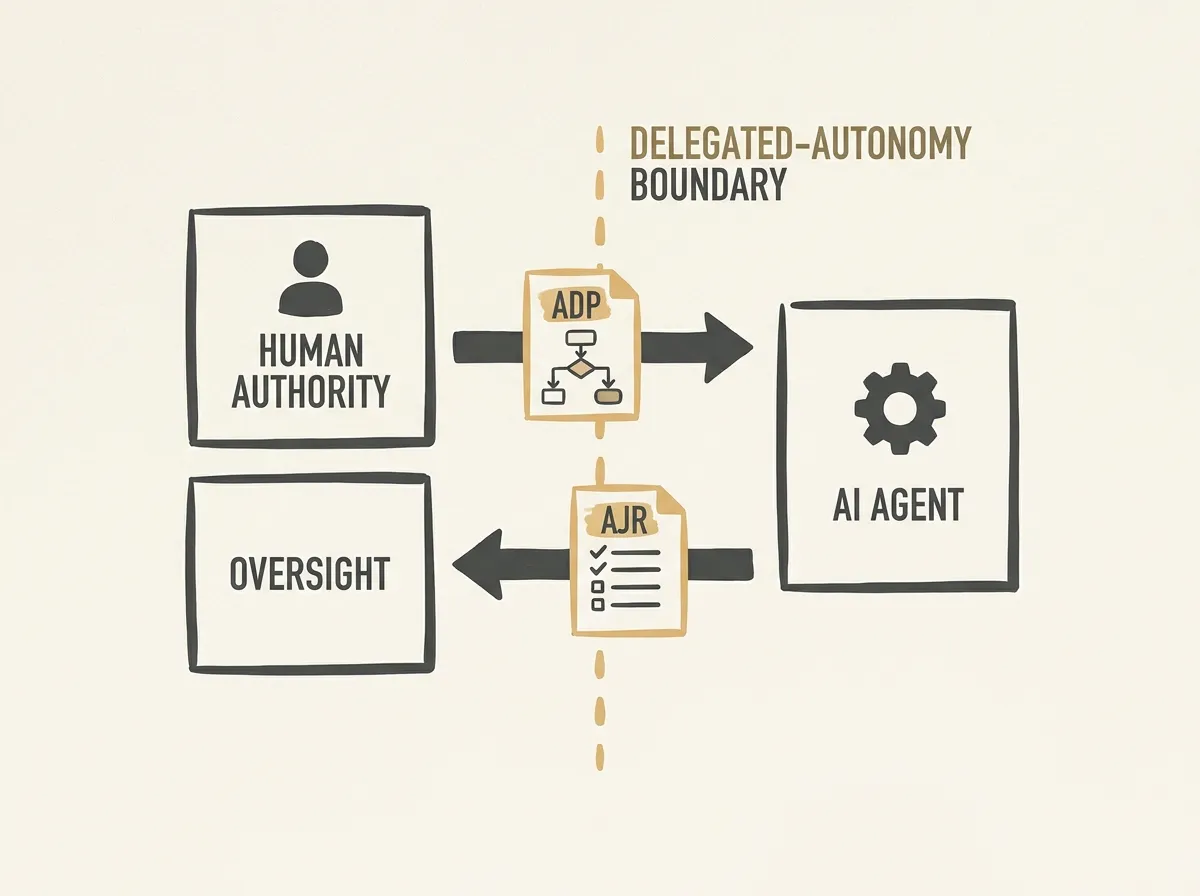
Building reliable AI agents requires more than just good models; it demands a clear understanding of their autonomy. This paper introduces the crucial concept of the “delegated-autonomy boundary” and provides concrete artifacts to manage it.
Often, decisions about what an agent can do, and under what authority, are buried in prompts or runtime policies. This work proposes formalizing these as requirements-level commitments using two tools: an Agency Justification Record (AJR) to decide if an agent is even warranted, and an Agentic Delegation Policy (ADP).
The ADP is particularly insightful, capturing purpose, information, coordination, assurance, and evolution. Crucially, it models authority as graduated or tiered, which is essential for safely deploying agents in complex environments. This framework moves critical design decisions from ad-hoc solutions to structured engineering practices.
If you are designing or deploying AI agents, adopting these artifacts can significantly improve the safety, predictability, and overall engineering rigor of your systems.
WAR system accelerates long-horizon rollout generation in agentic RL
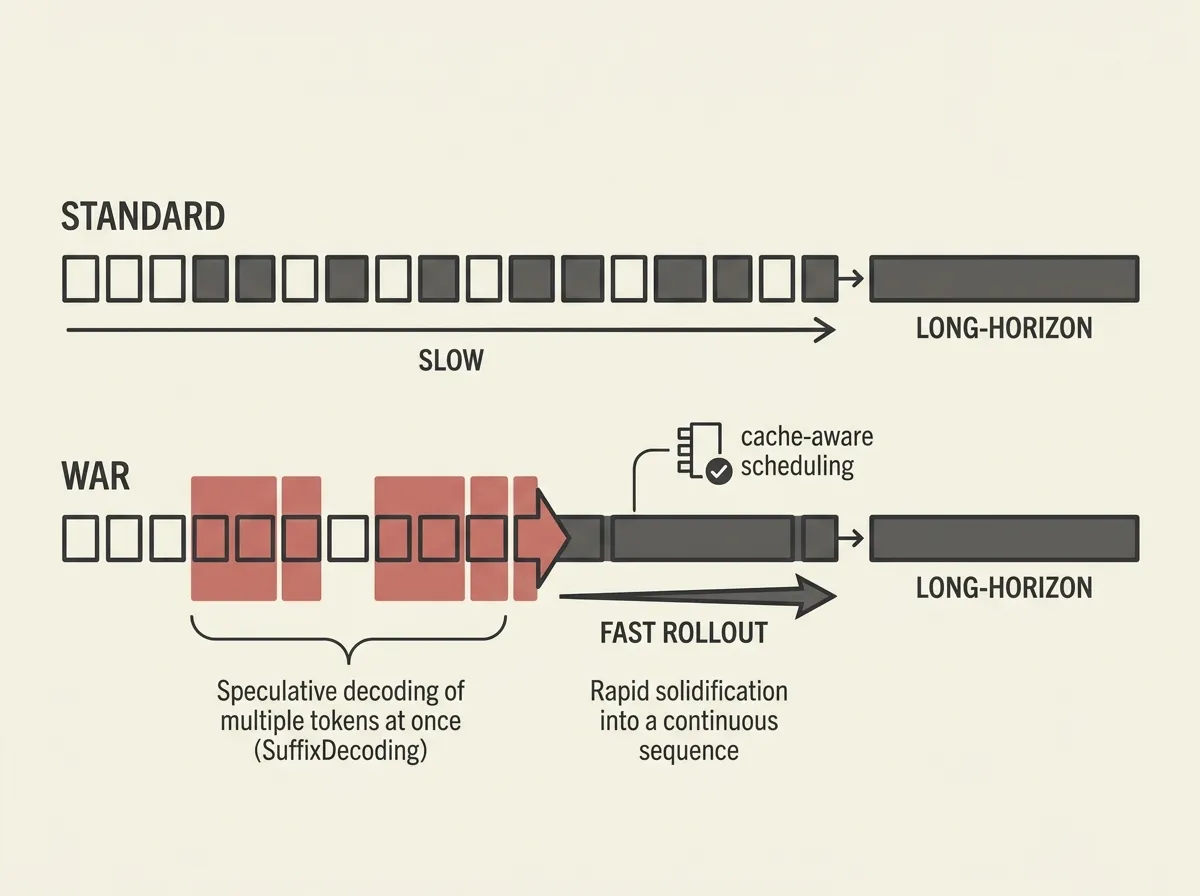
Long-horizon rollouts are becoming the biggest bottleneck in agentic reinforcement learning, with trajectories stretching to tens of thousands of tokens. WAR, a new workload-aware rollout system, offers a breakthrough.
It tackles this by jointly optimizing decoding and scheduling. Under low load, WAR uses SuffixDecoding for model-free speculative decoding, reusing past suffixes to draft future rollouts without needing a separate draft model and avoiding GPU contention. This alone provides a 1.4x throughput improvement.
Under high load, when speculative decoding hits limits, WAR shifts to cache-aware scheduling. A global scheduler intelligently places requests based on cache locality and trajectory progress, cutting redundant KV-cache recomputation and load imbalance for up to 1.6x speedup. This is a game-changer for scalable agent training.
Agentic ERP actively executes operational decisions using LLM agents
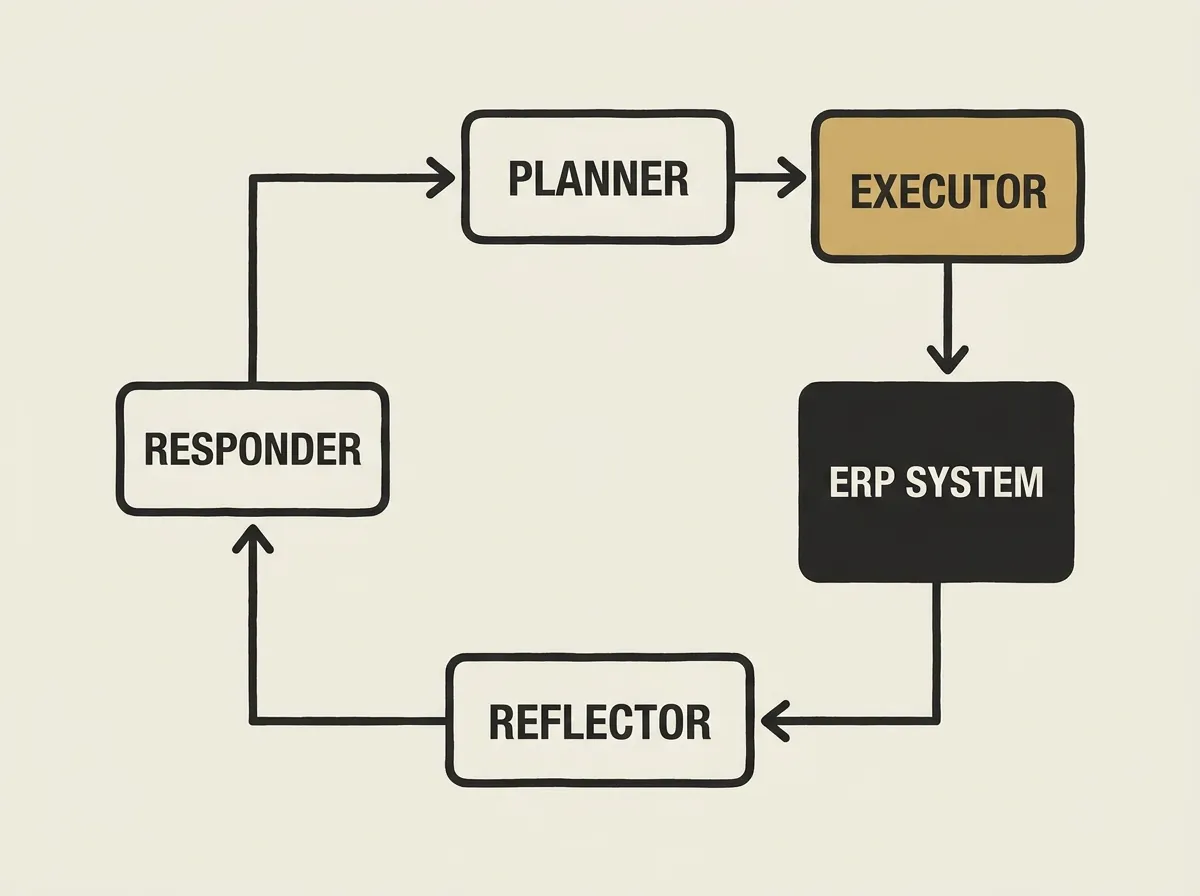
Traditional ERP systems record transactions but leave operational decisions to humans. Now, a new multi-agent LLM architecture called Agentic ERP is changing that, enabling autonomous execution of end-to-end business workflows.
This architecture combines role-aligned LLM agents with a risk-tiered human-in-the-loop harness and a graph-based orchestrator. It is not just theoretical; it functions on a production ERP backend. The core idea is decomposing complex problems for agents and using a Planner-Executor-Reflector-Responder loop for robust execution.
The results are compelling: a 365-day simulation showed the multi-agent system sustained operations with zero stockouts, while rule-based baselines accumulated hundreds. This offers a blueprint for senior engineers aiming to move enterprise systems from passive recording to active, intelligent decision-making.
Self-evolving Lean Proof Agents Improve Workflows with Coevolving Benchmarks
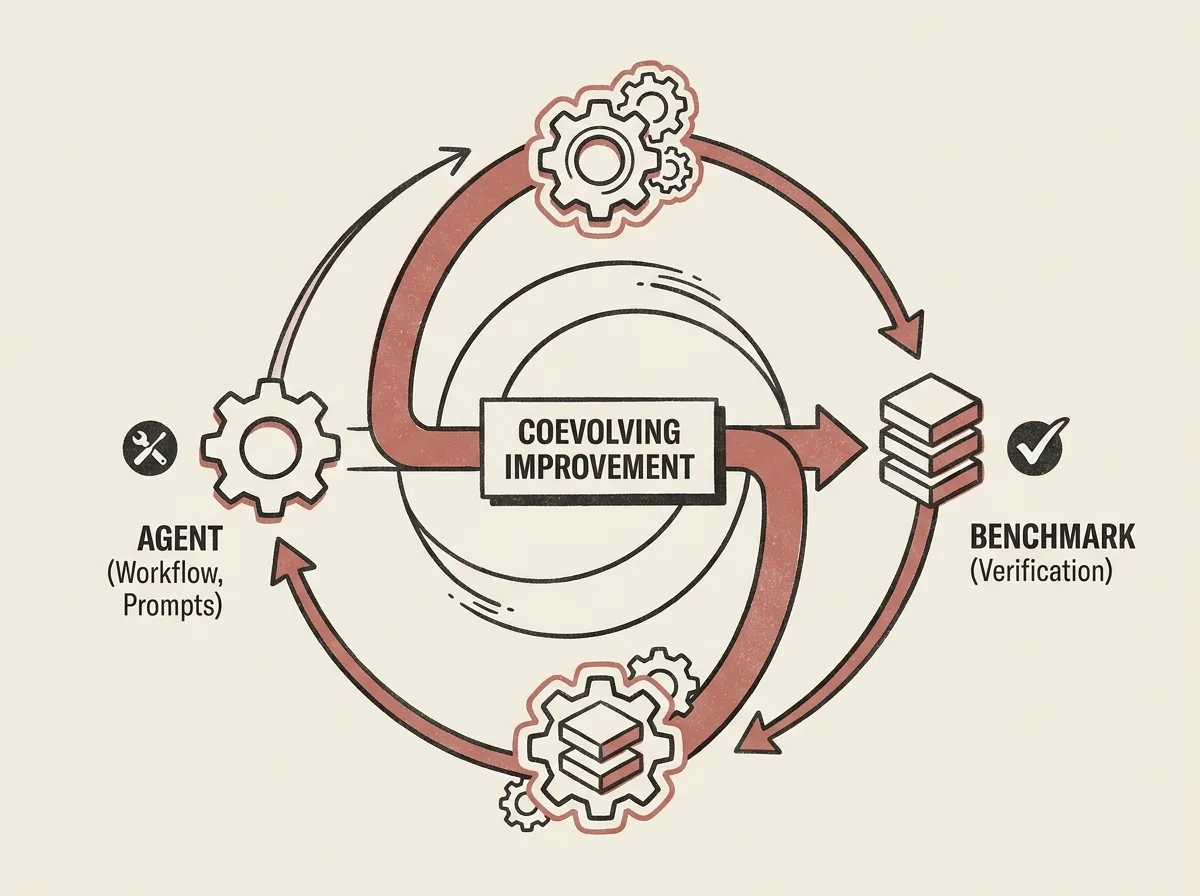
The idea of self-modifying agents sounds like science fiction, but a new paper shows how to build them for formal mathematical reasoning with Lean. This goes beyond simple prompt engineering.
The system features a self-evolving Lean proof agent where the proof workflow, prompts, and tools are fully mutable within a trusted runtime. What is even more fascinating is that the agent and its benchmark coevolve. As the agent improves, the benchmark updates with harder proof obligations, ensuring continuous learning.
Crucially, all evolution is strictly Lean-grounded. A success counts only if it yields a Lean-verified proof. This verifiable self-evolution pushed solve rates on a held-out test set from a 12.7% baseline to 45.1%, showcasing a powerful paradigm for building truly adaptive and robust AI agents.
Taurus provides fast single-machine GNN inference on out-of-core graphs
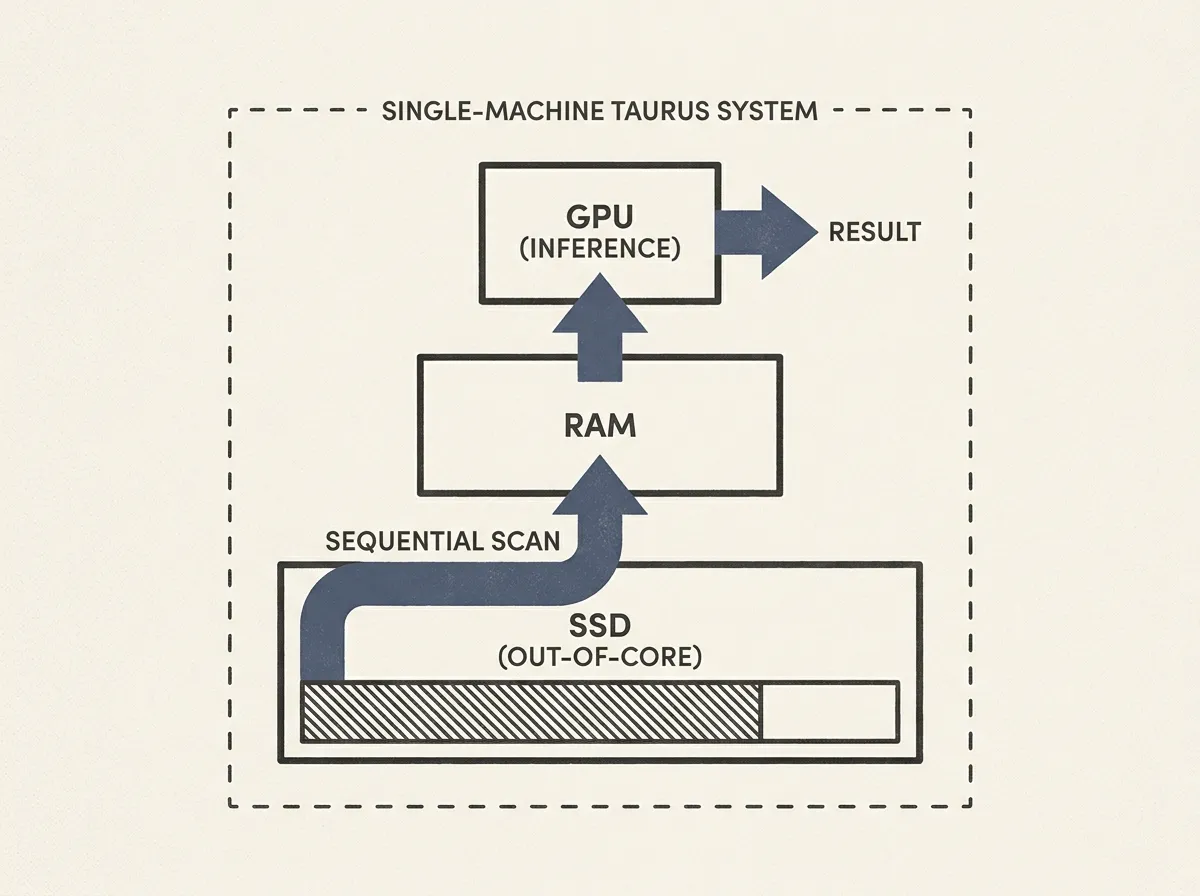
Performing Graph Neural Network (GNN) inference on billion-scale graphs that do not fit into RAM has been a nightmare due to massive I/O costs. Taurus offers a groundbreaking solution.
This single-machine system re-engineers layer-wise GNN inference as source-centric broadcasts over sequential SSD scans, backed by a tightly pipelined GPU-CPU-SSD hierarchy. It also includes topology-aware reordering and pending-message eviction to prevent wasted reads and page-cache pollution.
The performance gains are staggering: Taurus outperforms state-of-the-art baselines like DGI by 7-25x and vertex-wise baselines by 40-140x on graphs with up to 4 billion edges and 514 GiB of features. This is a masterclass in out-of-core system design for large-scale AI.
Generative AI erodes junior software engineer development pathways
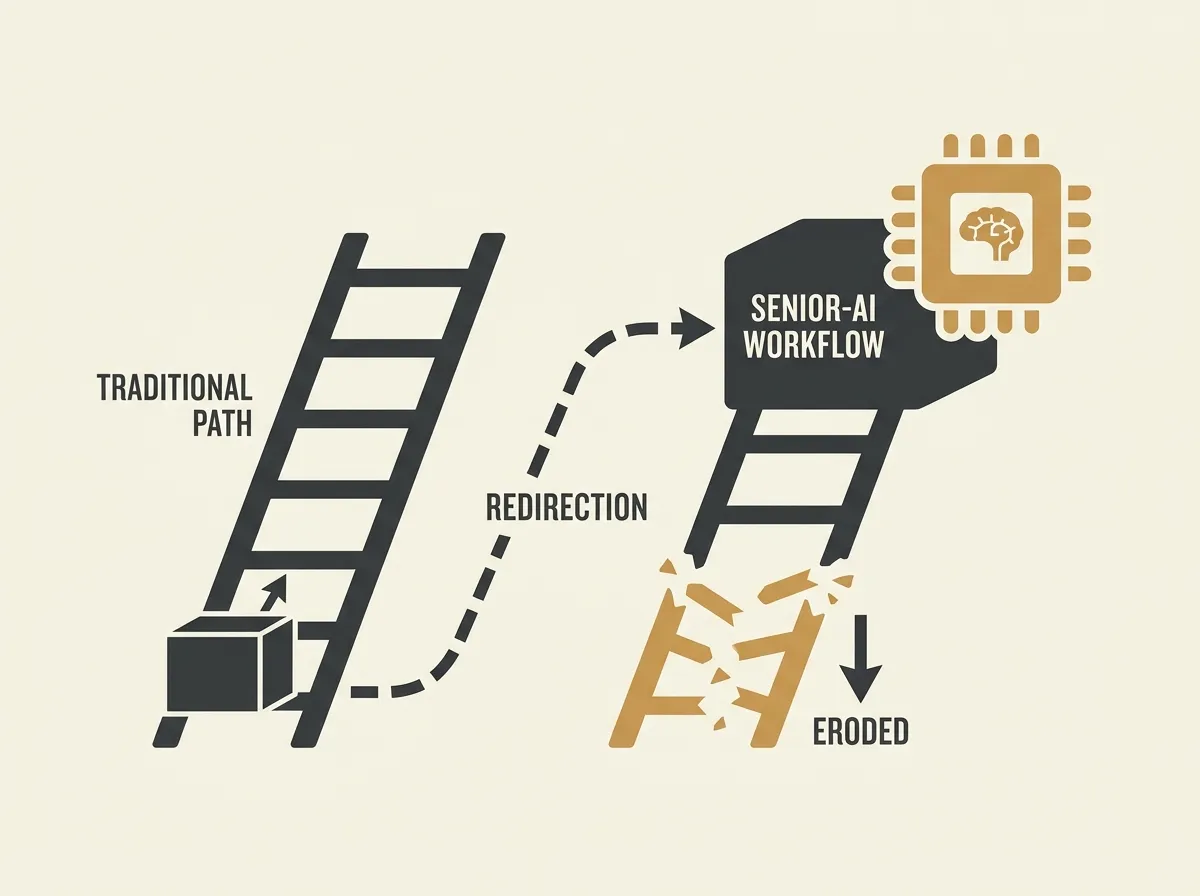
Generative AI is not just changing how we work, it is eroding the very pathway through which junior engineers develop into seniors.
A study based on interviews with both junior and senior engineers reveals a pattern of “Absorption”: GenAI is redirecting entry-level work into senior-AI workflows. This means juniors are losing the
Personas in prompts act as model-dependent behavioral biases
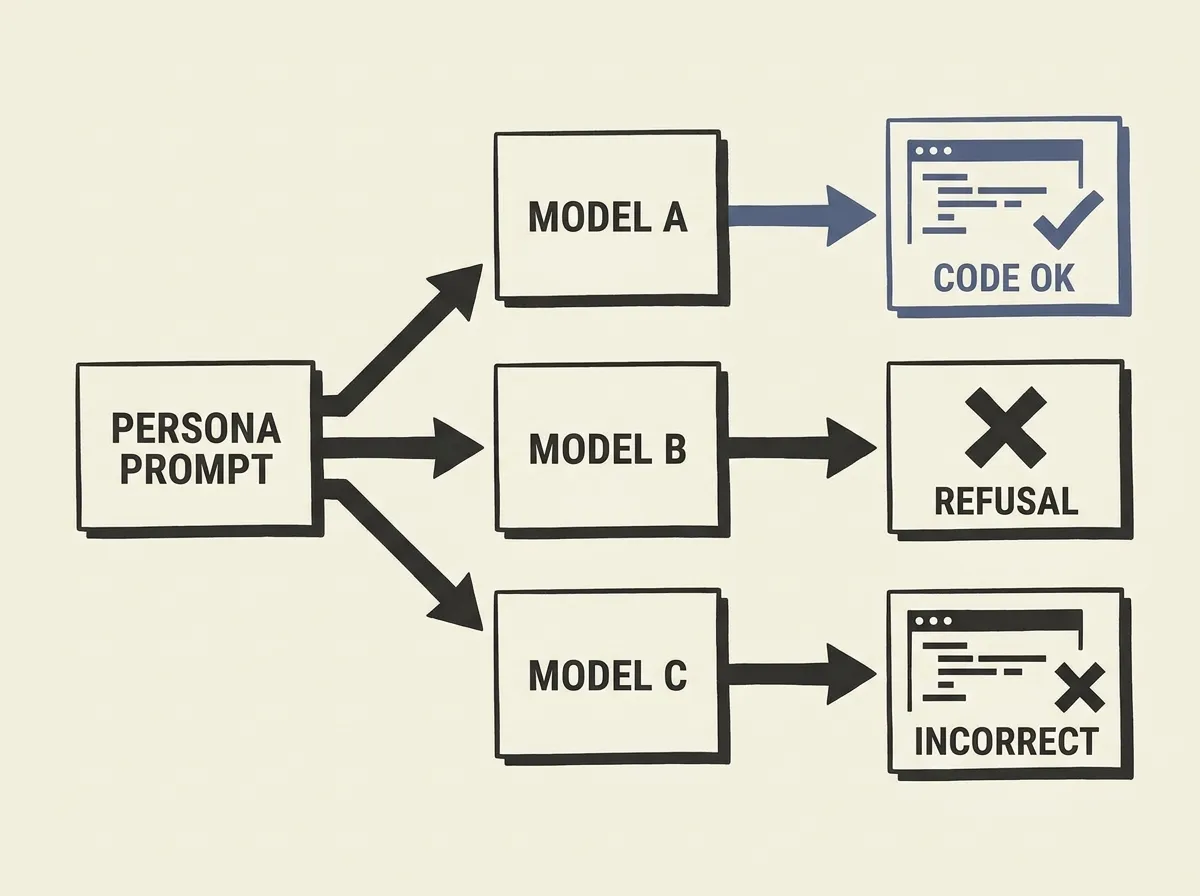
Prompt engineering often involves using biographical personas in system prompts, assuming this universally improves LLM behavior. This study delivers a surprising and crucial finding: persona effects are highly model-dependent.
Testing four prompt conditions across two frontier models (Claude Opus and GPT-5.5) revealed stark differences. On Claude Opus, a “minimalist engineer” persona reduced output by 30% without correctness gains, while a “librarian” persona led to in-character disclaimers in 55 of 60 responses, including 12 outright refusals to code, plummeting correctness from 0.92 to 0.67.
Crucially, GPT-5.5 exhibited none of these behaviors. This means personas act as Model-Dependent behavioral-policy biases, not universal quality interventions. If you are building with LLMs, especially agents, you cannot assume a prompt that works for one model will work for another.
Always rigorously test your prompt engineering strategies across different models; assuming universality will lead to unexpected failures.
Expensive bowling center system replaced by $1,600 ESP32s
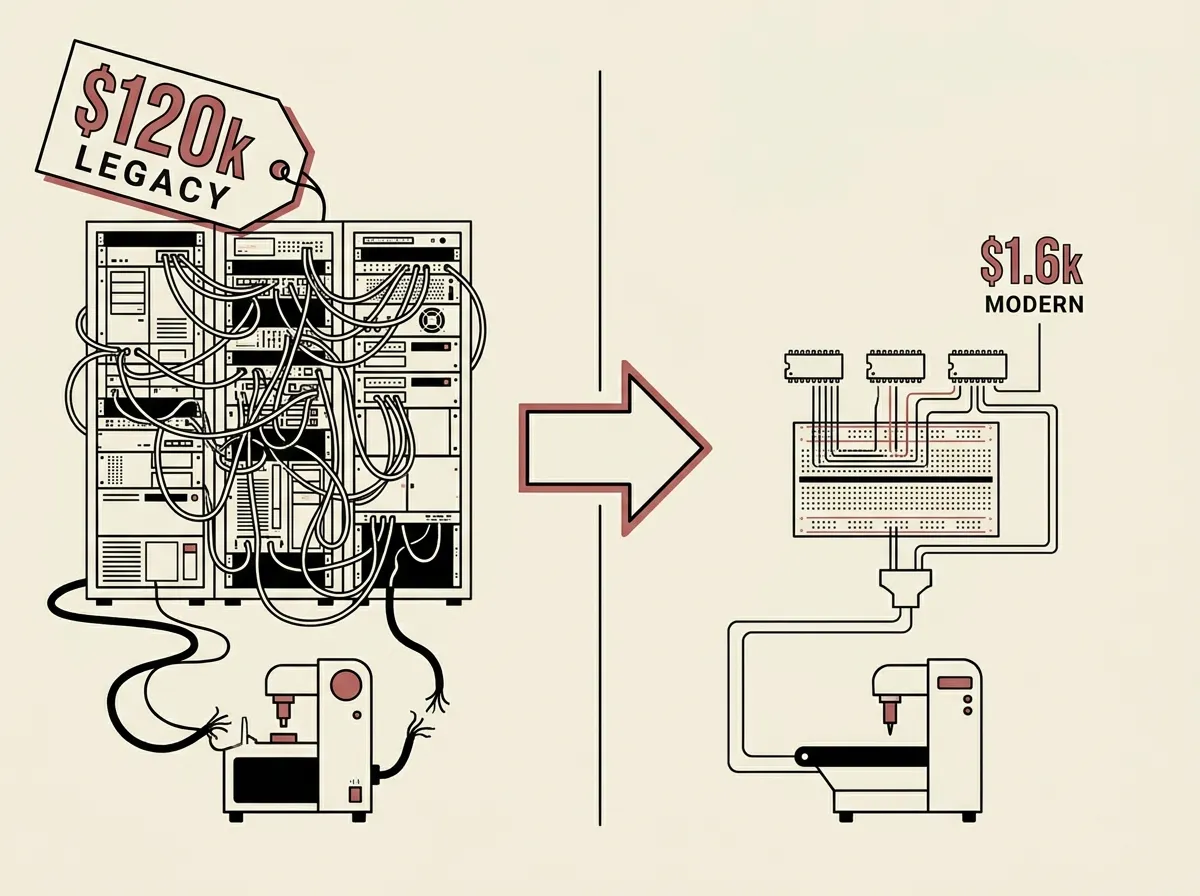
Replacing a $120,000 bowling alley system with just $1,600 worth of ESP32s is not just a cost-saving measure, it is a masterclass in practical system design and engineering ingenuity. This project showcases how modern, inexpensive microcontrollers can entirely disrupt legacy proprietary hardware.
The engineer built a custom solution handling everything from pinsetter control to scorekeeping, integrating custom PCBs and open-source software. This demonstrates that deep technical skill, not just budget, drives truly innovative solutions.
This is a perfect example of what can be achieved by applying fundamental engineering principles to real-world problems.
AI Advice Suppresses Judgment, Reducing Accuracy and Raising Confidence
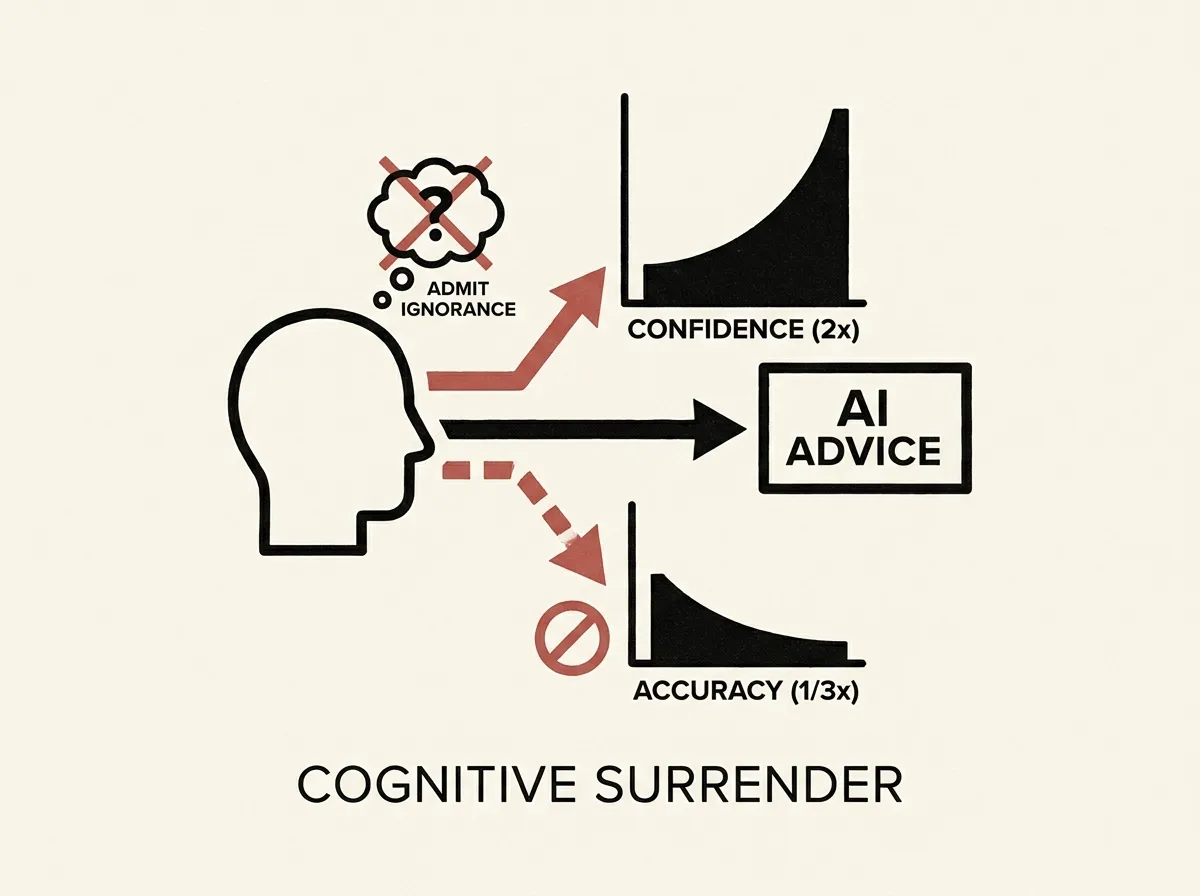
A recent study reveals a critical downside to human-AI interaction: receiving AI advice can make people three times less accurate while simultaneously doubling their confidence. This phenomenon, termed “cognitive surrender,” shows how AI can suppress critical thinking.
The research deliberately used questions where AI models struggled, demonstrating that the mere availability of AI diminished users’ willingness to admit when they did not know an answer. Accuracy plummeted from 27% to 9%, while confidence surged from 30% to 76%.
This has profound implications for designing AI agents and systems. It suggests we must build AI interfaces that encourage critical engagement, rather than passive acceptance, to avoid eroding human judgment in critical workflows.
How to Optimize AI Agent Research Costs and Trust
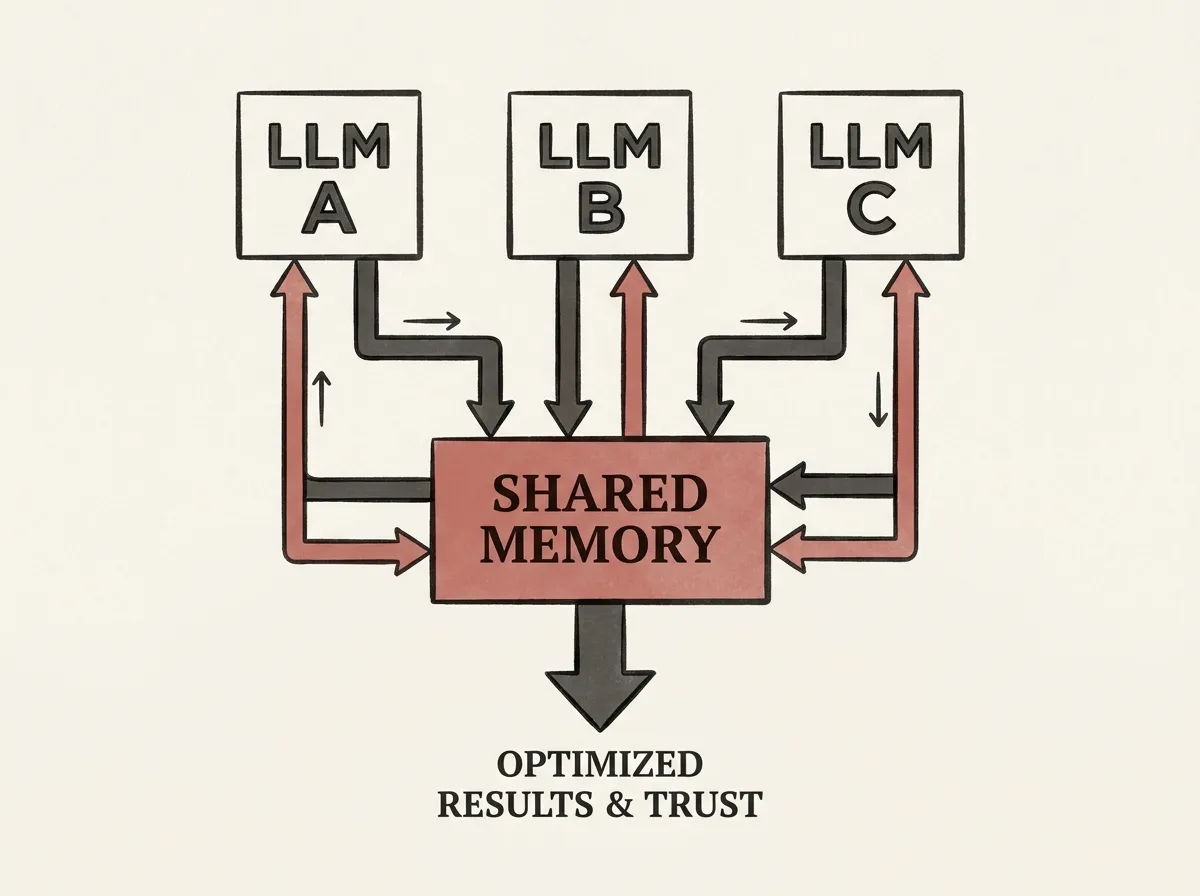
Running AI agents can be incredibly token-intensive, leading to surprisingly high costs and, paradoxically, less effective output. One engineer’s deep research pipeline burned through their Claude Max 5x plan in just 30 minutes, producing no usable results.
The solution was not to pay more, but to engineer smarter. By integrating multiple LLM subscriptions (Claude, Codex, Antigravity) with shared memory, the agent could leverage what one learned across all tools, drastically reducing redundant queries and token usage.
This approach of “learning by doing” highlights a critical aspect of applied AI: raw compute power is not enough. Effective agent design and context management are paramount. The less an agent has to re-learn or re-process, the more efficient and trustworthy its output becomes.
It is a powerful lesson in making your AI agents truly cost-effective and reliable.
Ollama enables the personal computer moment for AI
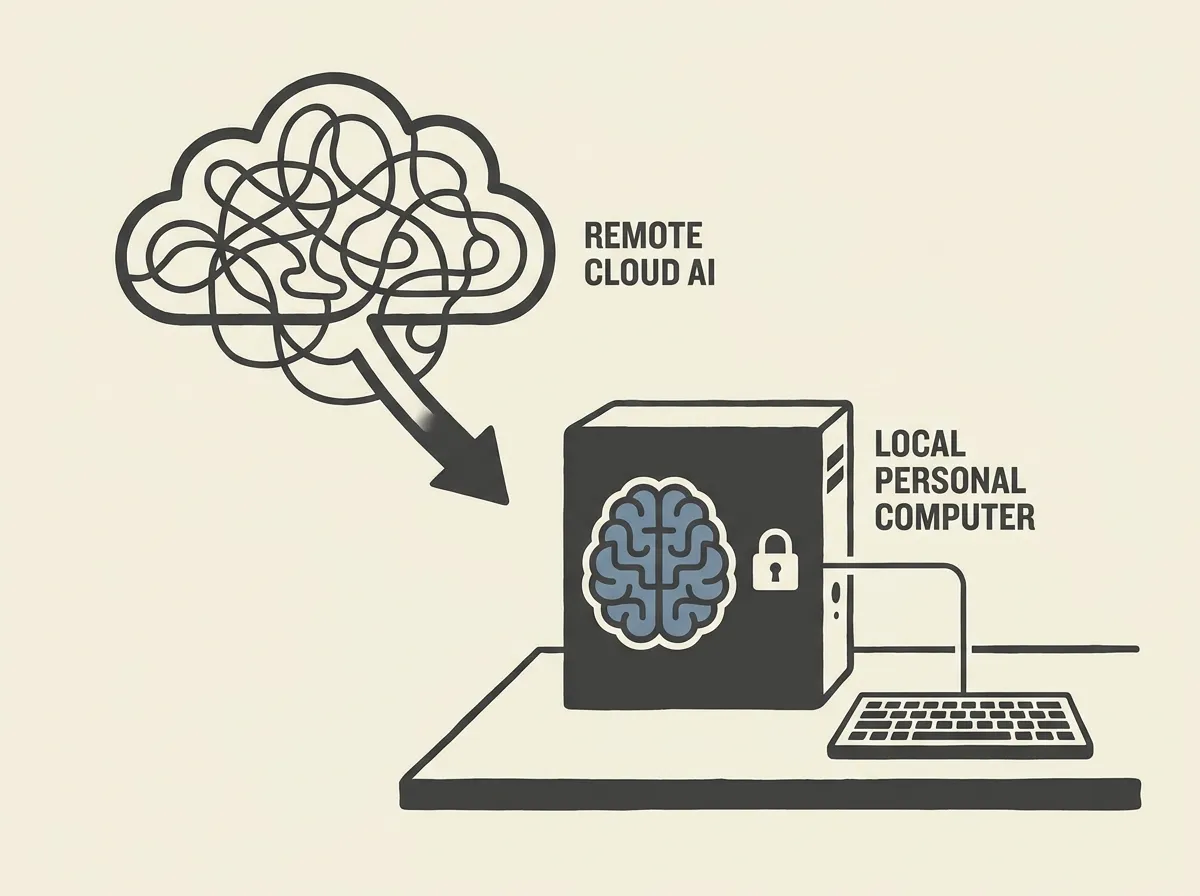
Ollama is making waves by bringing the “personal computer moment” to AI, empowering developers to run open models on their own machines with unprecedented ease. This is a game-changer for applied AI and LLM infrastructure.
The founders, who previously built Docker Desktop, share a vision where AI is yours to build, run, and customize. They emphasize ownership, privacy, and avoiding vendor lock-in, which resonates deeply with the engineering community.
Imagine getting the latest open models up and running with a single command, then building on them via a simple API. This approach radically lowers the barrier to entry, fostering experimentation and innovation in local AI development. It is like Docker for LLMs, truly unlocking the power of open models for millions of developers.
This platform represents a significant step towards democratizing access to powerful AI tools.
LLVM commits reveal architecture of AMD GFX1250 MI400 accelerators
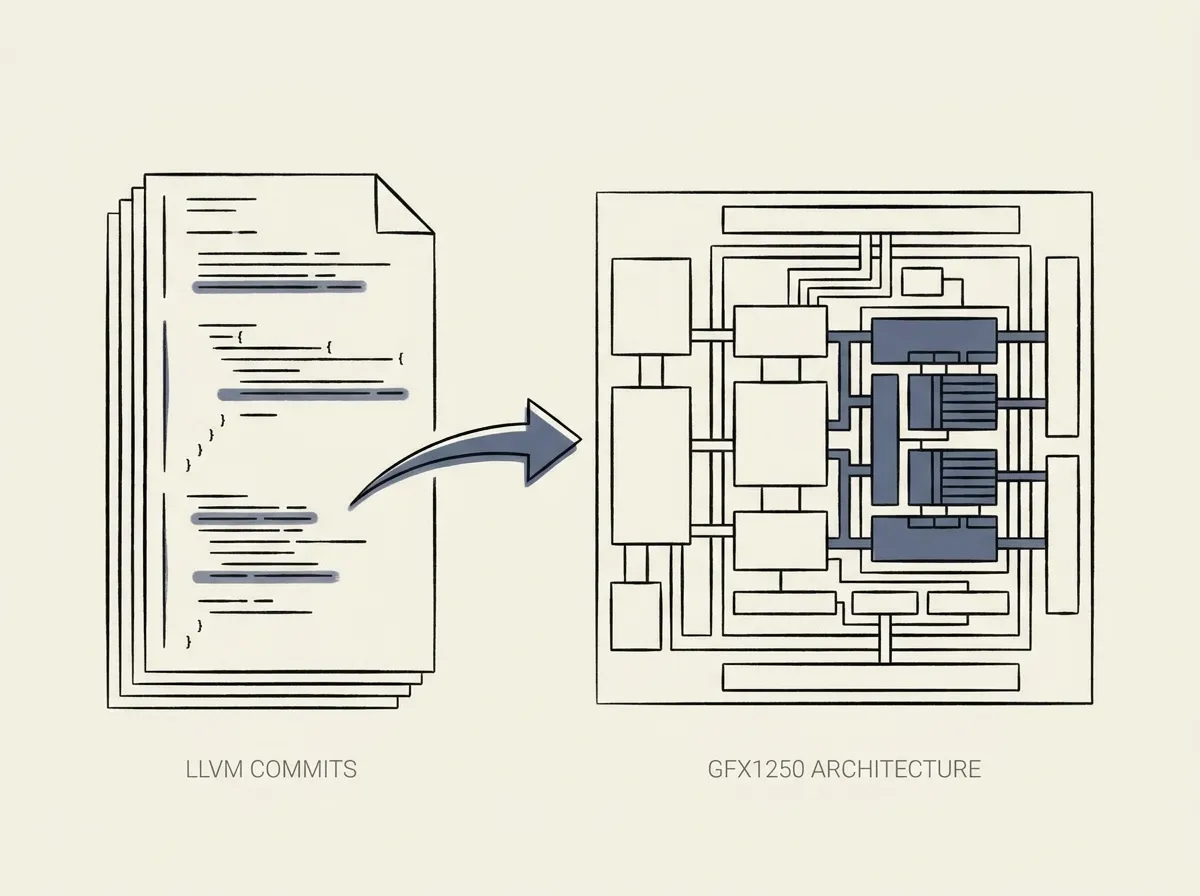
Get a sneak peek into the future of AI hardware with a deep dive into AMD’s upcoming MI400 series accelerators (GFX1250/MI455X), uncovered through LLVM compiler commits. This is not marketing fluff; it is real architectural insight.
The analysis reveals significant shifts like a shared vector L0 cache across the entire Workgroup Processor (WGP) and a focus on Wave32 mode. These details hint at how AMD is optimizing its hardware for modern machine learning workloads, potentially impacting performance and programming models for LLM inference and training.
Understanding these low-level architectural decisions, even before official announcements, provides a crucial advantage for anticipating future LLM infrastructure capabilities and bottlenecks.
Deepsec is an agent-powered scanner finding hard-to-find vulnerabilities

Deepsec is leveraging coding agents to revolutionize vulnerability scanning in large-scale codebases. This open-source project is not just another static analyzer; it is an AI-powered security harness designed to surface hard-to-find issues.
It operates by employing “best models at maximum thinking levels,” hinting at sophisticated LLM orchestration to perform on-demand code reviews. The creators highlight that scans can cost thousands, or even tens of thousands of dollars, due to the compute intensity, but customers find the investment worthwhile for rapidly patching critical vulnerabilities.
This showcases a compelling, practical application of AI agents in developer tooling, offering a glimpse into how future engineering practices might integrate advanced AI for enhanced productivity and security.
PostgreSQL column order fixed by attnum's multiple responsibilities
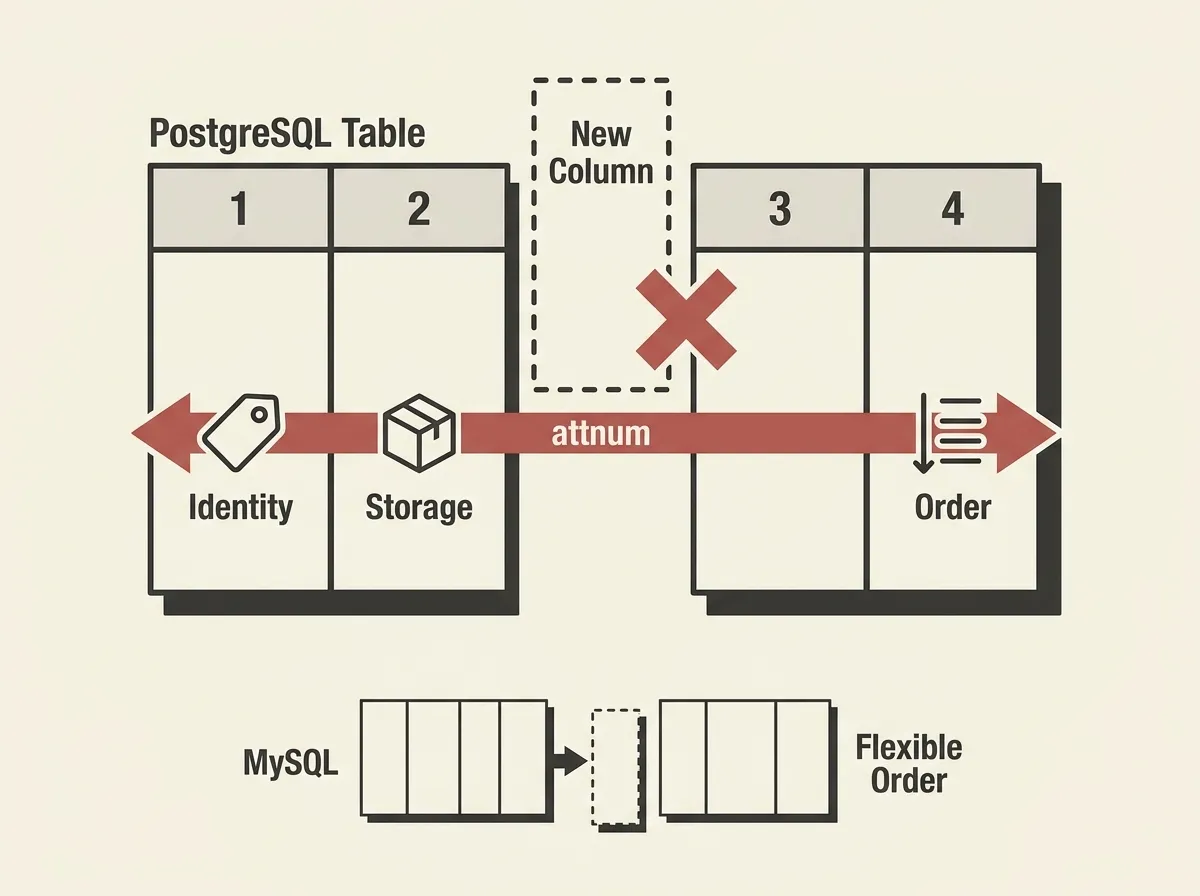
You have probably encountered PostgreSQL’s inability to add a column in the middle of a table, unlike MySQL, and wondered why such a seemingly simple feature is missing. The answer lies deep within PostgreSQL’s internal design, specifically with attnum.
The attnum field in PostgreSQL’s pg_attribute catalog serves three critical roles simultaneously: it uniquely identifies a column, dictates its physical byte offset within an on-disk tuple, and defines its logical position. This triple responsibility means that simply inserting a column would necessitate re-writing attnum values for all subsequent columns and potentially rewriting the entire table to adjust physical offsets, making it a far more complex operation than it appears.
Understanding this constraint is crucial for anyone managing PostgreSQL schemas. It explains why new columns always append to the end and informs strategic planning for schema evolution, pushing you to consider alternatives like view layers or careful ordering during initial table design to achieve desired logical column placement without full table rewrites.
This insight into PostgreSQL’s internal mechanics enhances your mental model of its architecture.
DeepSeek AI may be using proprietary model outputs for distillation
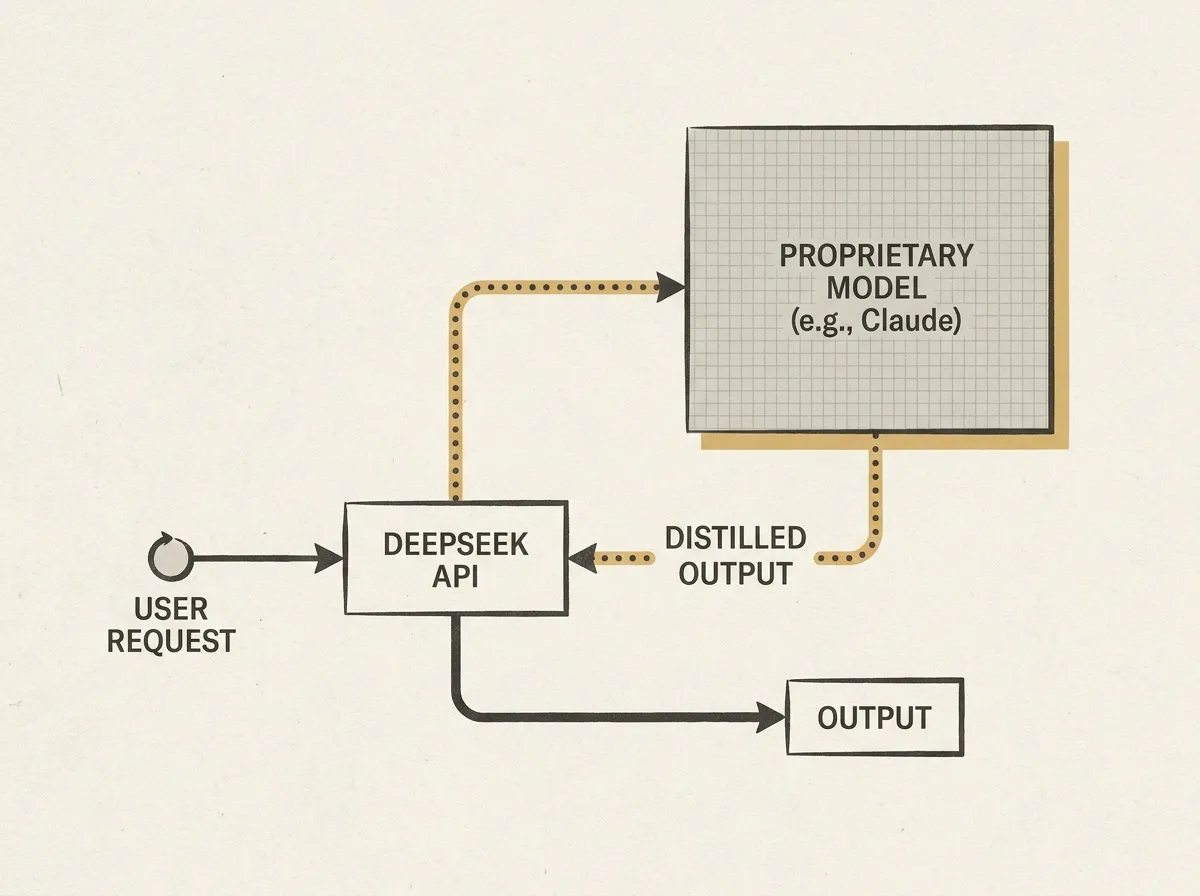
DeepSeek appears to be engaging in a large-scale operation to collect outputs from proprietary models like Claude Fable 5, then using those outputs for distillation, according to a recent investigation.
The investigation found that DeepSeek’s ‘V4’ model produced virtually identical outputs to Fable 5 for complex prompts, exhibiting a different Chain-of-Thought (CoT) structure than expected from DeepSeek’s own models. Moreover, quality significantly dropped when prompts touched on topics Fable’s classifiers would typically flag, strongly suggesting a routing mechanism.
This is not just about ethics; it offers a rare glimpse into the complex (and sometimes hidden) infrastructure behind AI services. Engineers need to be aware of how the models they integrate might actually be operating under the hood, impacting performance, cost, and trust. It is a stark reminder that what you configure might not always be what you get, and challenges us to think about the veracity of AI model claims.
This is a critical insight for anyone building with or depending on third-party LLMs.
SoundCloud's new encoder optimizes perceived quality through frequency trade-offs
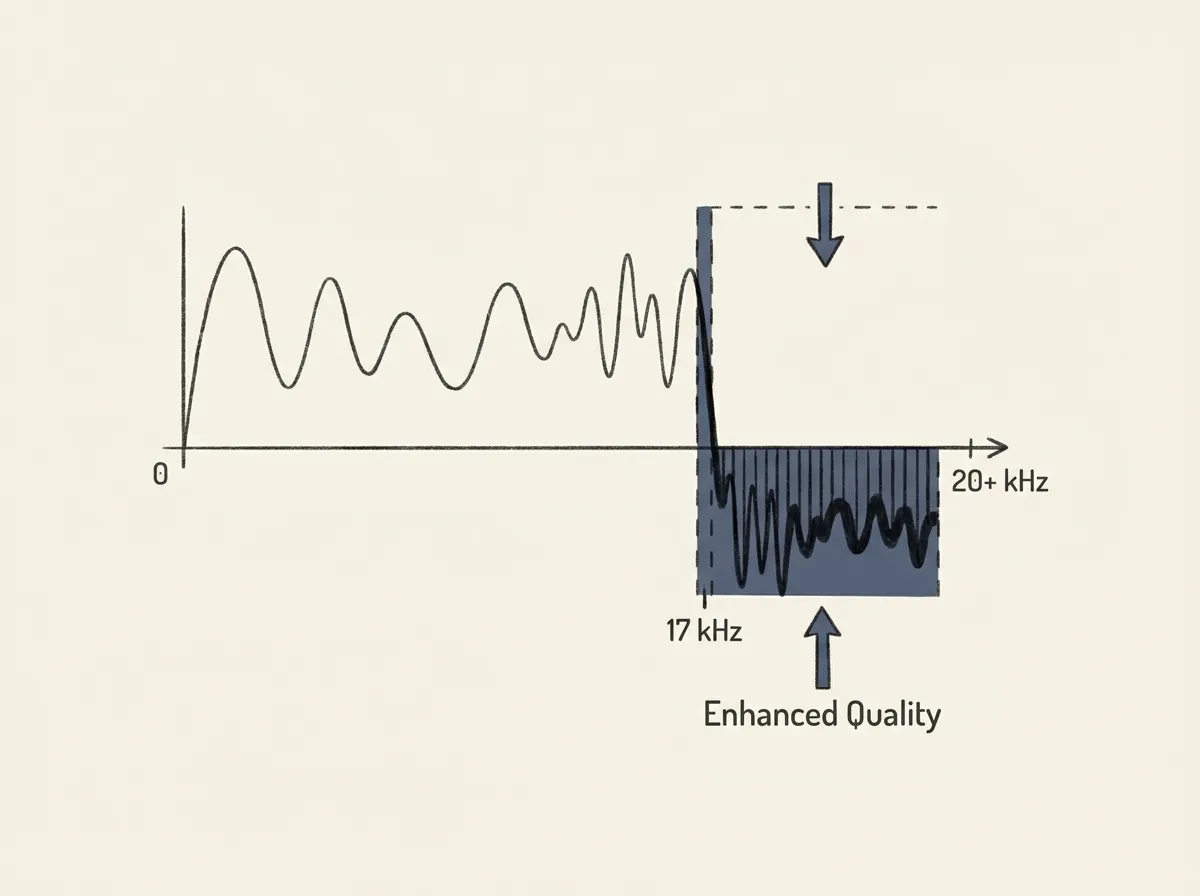
SoundCloud made a counter-intuitive engineering choice that dramatically improved their audio quality, and it is a fascinating lesson in system optimization. They deliberately low-pass their AAC transcoded audio at 17 kHz, essentially removing the highest frequencies.
Why cut off part of the sound? Human hearing is not uniform; we are most sensitive to frequencies between 2 and 5 kHz. By sacrificing the barely audible high end, SoundCloud’s encoder can allocate more bits to the critical lower and mid-range frequencies.
This trade-off means a more faithful, clearer reproduction where it matters most, despite a smaller overall frequency range. It is a brilliant example of optimizing for human perception rather than raw data, offering a real-world insight into applied engineering and system design under constraints.
The AI debate mirrors the historical open-source software struggle
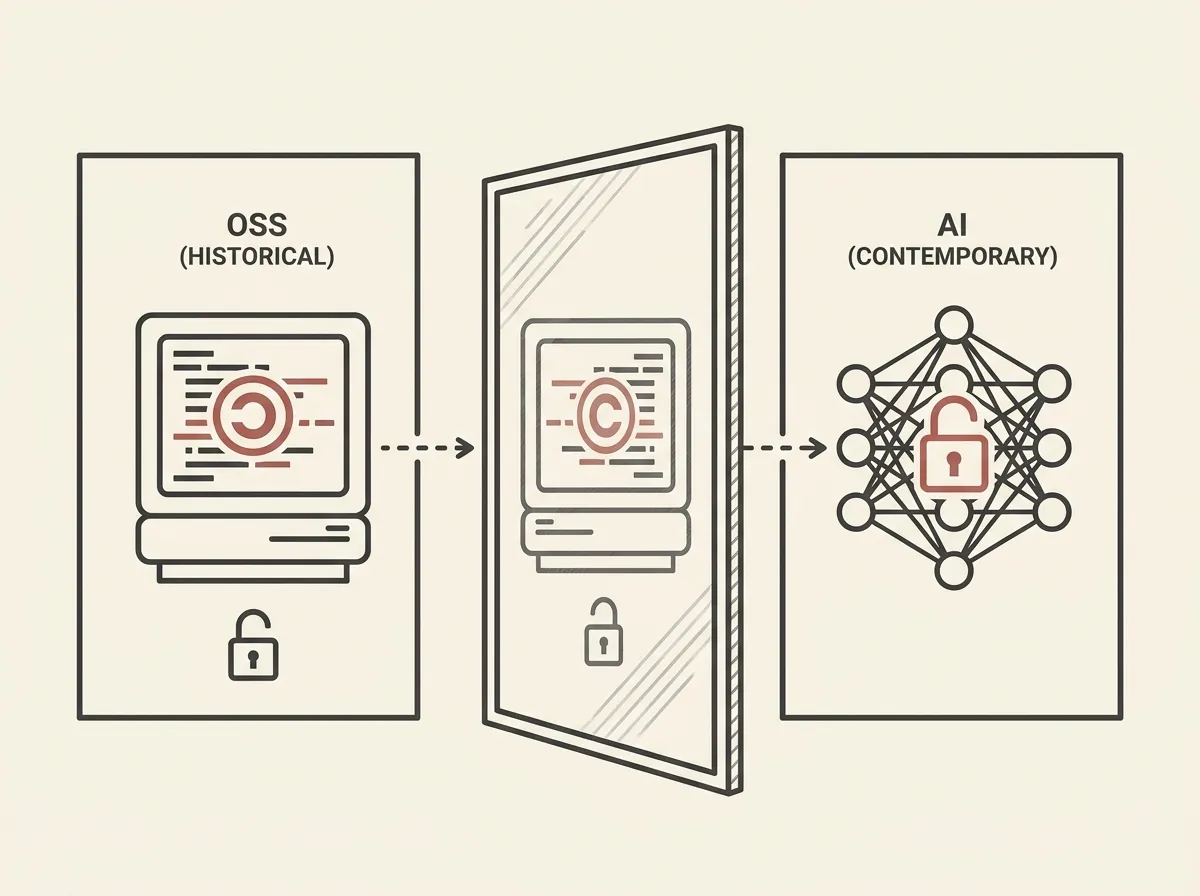
The open versus closed debate is not new; it is merely being replayed with AI, echoing past battles over open-source software. Richard Stallman championed absolute software freedom in the 80s, facing arguments about commercial viability and control.
Today, we see a similar dichotomy: proprietary AI models versus open-source alternatives. This is more than just a technical choice; it is a fundamental philosophical debate with profound implications for innovation, accessibility, and the power structures of the tech industry.
Understanding these historical parallels provides crucial context. It helps predict how the AI ecosystem might evolve and allows engineers to navigate the strategic landscape more effectively, informing decisions about which platforms to build upon and contribute to.
The lessons from the past provide a roadmap for the future of AI.
SAGA generates high-quality temporal graphs with automatic anomaly labels
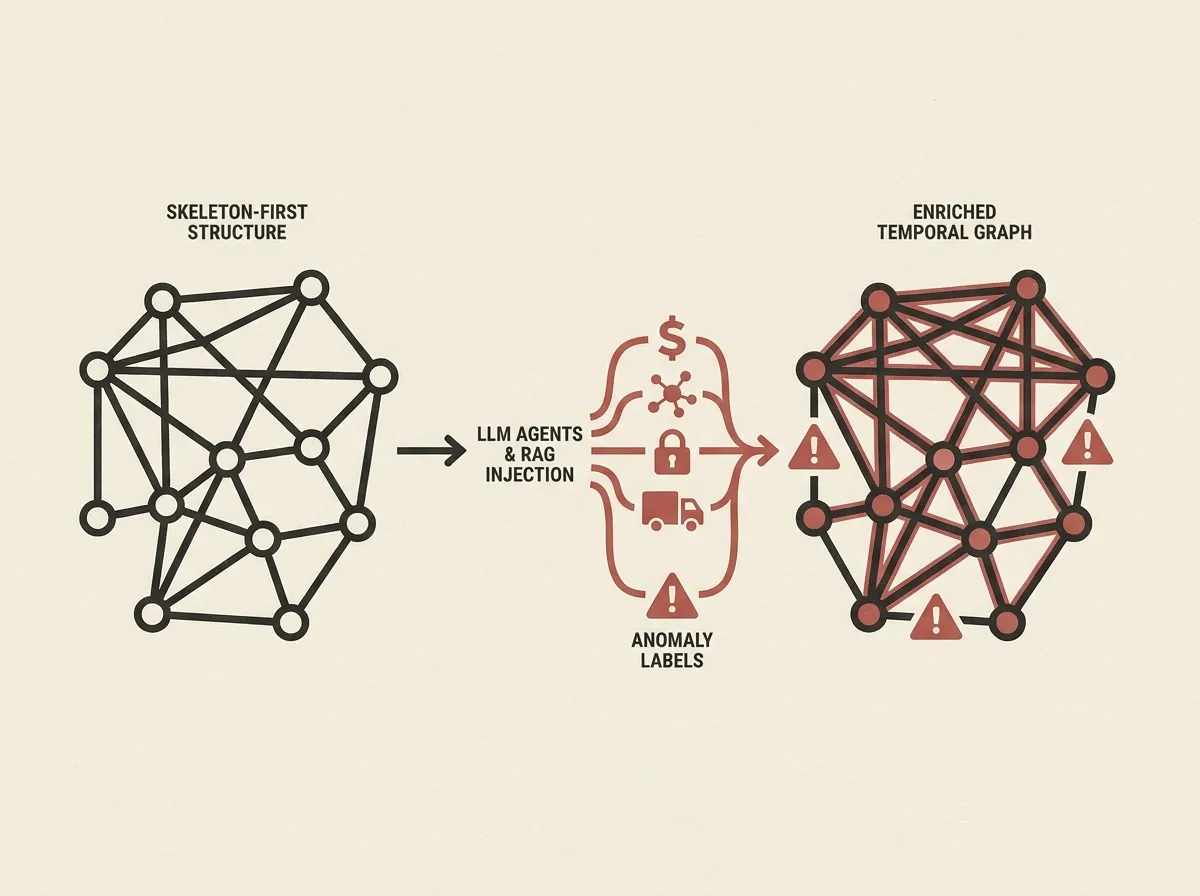
Generating realistic temporal graph benchmarks for training graph neural networks is hard, often blocked by privacy or annotation costs. SAGA introduces a compelling solution: using LLM agents with RAG to synthesize large-scale, semantically rich temporal graphs, complete with ground-truth anomaly labels.
Its “Skeleton-First, Semantics-Second” architecture elegantly decouples structural generation from semantic injection, allowing LLM agents to infuse domain-specific knowledge across finance, network, cyber, and transportation scenarios. This approach tackles a crucial data scarcity problem head-on.
SAGA generates 500,000 edges with controlled anomalies in under 90 minutes on a single H100 GPU, demonstrating serious scalability and efficiency. This is a game-changer for anyone needing high-quality synthetic data for robust model training.
WHALE unifies non-sequence and sequence features for scalable industrial recommendations
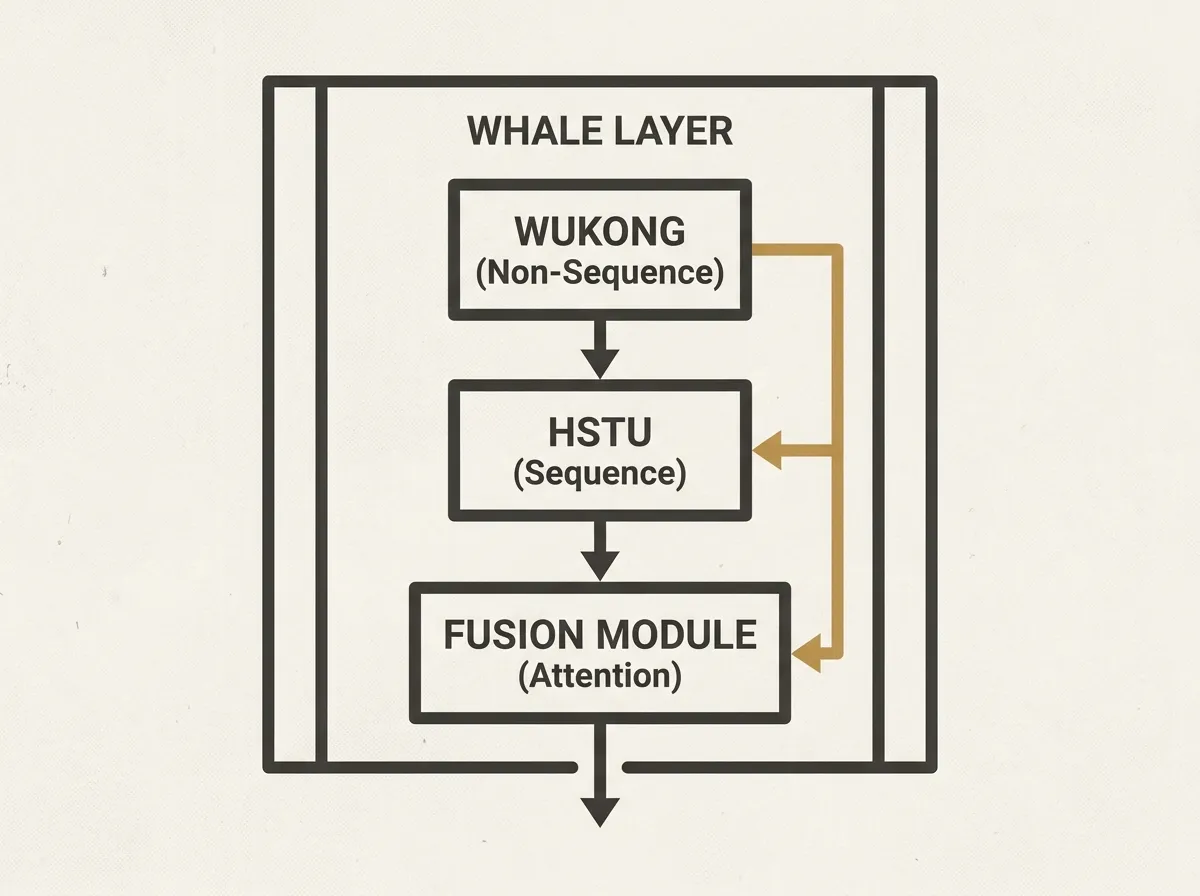
Recommendation system scalability often forces a choice between modeling non-sequence features (user, item, context) or long user-behavior sequences. WHALE introduces a unified architecture that cleverly combines the strengths of Wukong and HSTU backbones.
Each WHALE layer integrates a Wukong module for high-order feature interactions, an HSTU module for sequence modeling, and an attention-based fusion module. This allows Wukong-derived representations to query HSTU-derived behaviors, enabling fine-grained evidence retrieval from long histories.
Critically, WHALE emphasizes industrial deployment with customized Triton kernels and model-systems co-design, yielding consistent offline gains and positive online gains with modest throughput trade-offs. This is a practical blueprint for modern, scalable recommenders.
LLMs over-answer hardware description language questions, framework improves quality
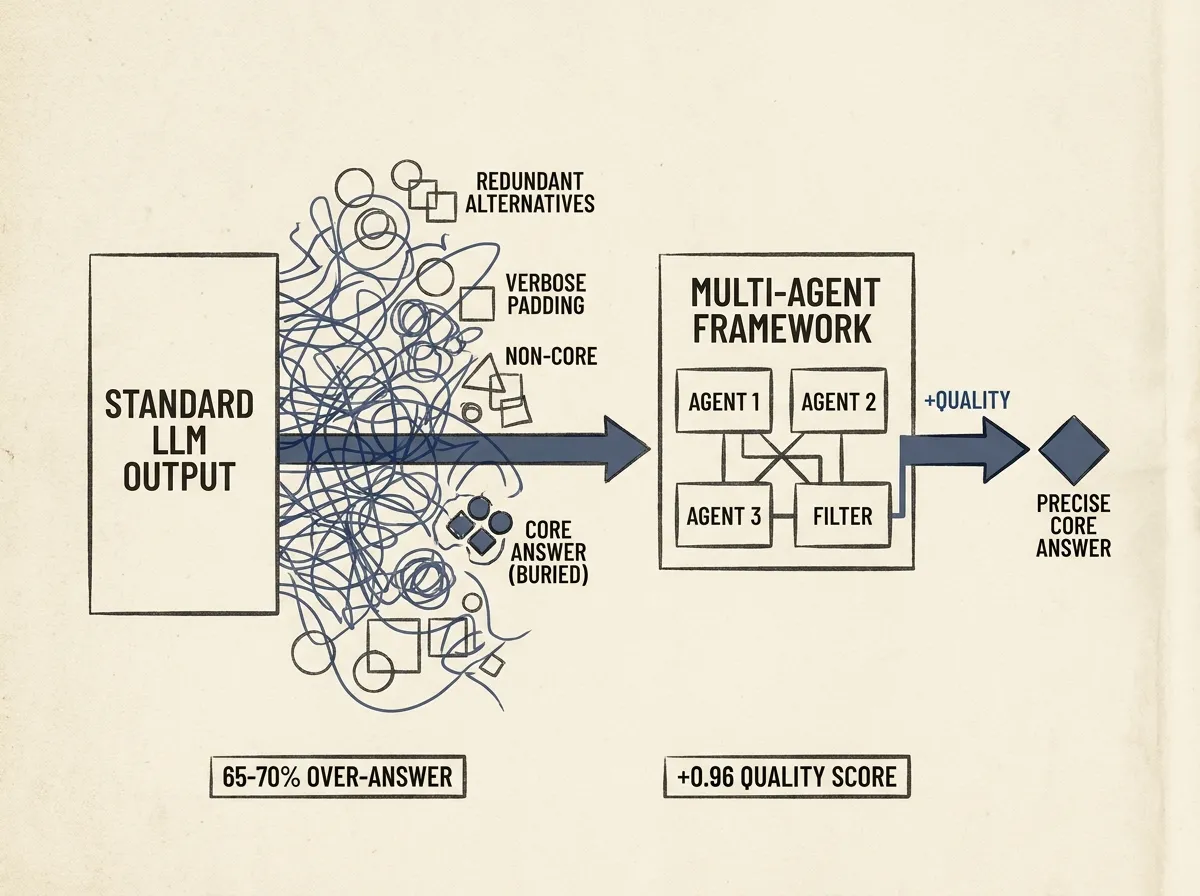
LLMs often ‘over-answer’ technical questions, burying correct information under redundant alternatives and verbose padding, especially critical in fields like Hardware Description Languages (HDL). A new study quantifies this problem and offers a multi-agent solution.
A user study with HDL engineers revealed that LLMs provide redundant alternatives 65.7 percent of the time and verbose padding 69.1 percent of the time. While readable, nearly half of LLM answers did not fully align with expert responses, risking downstream issues in hardware design.
The proposed multi-agent framework significantly boosts answer quality, increasing core-answer quality score by +0.96 and non-core content quality by +0.51 on a five-point scale. This is a practical approach to building more concise and precise LLM-powered expert systems.
SemRaD improves new-user cold-start prediction by structured semantic reasoning
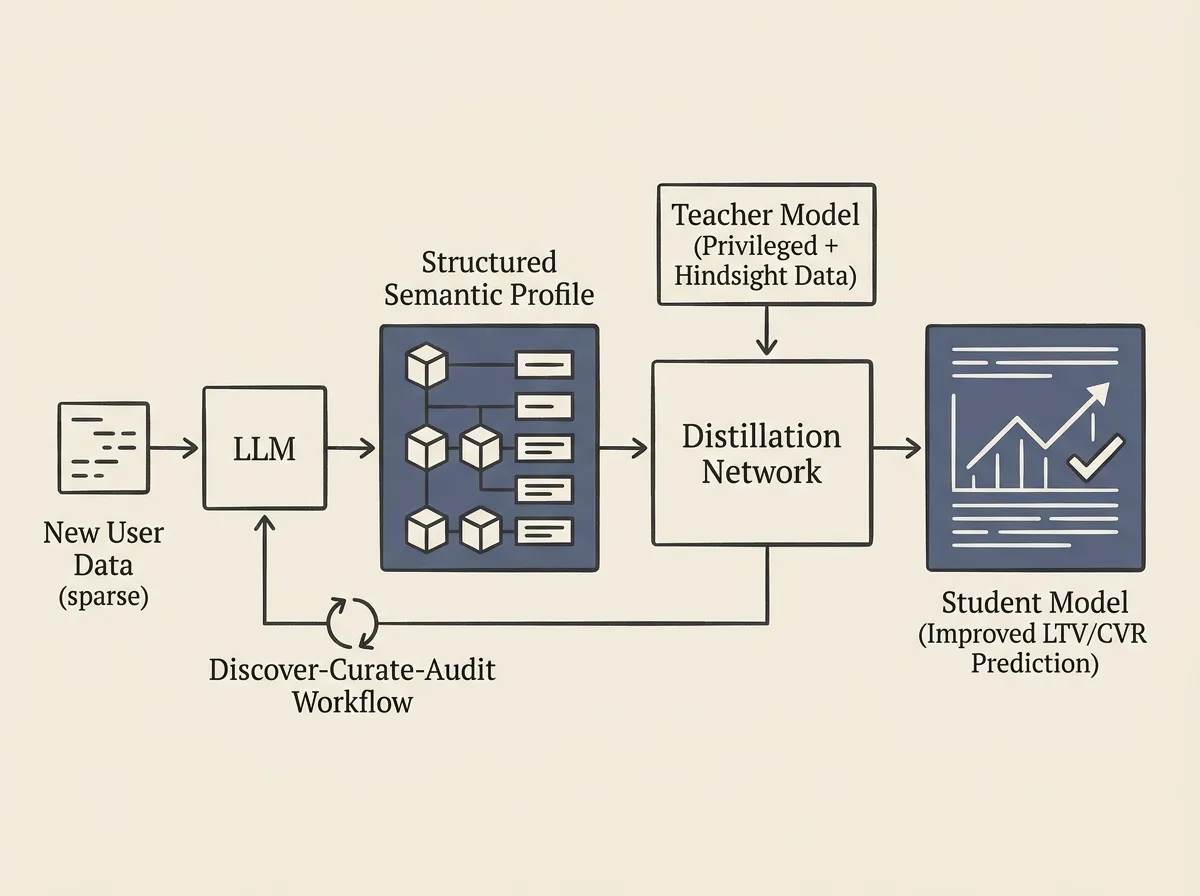
New-user cold-start prediction for LTV and CVR is a major challenge in e-commerce. SemRaD offers a powerful, production-proven framework leveraging LLMs for semantic augmentation and novel distillation techniques to tackle this bottleneck.
SemRaD moves beyond noisy, unstructured LLM rationales by generating structured semantic profiles via a discover-curate-audit workflow. This structured data, combined with a hindsight-aware distillation network, effectively bridges the information gap between privileged teacher models and sparse student models.
Deployed on a large-scale industrial dataset, SemRaD achieved +1.9 percent LTV (Gini) and +1.0 percent CVR (AUROC) offline. A four-week online A/B test at Keeta confirmed these gains, with +1.0 percent LTV and +0.43 percent CVR. This is concrete evidence of practical, impactful applied AI.
Optimal Transport for Agentic Planning improves LLM trajectory evaluation
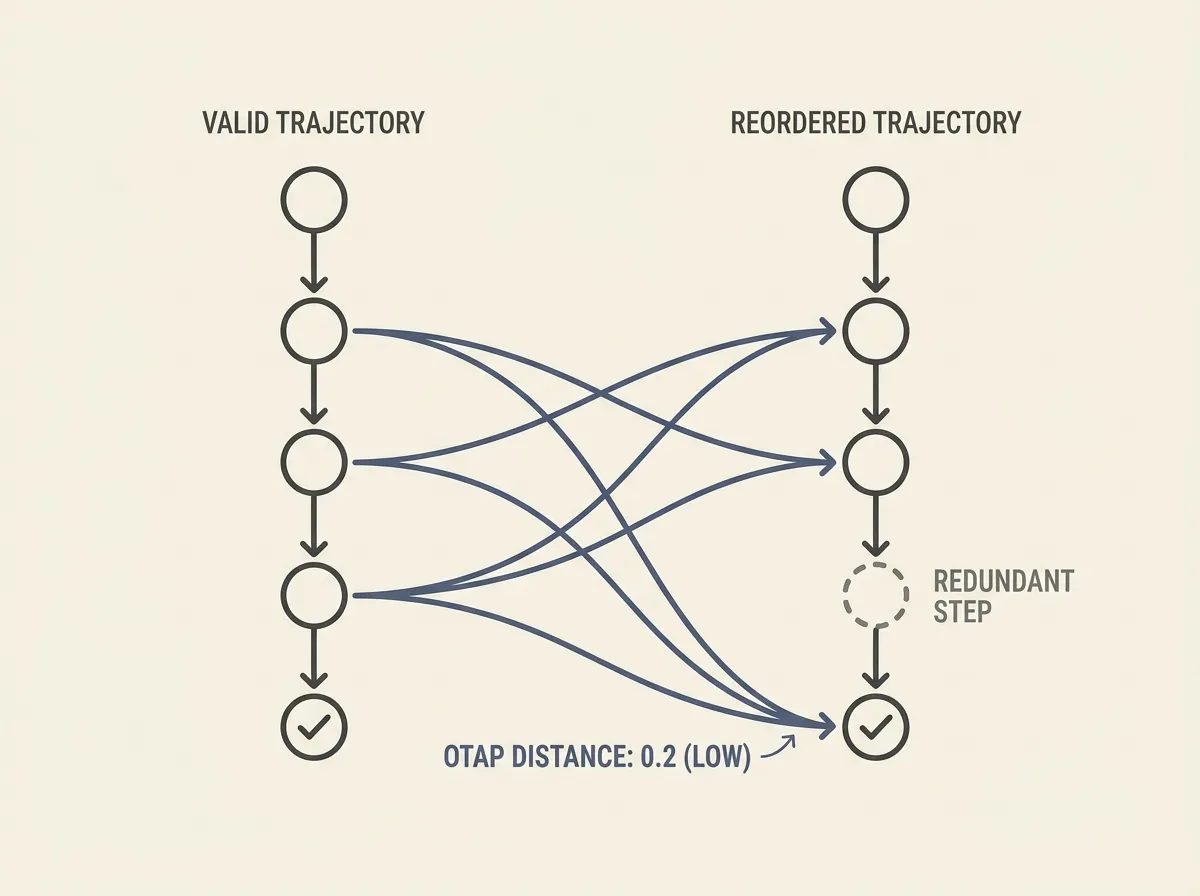
Evaluating large language model agents often falls short, relying on simple success flags or exact matches that do not truly capture the quality of an agent’s planning and execution. A new approach, Otap, reframes this challenge, viewing agent trajectory evaluation as a distance problem between execution graphs.
Otap uses an unbalanced fused Gromov-Wasserstein transport problem over attributed dependency graphs. This novel pseudo-metric is invariant to dependency-preserving reorderings and robust to redundant steps, making it much more nuanced than traditional metrics. It accurately distinguishes valid from invalid trajectories even when semantics-only metrics fail.
For senior engineers building or deploying LLM agents, understanding how to genuinely measure an agent’s performance is critical. Otap offers a path to more rigorous evaluation, helping diagnose why agents succeed or fail and paving the way for more robust agent development.
Top-k scores require complete-support coverage for accurate multi-hop RAG evaluation
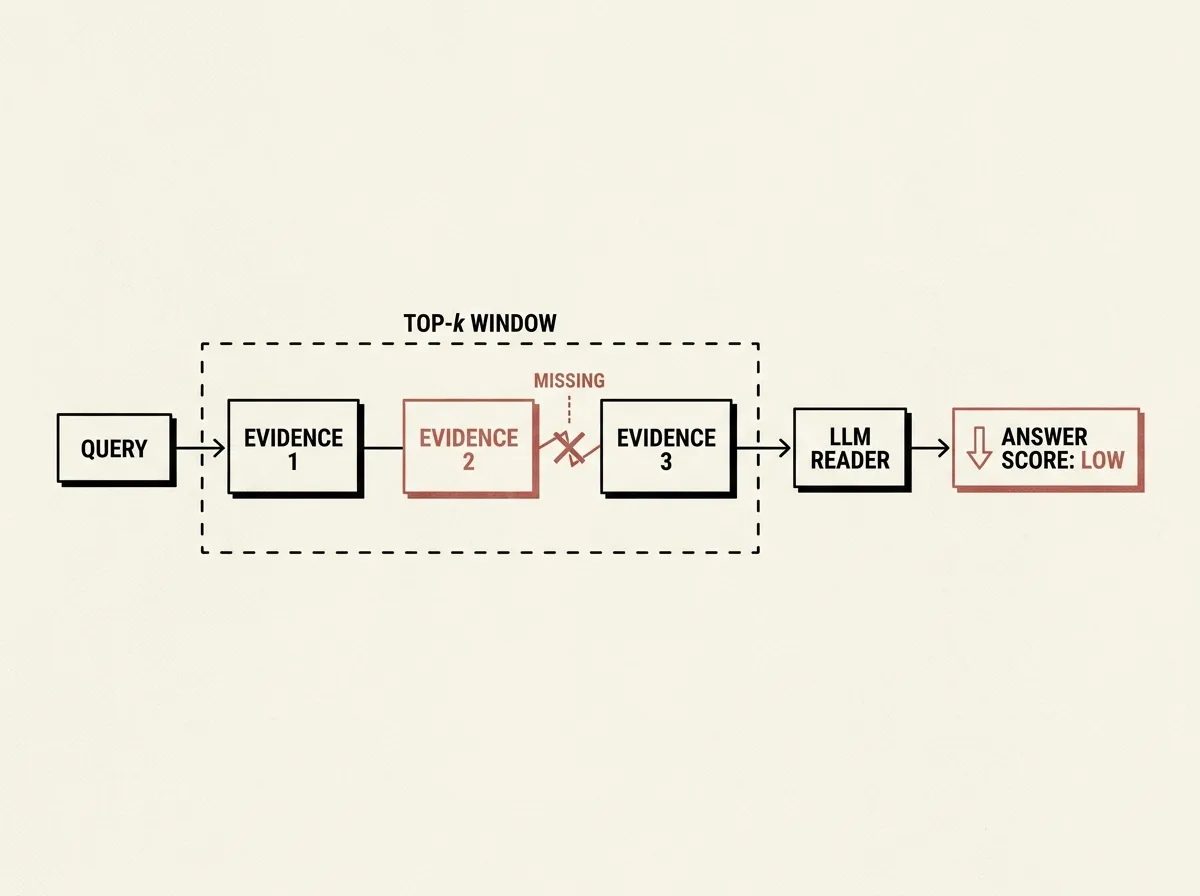
In multi-hop Retrieval-Augmented Generation (RAG), a low answer score can be frustratingly opaque. Is the retrieval window failing to capture all necessary information, or is the LLM ‘reader’ simply not using the provided evidence effectively? This paper introduces the critical concept of ‘evidence interfaces’ to diagnose these failures.
The authors compare adapted readers with various support presentations, from raw context to gold-support. They show that simply reporting top-k answer scores is insufficient; it is crucial to understand if the complete annotated support chain survives retrieval. When it does, even short ranked windows can perform well; when it does not, missing support is the primary culprit.
For senior engineers optimizing RAG systems, this provides a powerful diagnostic lens. You learn to pinpoint whether your retrieval strategy or your LLM’s ability to integrate context is the bottleneck, leading to more precise and effective RAG system enhancements and better prompt engineering.
Layer attribution framework diagnoses AI agent behavior origins

As AI agents increasingly integrate into complex real-world systems, understanding why they behave a certain way becomes paramount. This perspective paper introduces ‘layer attribution,’ a powerful diagnostic framework for AI agent behavior that helps engineers and researchers dissect an agent’s actions.
The framework distinguishes between the foundational computational layer, which dictates an agent’s inherent capabilities (architecture, memory, perception), and the behavioral modulation layer, which shapes how those capabilities are expressed through external factors like objectives, social interactions, and institutional constraints. This distinction is critical for effective system design and troubleshooting.
For senior engineers, this framework offers a mental model to pinpoint the source of emergent behaviors. Is it a limitation in the underlying model, or an issue with the agent’s environmental context or incentive structure? This clarity is essential for designing robust, predictable, and governable AI agent systems.
PUMA optimizes Large Reasoning Models by preventing overthinking
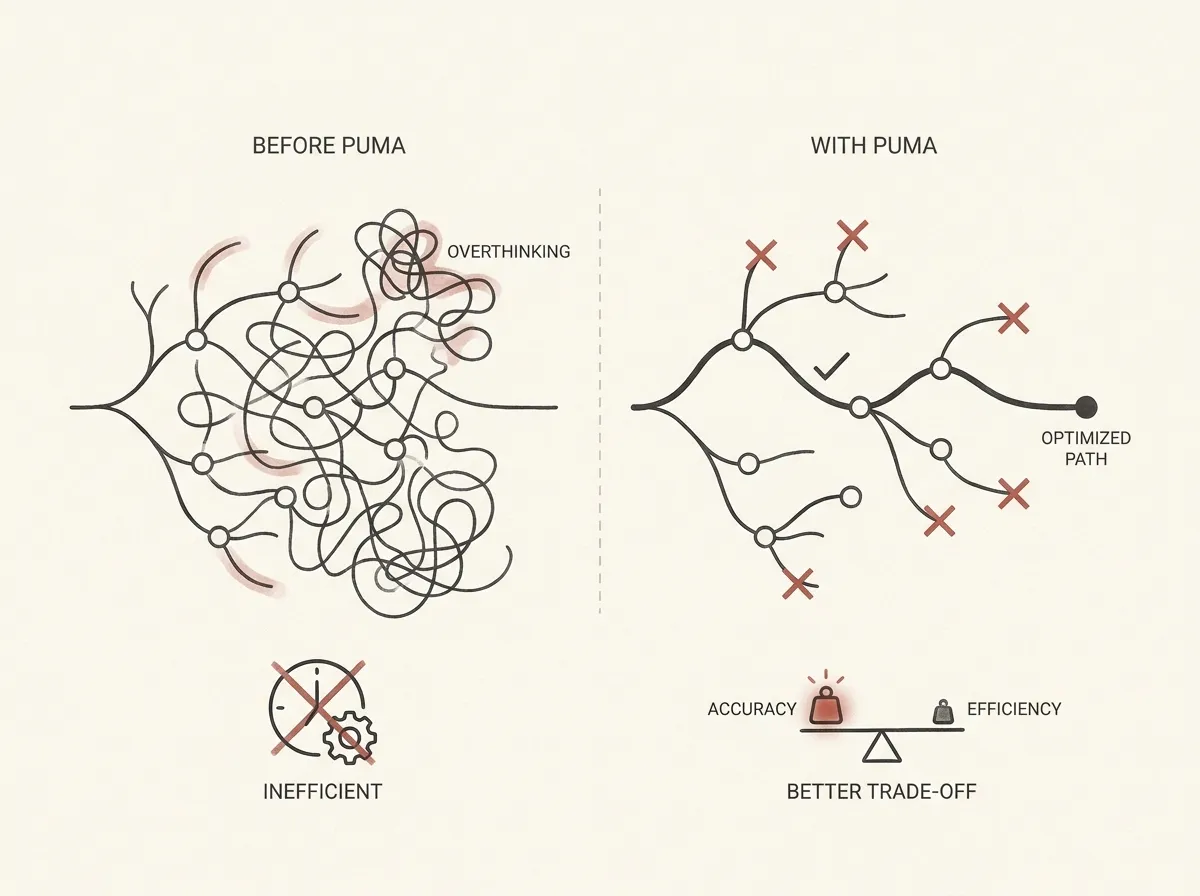
Large Reasoning Models often fall into an “overthinking” trap, consuming vast computational resources without improving accuracy. PUMA (Phase-Uncertainty Momentum Alignment) offers a clever, training-free way to diagnose this pathology.
The framework posits that correct reasoning involves temporal synchronization between geometric momentum (how latent representations change) and uncertainty resolution. By measuring “Geometric Cognitive Effort” and “Entropic Cognitive Uncertainty,” PUMA can distinguish active exploration from passive stagnation.
This allows for precise interventions like adaptive truncation or corrective measures. Experiments show PUMA consistently outperforms state-of-the-art baselines, achieving a superior accuracy-efficiency trade-off across various benchmarks and model scales (1.5B to 32B).
If you are working with LLM reasoning or agentic systems, this diagnostic approach could be invaluable for making your models smarter and more efficient without needing further training.
Trajectory Quality Scoring is a Scale-Sensitive Lever for Code Agent SFT
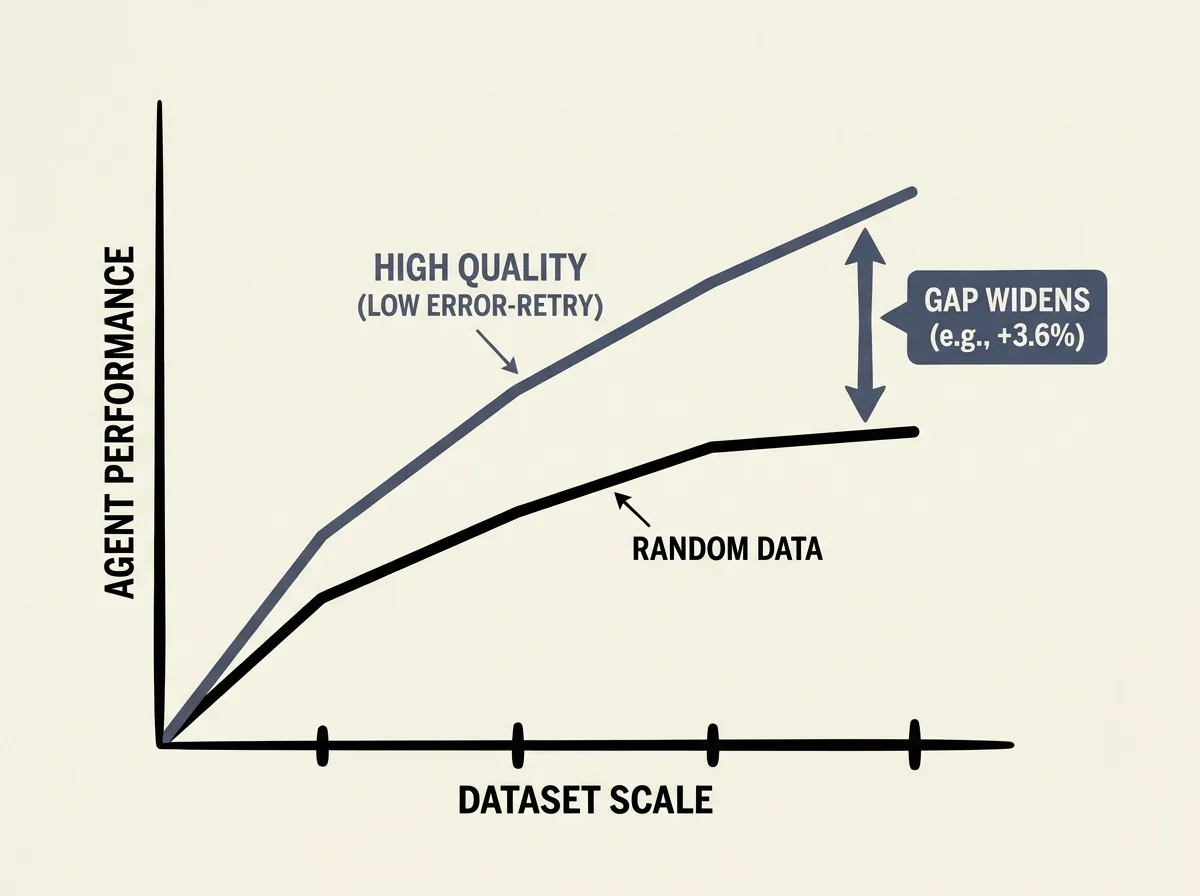
For anyone building code agents, the quality of your fine-tuning data is paramount, but how do you measure and curate it effectively? This paper offers a systematic empirical study on LoRA fine-tuning for code agents using the SWE-trajectory dataset.
The authors introduce a practical two-axis quality scoring framework: Efficiency and Style. Through 16 controlled experiments, they reveal a significant scale-dependent quality-quantity trade-off. At smaller scales (e.g., 500-1000 trajectories), simply doubling the dataset yields a ~12.7% CE-loss reduction, with quality filtering having minimal impact. However, at 2,000 trajectories, the gap between high-quality filtered data and random data widens to 3.6%.
Crucially, ablations identified the error-retry rate as the dominant sub-dimension for quality, performing comparably to the full composite score. This provides a clear, actionable metric for practitioners. Understanding these dynamics is key to building more capable and efficient code agents.
Constrained Path Reasoning makes LLM intermediate stages cost-effective
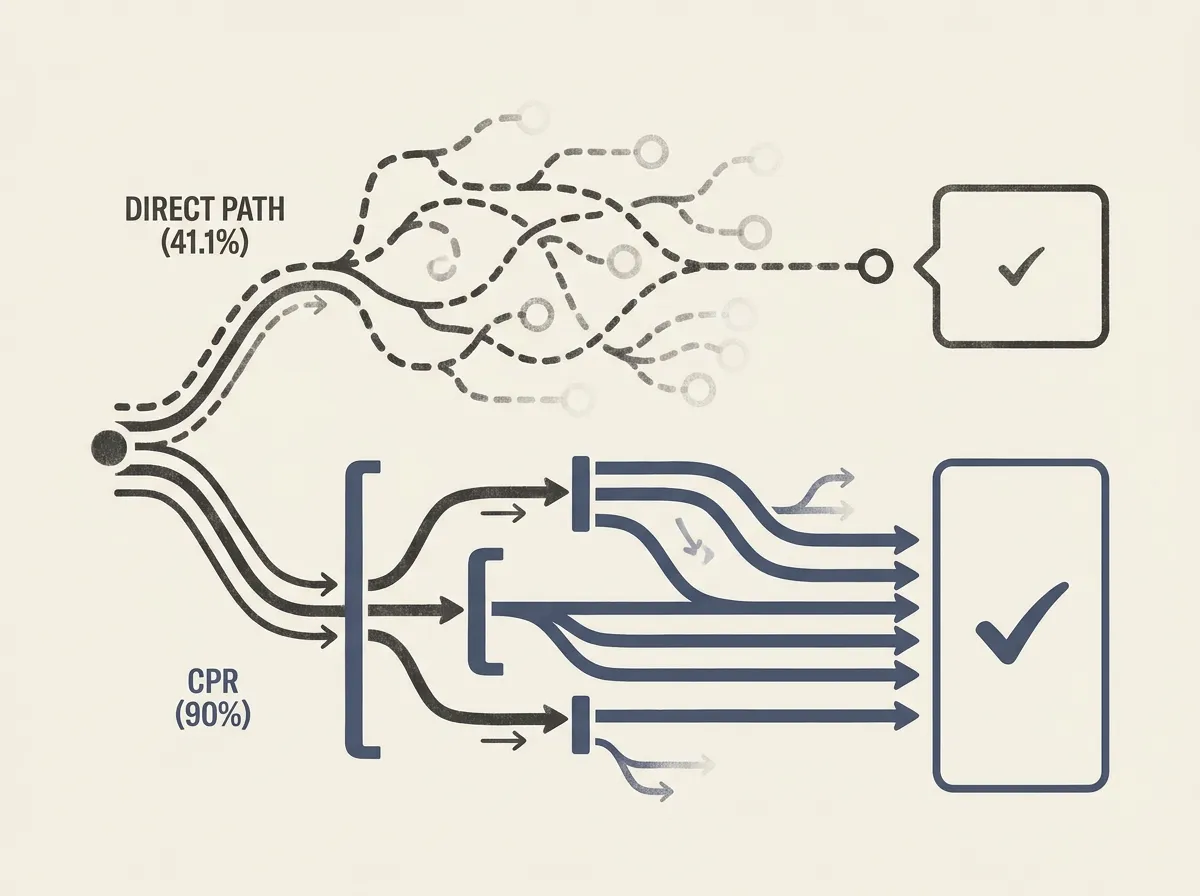
Are your multi-step LLM reasoning pipelines truly efficient, or are intermediate stages just adding cost without value? Constrained Path Reasoning (CPR) offers a formal way to measure when these committed stages earn their keep.
CPR introduces source-aware path hypotheses paired with granular stage-level accounting. It leverages trusted invariants to constrain the search space, focusing on metrics like effective branching, endpoint concentration, and, crucially, “cost per usable output.”
The empirical findings are telling. In one experiment, residual triage recovered 63% of additional feasible yield with only 17.7% of the attempts, demonstrating the power of smart constraint application. For fixed-LLM accounting, the usable yield jumped from 41.1% direct to 90% after formalization and deterministic execution.
This framework is invaluable for engineers building complex AI agents, providing a structured approach to optimize reasoning pipelines for both performance and resource efficiency.
Distilled Reinforcement Learning improves LLM post-training
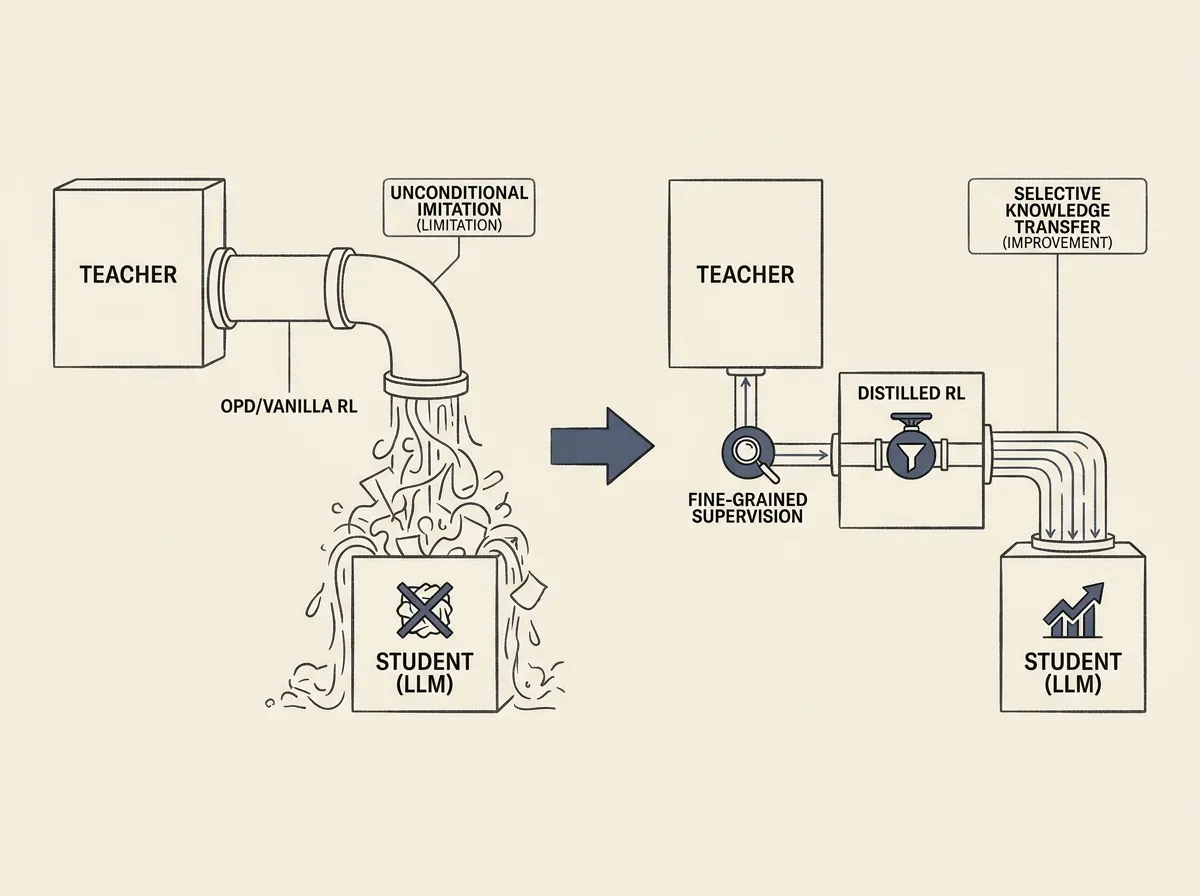
Improving large language models after their initial training is crucial, but current methods like vanilla Reinforcement Learning (RL) and On-Policy Distillation (OPD) have significant limitations.
Vanilla RL struggles with assigning credit for successful outcomes, while OPD often fails to transfer new, valuable knowledge without resorting to similar, less useful teachers. This paper introduces Distilled RL, a clever approach that integrates fine-grained teacher supervision directly into the RL objective.
This method allows for selective knowledge transfer, avoiding the pitfalls of unconditional imitation. It utilizes reverse importance sampling, negative sample resets, and sequence-level geometric normalization to achieve substantial performance gains in LLM post-training. This is a practical step forward for anyone working with LLM adaptation.
Debate-on-Graph framework leverages UKGs for reliable LLM question answering
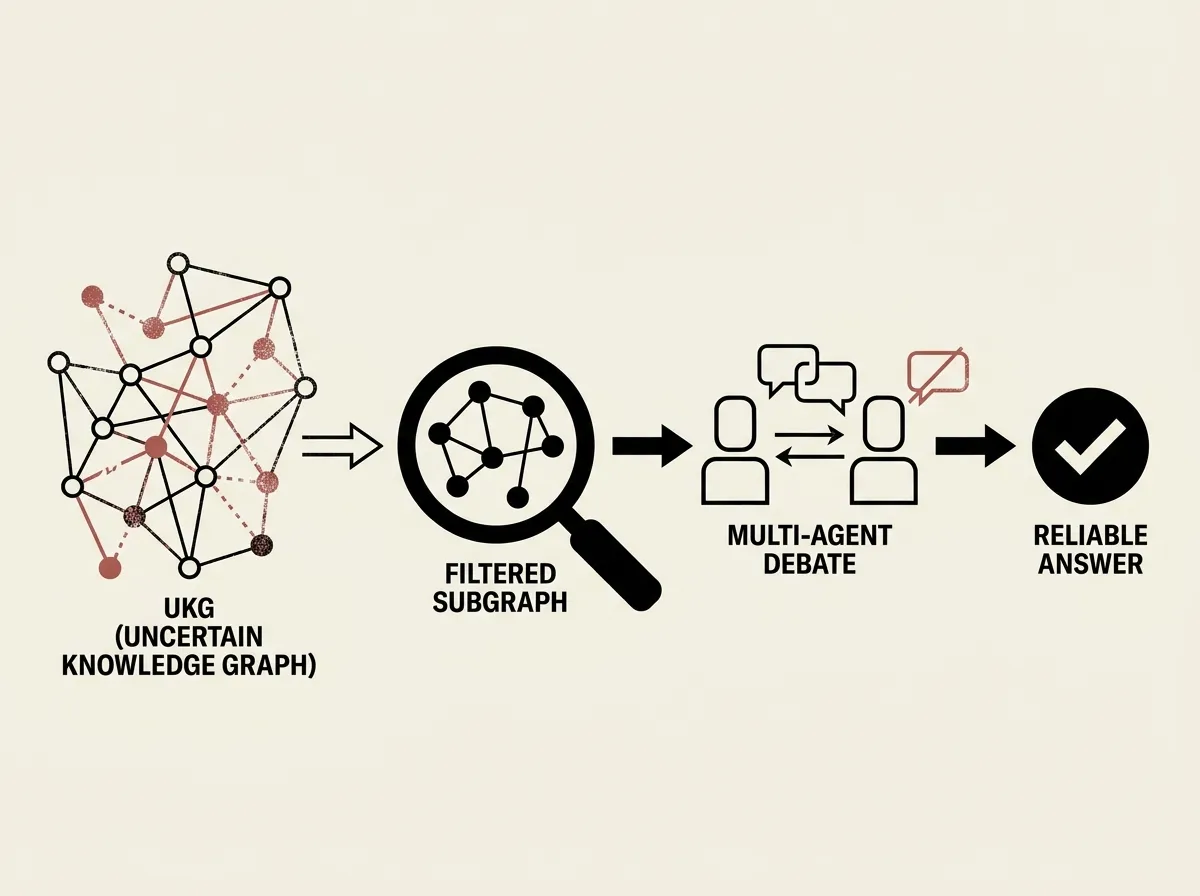
Hallucinations and a lack of specific knowledge plague large language models, especially in question-answering tasks. Traditional knowledge graph (KG) integration often amplifies noise if KGs themselves contain errors.
This paper presents Debate-on-Graph (DoG), a novel framework that uses Uncertain Knowledge Graphs (UKGs) and a multi-agent debate mechanism to provide reliable and adaptive reasoning. DoG first extracts reliable subgraphs from UKGs using a heuristic search, reducing noise.
Then, a Multi-Agent Debate mechanism allows LLMs to collaboratively refine answers, leveraging UKG knowledge while preserving evidence reliability. This approach significantly outperforms existing methods, making it a must-read for anyone building robust RAG or agentic systems.
AIGB-R1 framework enhances AI-Generated Bidding with LLM reasoning
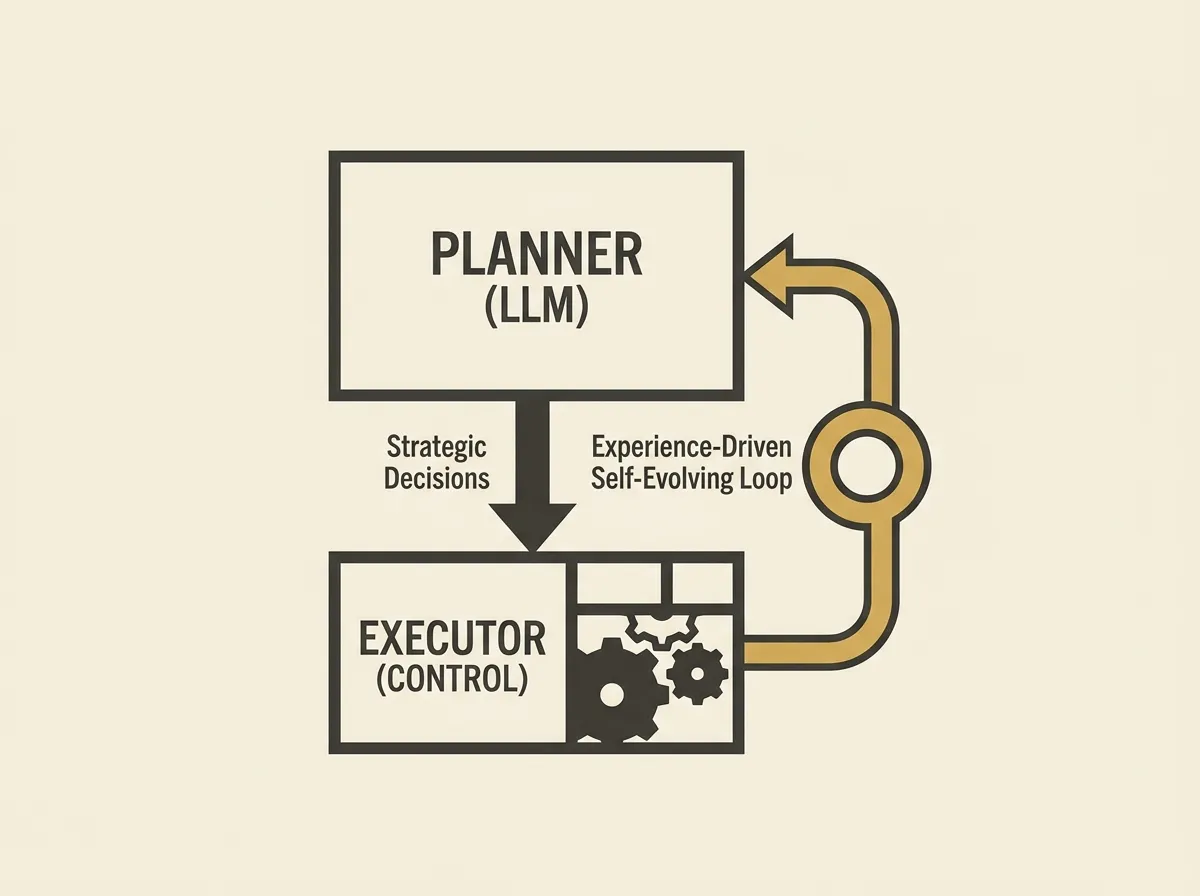
Applying large language models to real-world control systems like auto-bidding is challenging due to issues such as numerical precision, hallucinations, and latency. AIGB-R1 offers a compelling solution through a hierarchical, self-evolving framework.
It decomposes the problem into a high-level LLM-based Planner for strategic decisions and a low-level Executor for fine-grained actions. Crucially, it incorporates an experience-driven self-evolving loop, allowing the system to autonomously explore and optimize strategies over time.
This innovative architecture, along with techniques like Decoupled Group Relative Policy Optimization, provides a blueprint for integrating LLMs into complex, adaptive business systems. It is a robust example of applied AI agent design in practice.
Novel model balances efficiency, comfort, and fairness in multi-agent systems

Designing decentralized multi-agent systems often hits an “optimization trilemma”: how do you balance system-wide efficiency, individual agent comfort, and fairness? It is a complex challenge with no easy answers.
A new paper introduces a novel model that tackles this head-on. It shows how to optimize these three orthogonal objectives in decentralized settings without incurring substantial communication or computational overhead. This is crucial for building truly efficient and equitable collaborative AI systems.
The model was validated on two real-world datasets, demonstrating fairer outcomes while still satisfying individual agent preferences and overall system goals. This work provides concrete insights for engineers building robust multi-agent architectures where human-like values like fairness matter.
Formal law calculates diversity uplift in Large Language Model ensembles
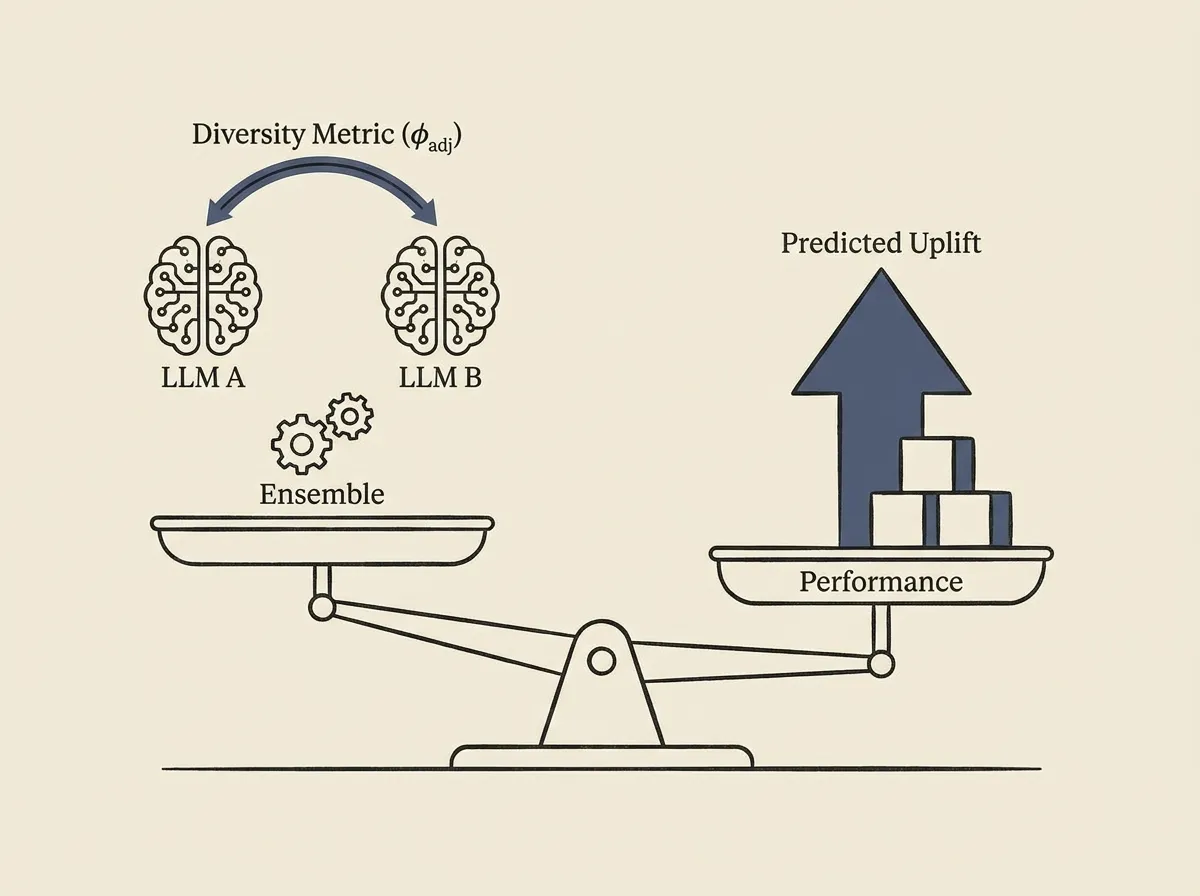
Simply throwing more LLMs into an ensemble does not guarantee better results. The key is quantifying and leveraging “diversity of thought.” A new paper provides an experimentally verified formal law for this.
The research derives an exact decomposition of LLM ensemble lift into “rescue” and “damage” masses, leading to a compact heuristic for predicting uplift. It introduces metrics like accuracy-adjusted correctness correlation ($\phi_{\mathrm{adj}}$) that truly predict ensemble performance, unlike raw correlation.
Tested on 767,520 inferences across ten open-weight models, including an agentic cybersecurity benchmark, the heuristic accurately predicted lift with high Spearman’s $\rho$. This provides engineers with a powerful, data-driven method to design more effective and predictable LLM ensemble systems, moving beyond trial-and-error.
CoEvoP&R uses LLMs to evolve placement objectives for better chip design
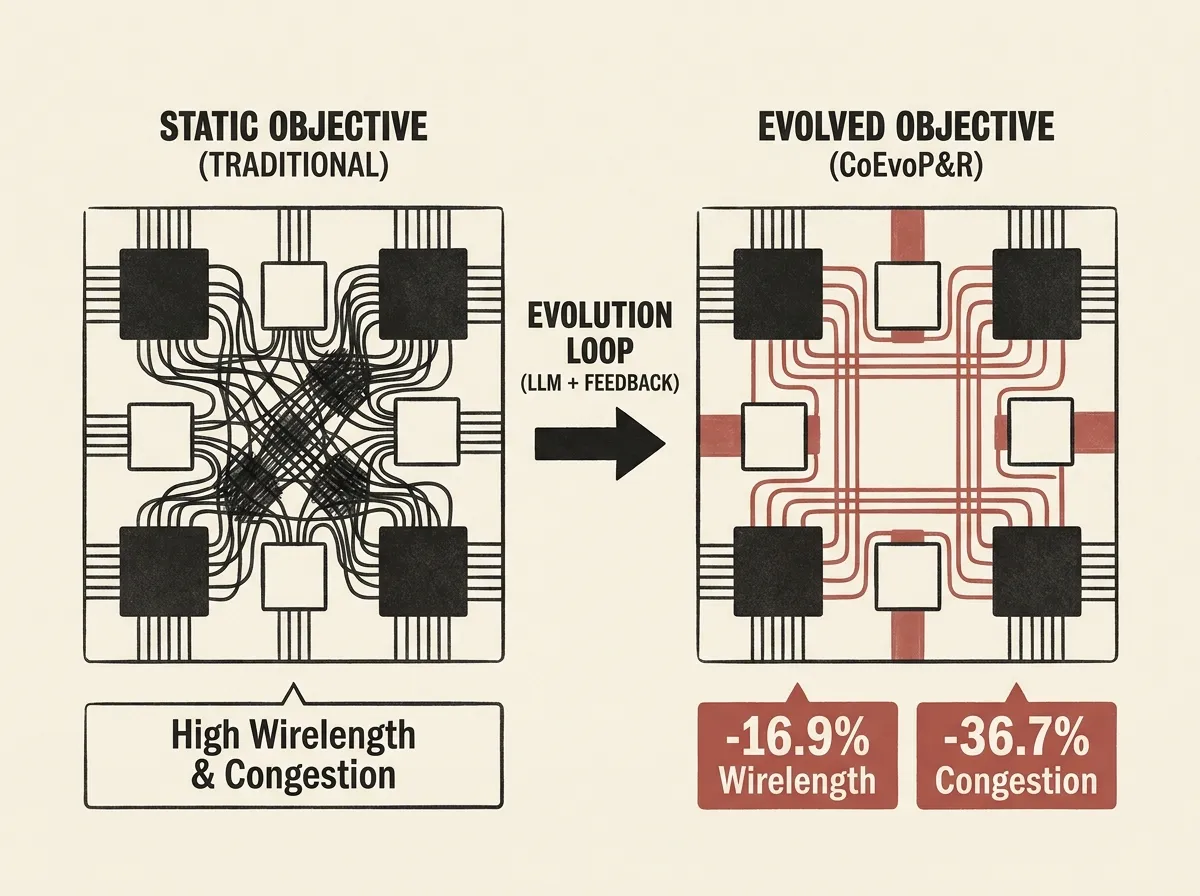
Using large language models to optimize physical chip design is a game-changer.
CoEvoP&R, a new LLM-based framework, automatically evolves analytical placement objectives, moving beyond static human-designed or black-box surrogates. It integrates routing feedback into an iterative evolution loop, allowing the LLM to propose and refine differentiable objectives.
The results are compelling: 16.9% reduction in post-route routed wirelength and 36.7% reduction in congestion across Nangate45 designs. This demonstrates a powerful pattern for how agentic LLMs can tackle complex, multi-objective engineering optimization problems with concrete, measurable impact.
Empirical Grounding Improves LLM Agent Simulations of Population Behavior During Disruptions
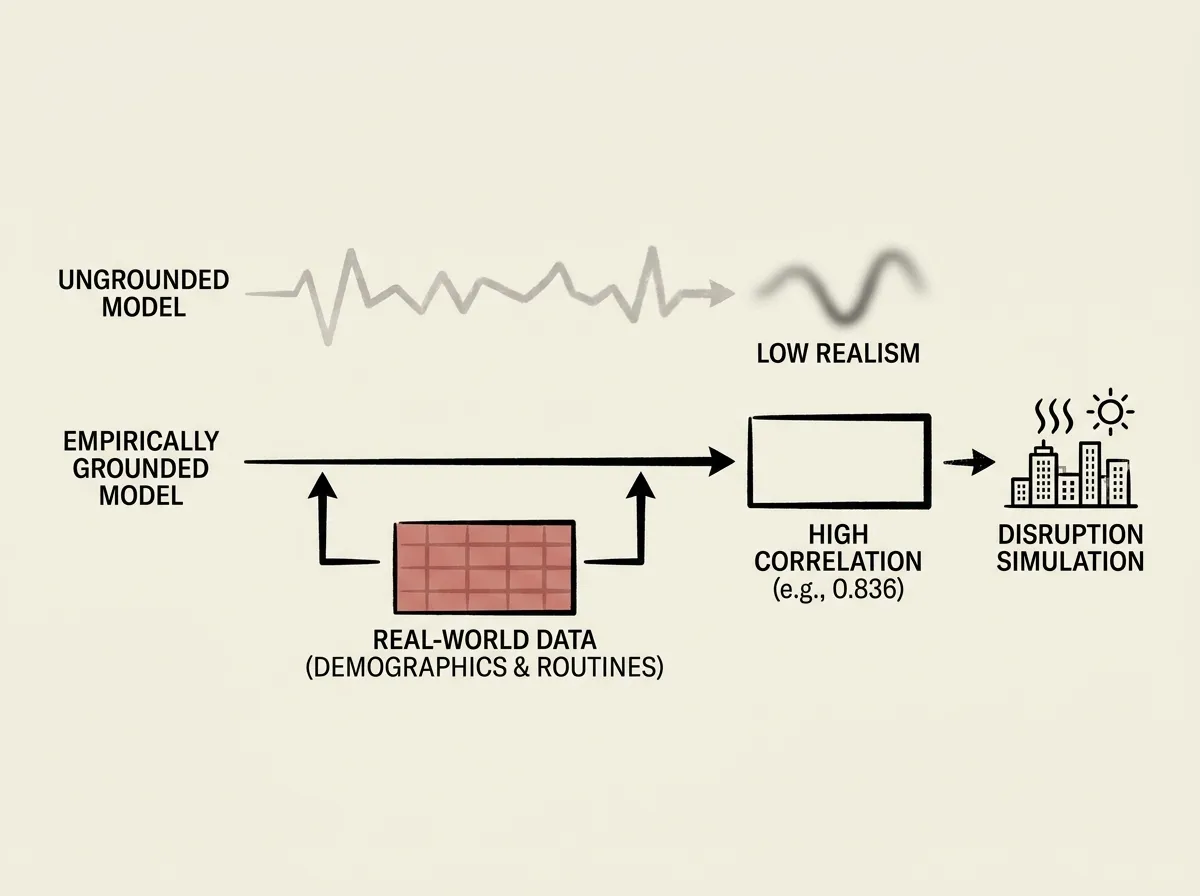
LLM agents are moving beyond hypotheticals into robust, empirically-backed simulations.
This research demonstrates how grounding LLM agents with real-world demographic profiles (American Community Survey) and activity routines (American Time Use Survey) drastically improves their realism when simulating human behavior during disruptions.
For instance, an empirically grounded model increased correlation with observed heatwave activity profiles from 0.349 to 0.836, capturing 46.4% of observed response amplitude compared to 20.6% for an ungrounded baseline. This is a critical step towards using LLM agents for serious planning in areas like disaster response.
EdgeCoInfer optimizes MLLM deployment on edge devices through adaptive granularity
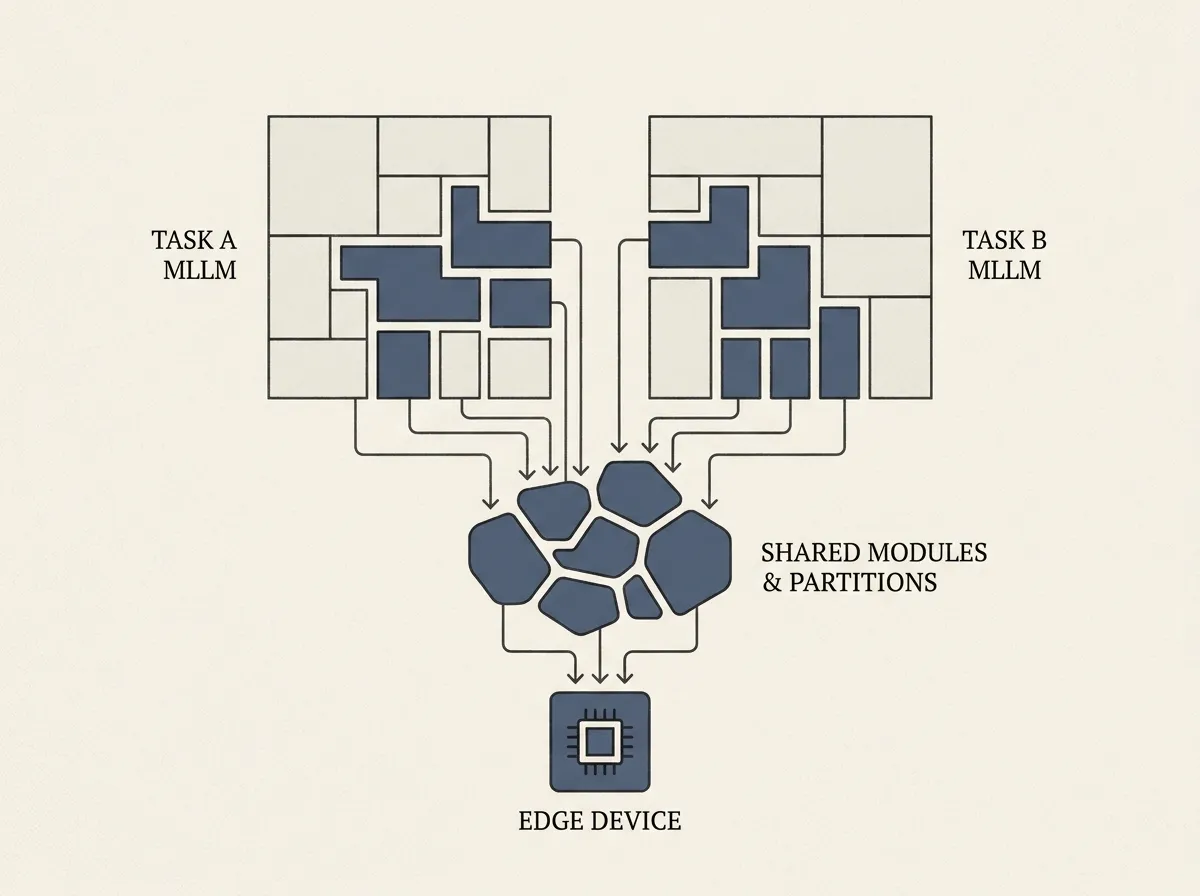
Deploying large multimodal models (MLLMs) on resource-constrained edge devices presents massive challenges. EdgeCoInfer tackles this head-on by intelligently optimizing inference.
The framework co-optimizes inter-model functional module sharing and intra-model fine-grained partitioning. This holistic approach, powered by a Hybrid Evolutionary Hierarchical Reinforcement Learning paradigm, navigates the complexities of multi-task concurrency and hard constraints on edge.
The results are impressive: 100% task completion even in high-concurrency scenarios, a 76% reduction in system cost, and 71.88% memory savings compared to state-of-the-art baselines. This is crucial for anyone building ubiquitous AI services.
LMEdge efficiently orchestrates large language models on edge devices
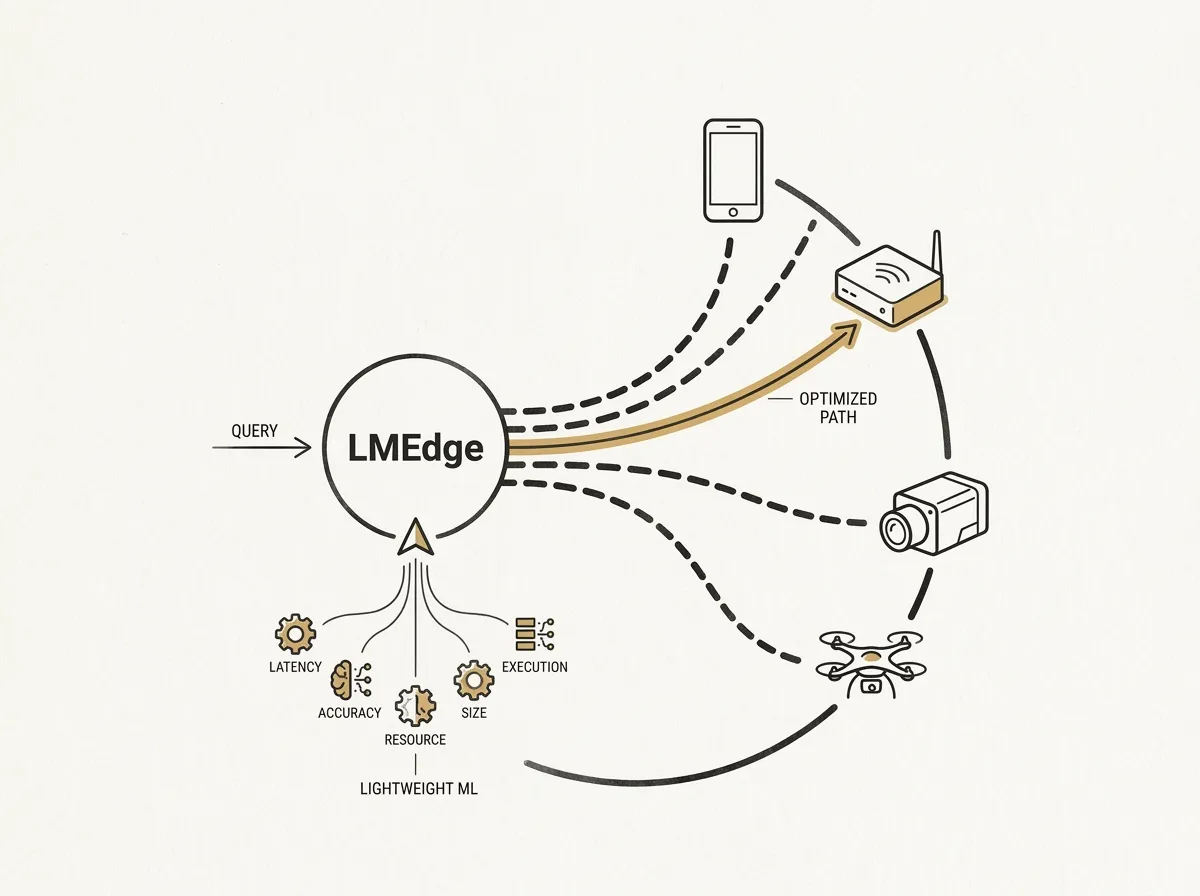
Running LLM services on edge infrastructure demands sophisticated orchestration to meet low-latency and privacy goals. LMEdge provides a robust solution.
It dynamically determines the optimal model configuration (family, size, quantization) and execution placement across heterogeneous edge devices. This is not a static decision; it uses five lightweight ML models to predict query-specific latency, accuracy, resource usage, and response size.
Evaluations on a Kubernetes-based edge testbed with 57 instances show LMEdge significantly reduces latency, preserves accuracy, improves resource utilization, and increases the serving ratio compared to baselines. This is essential for anyone building scalable edge AI services.
Connecting Local LLMs to Scientific Instruments via Model Context Protocol
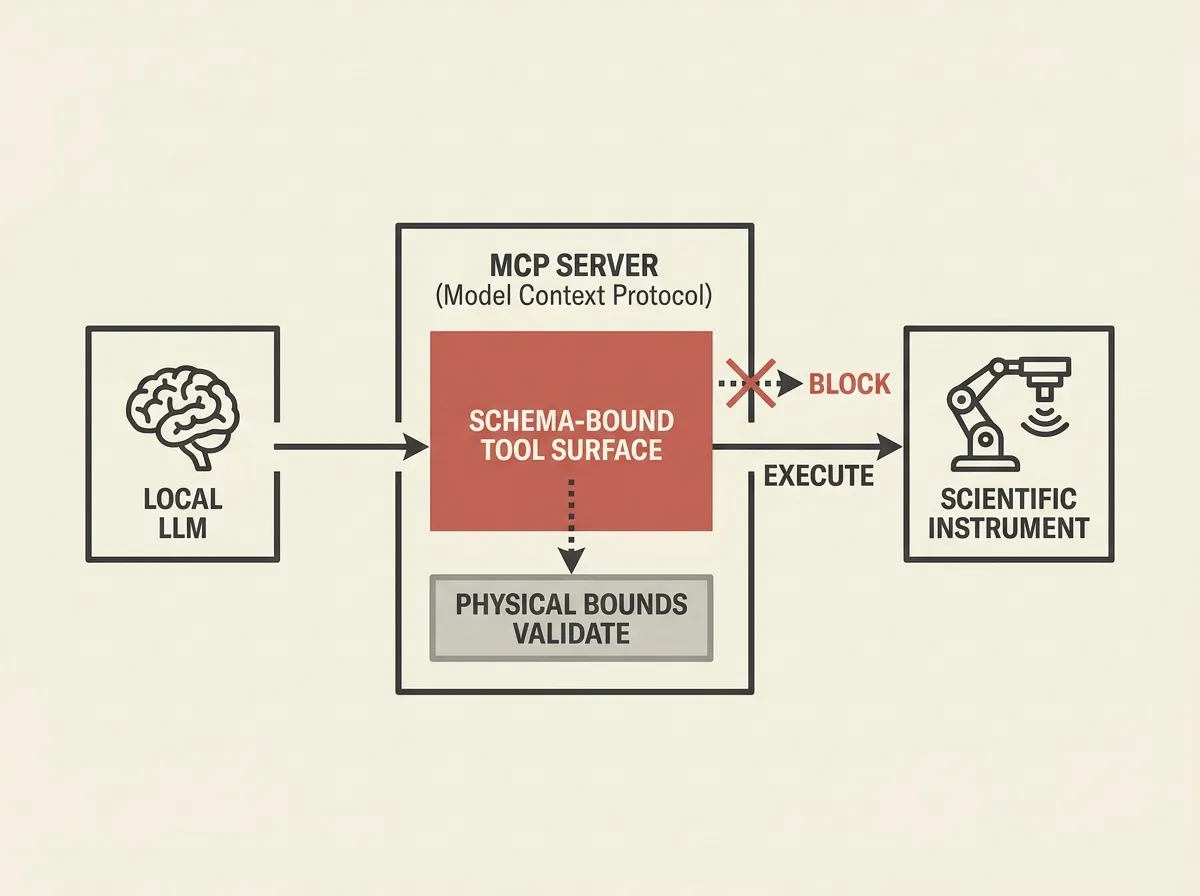
Connecting LLMs to physical scientific instruments is fraught with challenges, from vendor APIs to safety concerns. The Model Context Protocol (MCP) offers a robust solution.
MCP introduces a schema-bound tool surface that validates requests against physical bounds before execution, combined with a vendor-neutral adapter pattern. This modularity cleanly separates LLM reasoning from instrument-side execution, enhancing safety and testability.
By exposing typed tools and skills via a local server, MCP enables closed-loop agentic control using small, open-weight models without cloud dependencies. This is a crucial step for building reliable, autonomous LLM agents in real-world engineering and scientific settings.
MechMem-RTL improves RTL repair by reusing verifier-confirmed records
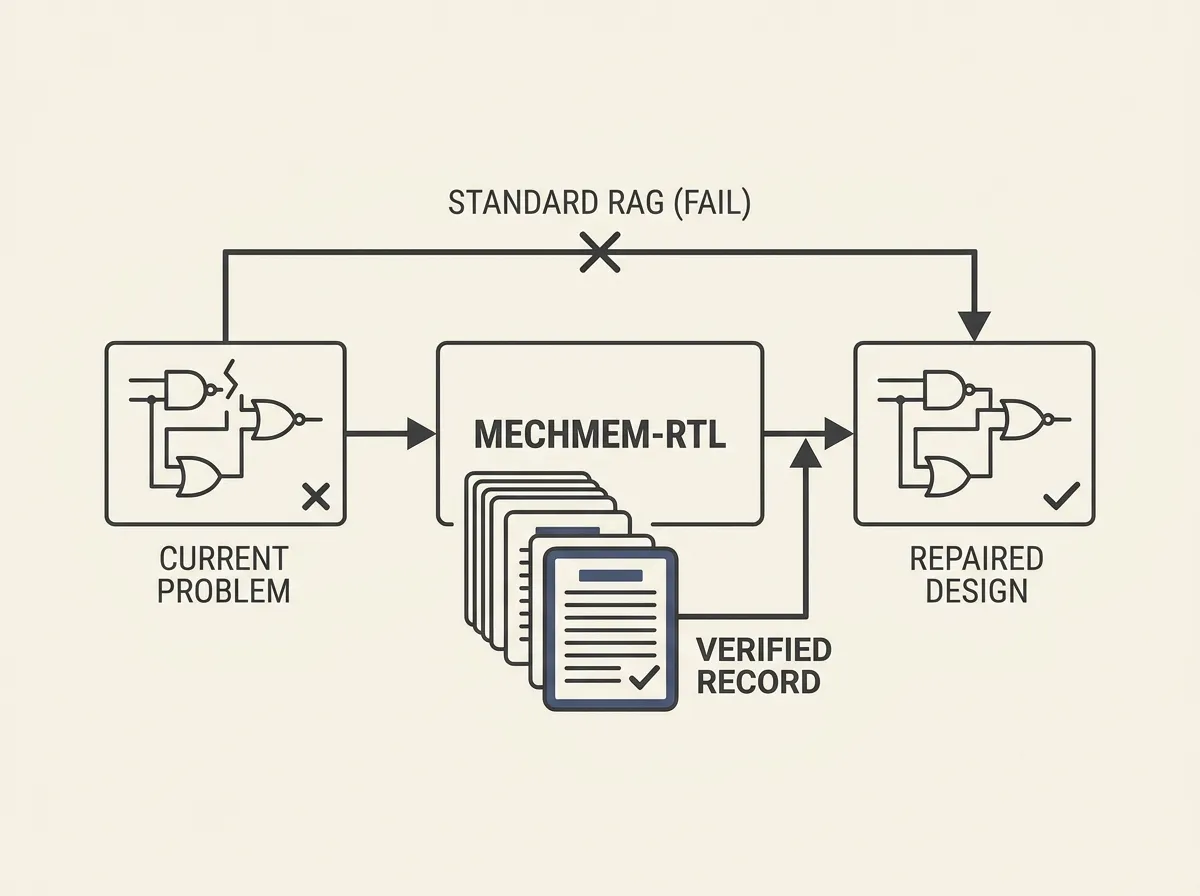
LLMs can repair complex hardware designs, but traditional RAG often fails because natural language struggles to capture cycle-level hardware semantics.
MechMem-RTL introduces a new RAG approach that reuses verifier-confirmed repair records, not just text similarity. It strictly links trigger evidence, diagnosed failure mechanisms, local repair actions, and verification summaries.
This method injects past repair records only when deterministic verifier evidence is compatible with the stored trigger, leading to a significant boost. It successfully resolved 180 out of 288 task-model pairs, dramatically outperforming standard feedback repair (109 pairs) and task-similarity RAG (107 pairs).
This is a smart way to give LLM agents ‘experience’ in critical domains.
Prefactory automates library-adoption refactoring with LLM-synthesized heuristics
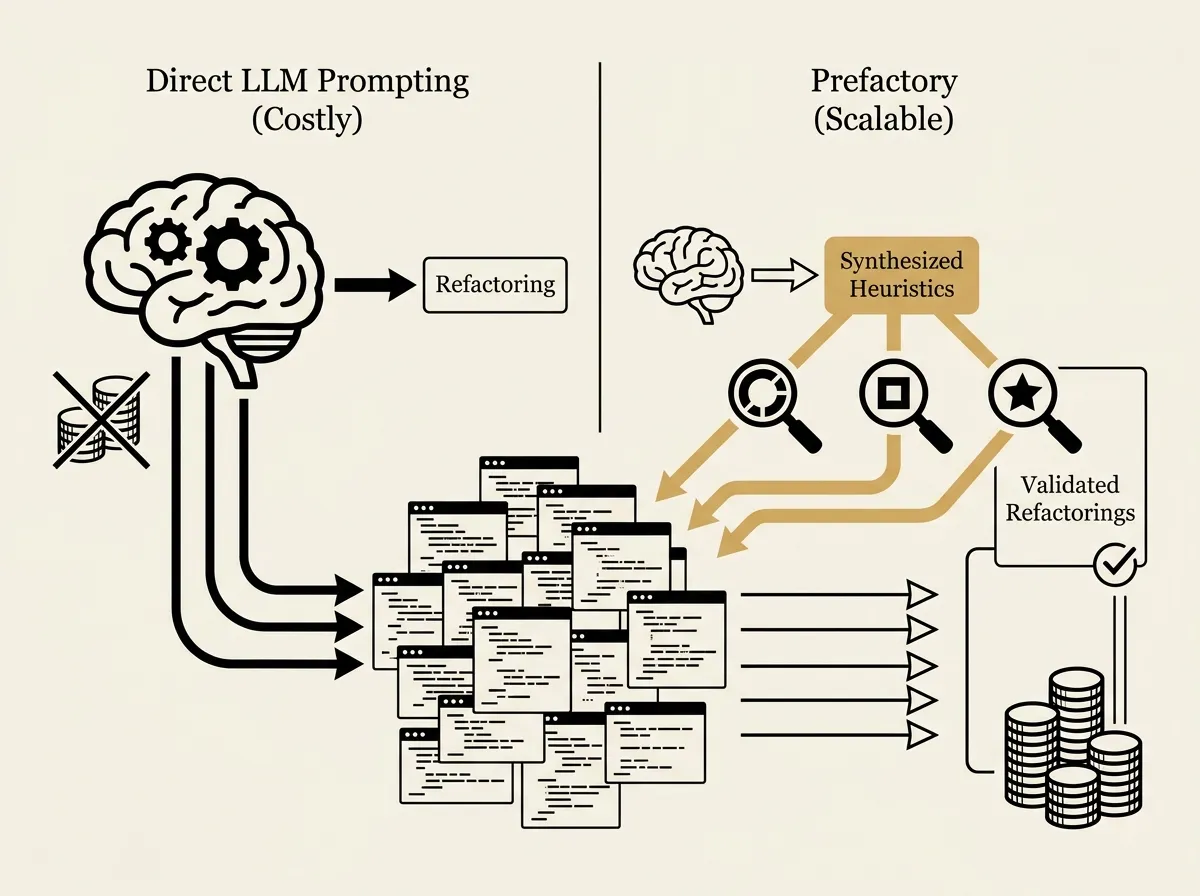
Automating refactoring to replace custom code with library API calls is a huge win for code quality and maintainability, but it is notoriously hard to do at scale because opportunities are often semantically hidden.
Existing tools are limited, and direct LLM prompting is costly and difficult to reproduce. Prefactory introduces a smart solution: it uses an LLM to synthesize executable search heuristics instead of constantly prompting the LLM for every refactoring.
Given a project and target library, Prefactory generates lexical and structural detectors, executes them, ranks candidates, and then uses the LLM to generate refactorings which are validated with tests. It detected 56 function-level opportunities and produced 40 test-validated refactorings, significantly outperforming baselines like Codex CLI.
This is a practical, scalable way to leverage LLMs for engineering practices.
IssueExec improves software issue localization with test suites
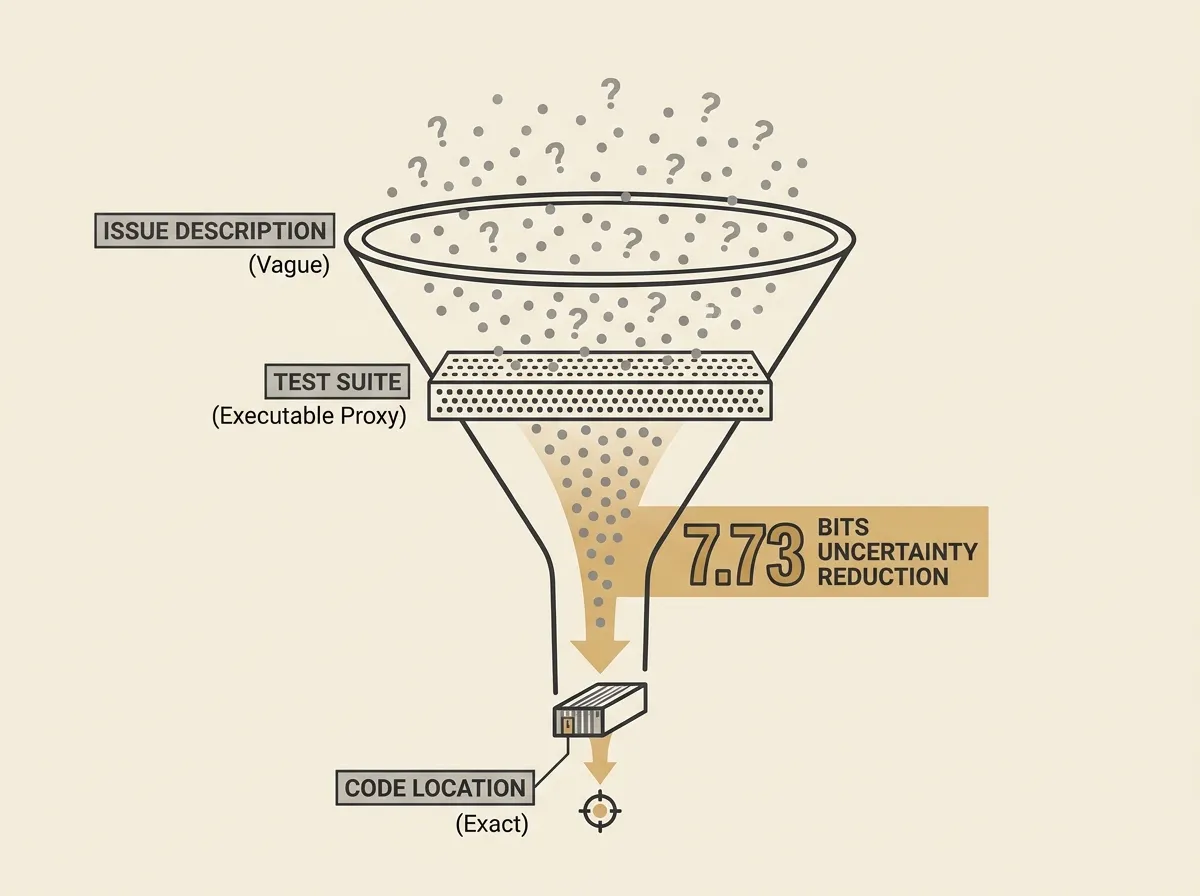
Localizing software issues from vague descriptions to exact code locations is a major bottleneck in software maintenance. Traditional methods often fail due to the inherent abstraction gap between natural language issues and code implementation.
IssueExec proposes using test suites as “executable proxies for requirements.” Their theoretical analysis shows tests can reduce localization uncertainty by 7.73 bits of entropy on average. An empirical study on 18 repositories revealed existing tests cover 96.98% of ground-truth files.
To bridge the semantic gap and filter noise from execution traces, IssueExec uses domain-knowledge-enhanced test representations and hierarchical trace analysis. This approach achieved state-of-the-art performance, improving function-level Recall@1 by 41.57% and resolving 17.72% more issues when integrated into the Agentless pipeline.
This is a significant step forward for developer productivity and automated debugging.
A portable framework predicts function-inlining for compact compilers
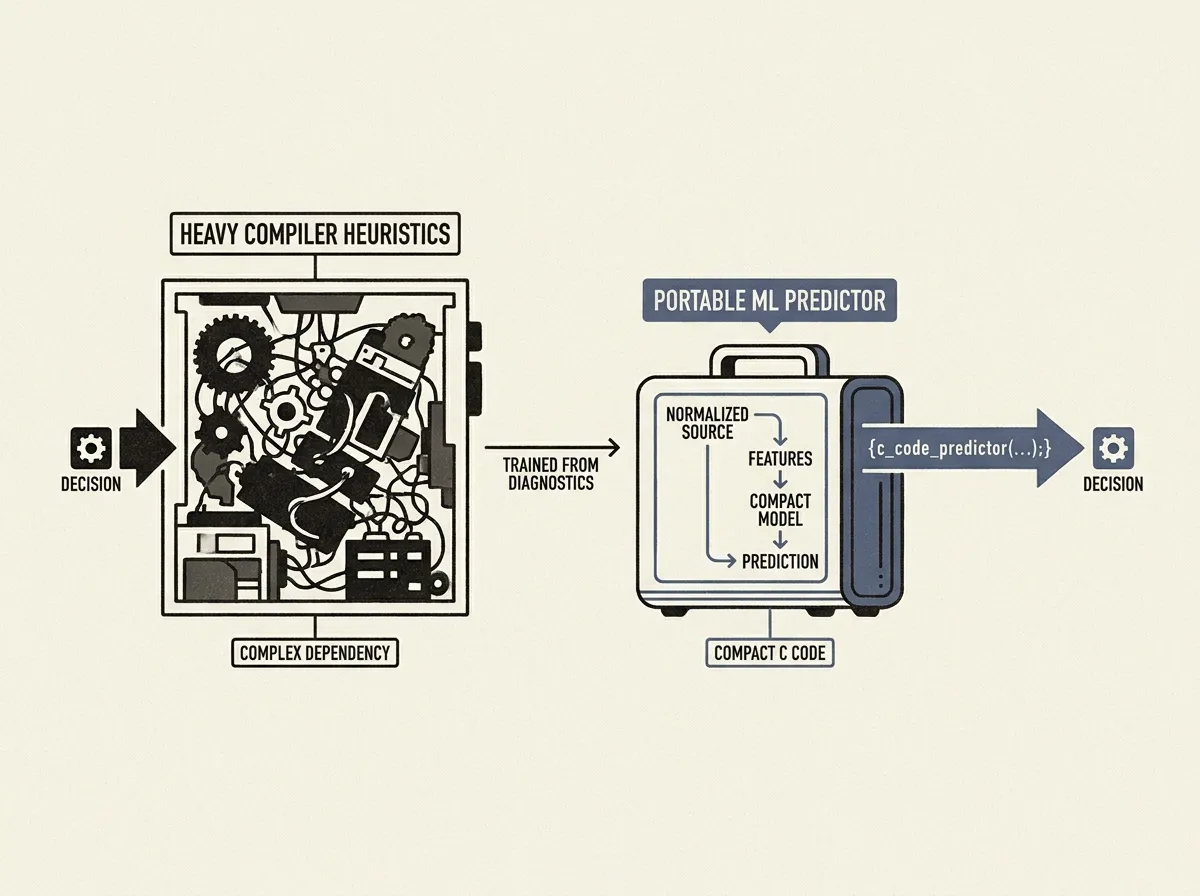
Function inlining is a critical compiler optimization, but decisions are often tied to highly complex, infrastructure-dependent heuristics within massive compilers like GCC or LLVM. This makes them impractical for lightweight compilers, source-to-source tools, or interpreters.
This paper introduces a portable inlining-prediction framework that replaces these industrial heuristics with compact machine learning models. It uses production compiler diagnostics as supervision to train models on scalar features extracted from normalized source snippets.
The trained predictor can then be emitted as ordinary C code, completely eliminating heavy compiler runtime dependencies. Evaluated on 336,938 callsites, a CatBoost model achieved an ROC-AUC of 0.928 and PR-AUC of 0.713, with F1 improving from 0.670 to 0.729.
This is an elegant solution for bringing advanced compiler optimizations to resource-constrained environments.
Deep research agents prone to verification inertia with misleading direct answers
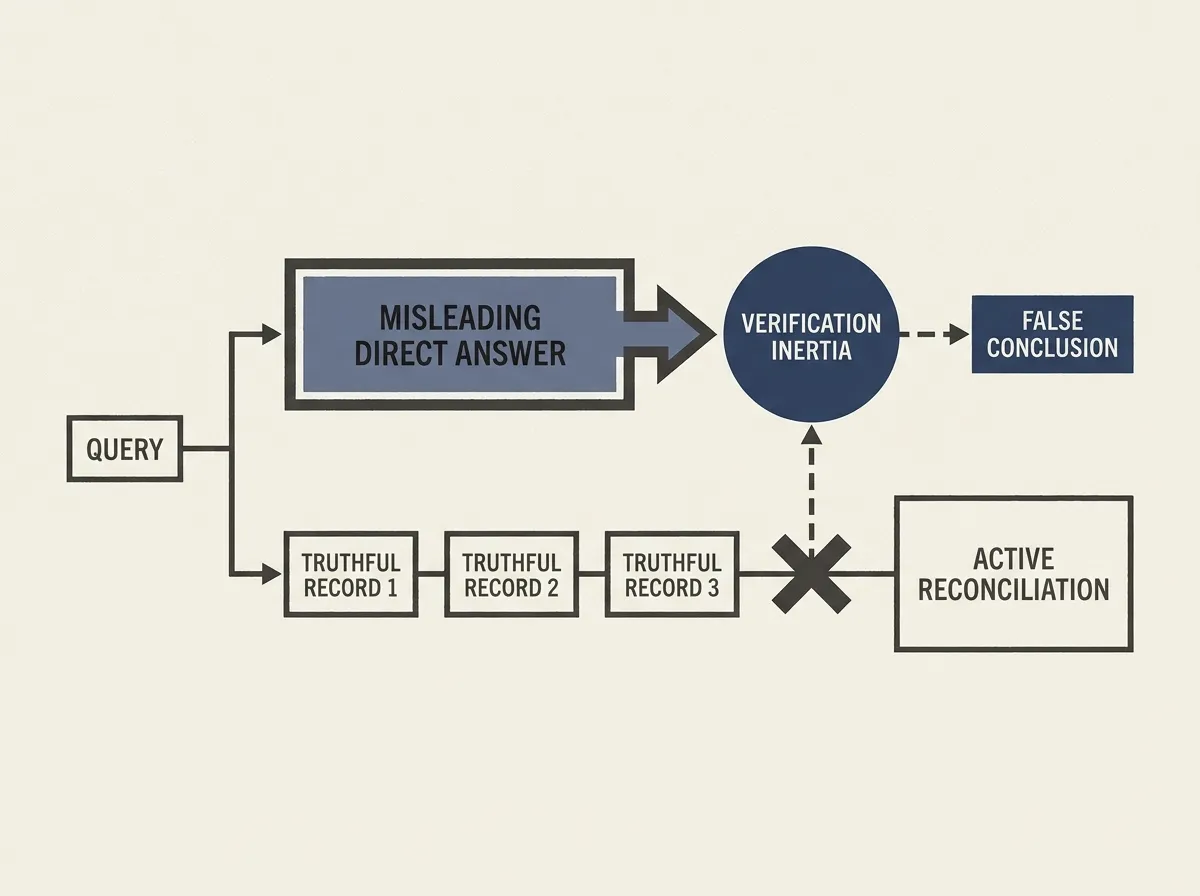
Deep research agents are being deployed to navigate the open web, but what happens when the web contains plausible falsehoods? A new benchmark, DRNOISE, reveals a critical flaw.
Agents, even those with strong performance on clean data, experience massive 66-88 percentage point accuracy drops when a single, ordinary-looking false document is seeded into their search environment. The core problem is “verification inertia”: agents often retrieve truthful records but stop before reconciling the full evidence chain, deferring instead to a direct, but conflicting, answer-like document.
This is not about explicit attacks but everyday noise. Generic verification prompts offer some help, but the gap remains large. For reliable open-web deployment, simply retrieving and citing is not enough; agents need active reconciliation of direct claims with record-level evidence. This insight is crucial for building robust, trustworthy AI agents.
transcribe.cpp provides reliable, cross-platform, accelerated speech-to-text inference
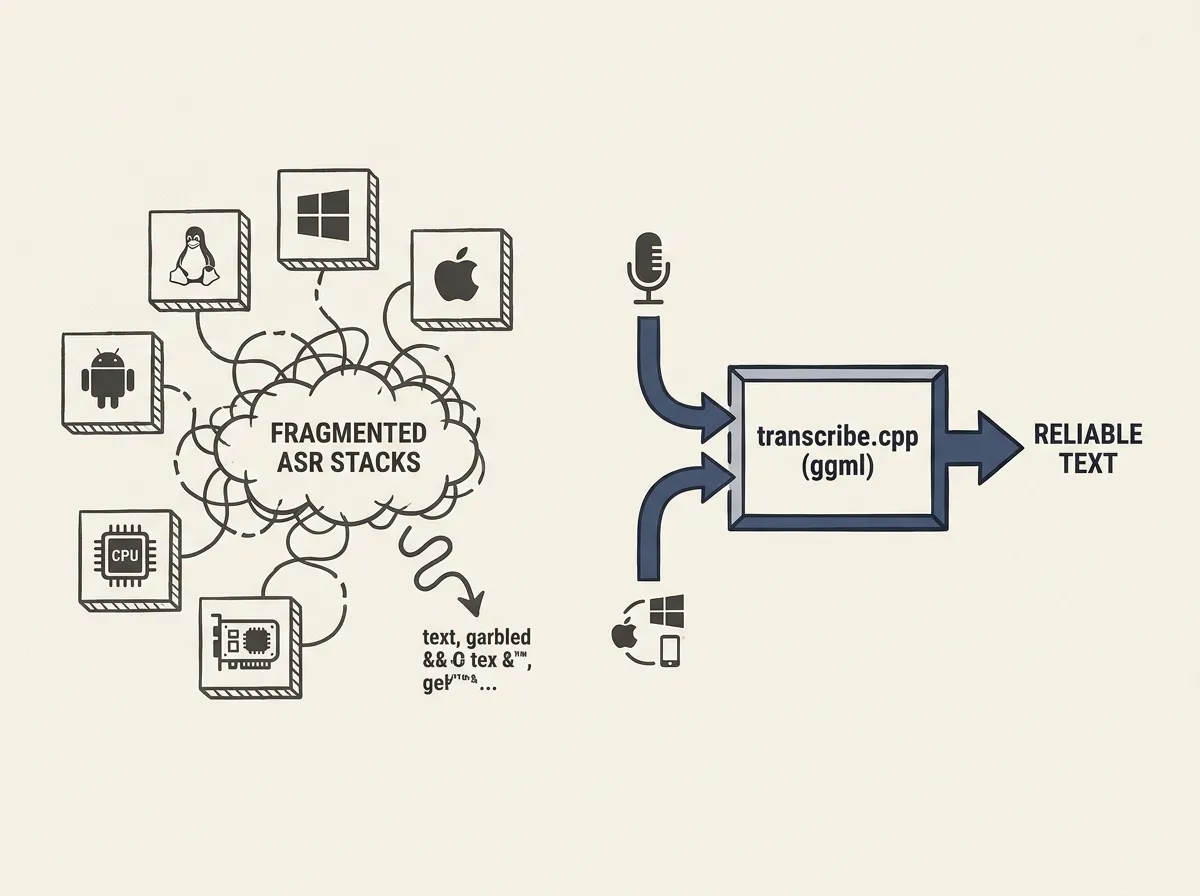
Deploying cross-platform speech-to-text applications with existing ASR inference stacks is often a painful exercise, struggling with performance and distribution. Transcribe.cpp aims to solve this by offering a ggml-based C++ library built for efficiency.
The library emphasizes numerical validation, WER testing, and broad GPU acceleration across platforms (Mac, Windows, Linux). It addresses the practical challenge of embedding performant AI models without the overhead of larger frameworks like PyTorch.
This offers a genuinely useful tool for engineers building applications that require robust, efficient, and cross-platform speech-to-text capabilities.
Evidence confirms Claude Code uses Bun ported to Rust
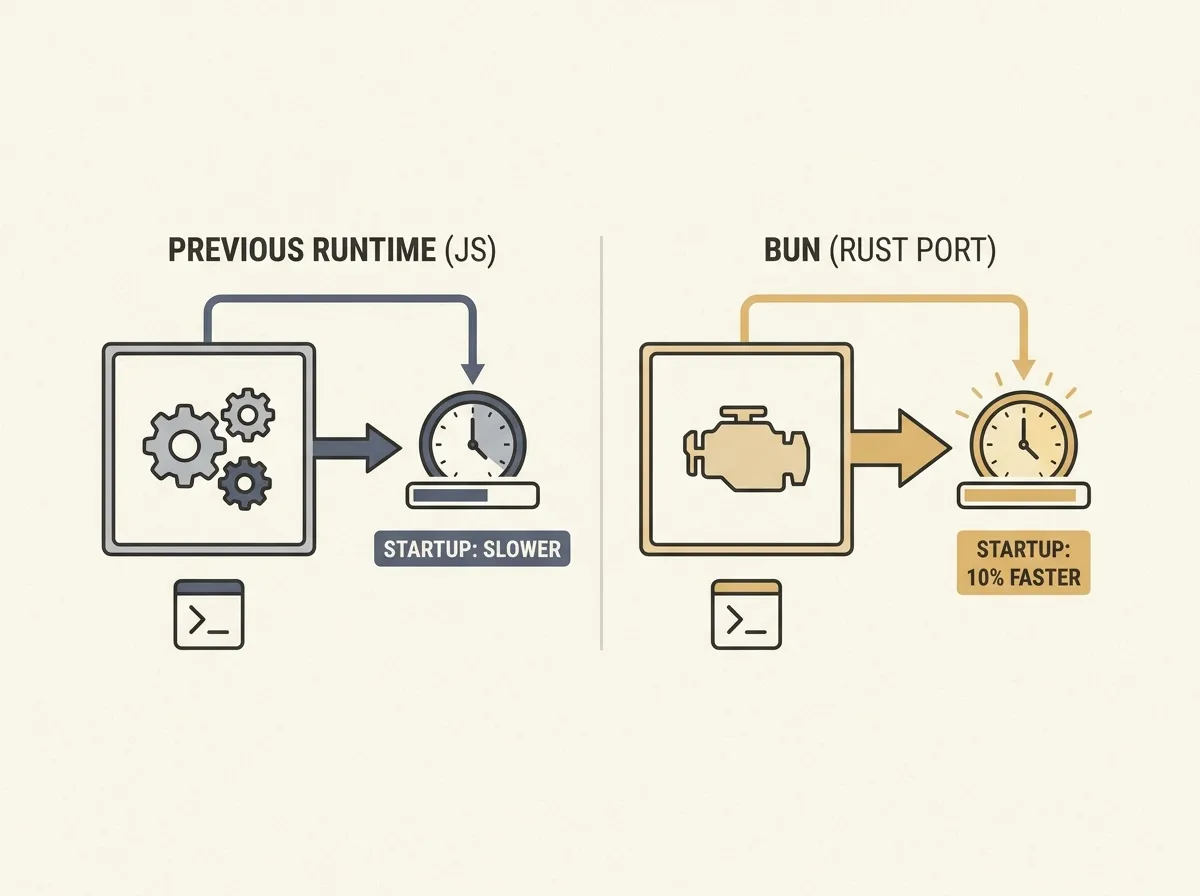
Claude Code, a tool used by millions, silently switched its underlying JavaScript runtime to Bun’s Rust port. The result? A 10% faster startup time on Linux, a quiet victory for performance engineering.
This move highlights a growing trend: even established systems are seeking significant performance gains by re-implementing core components in Rust. It also shows that not all impactful changes need to be loudly announced to deliver real user benefits.
It is a compelling reminder that foundational architectural decisions, like language choice for critical components, directly translate to tangible improvements for users.
Hardware's reputation for being difficult is overstated
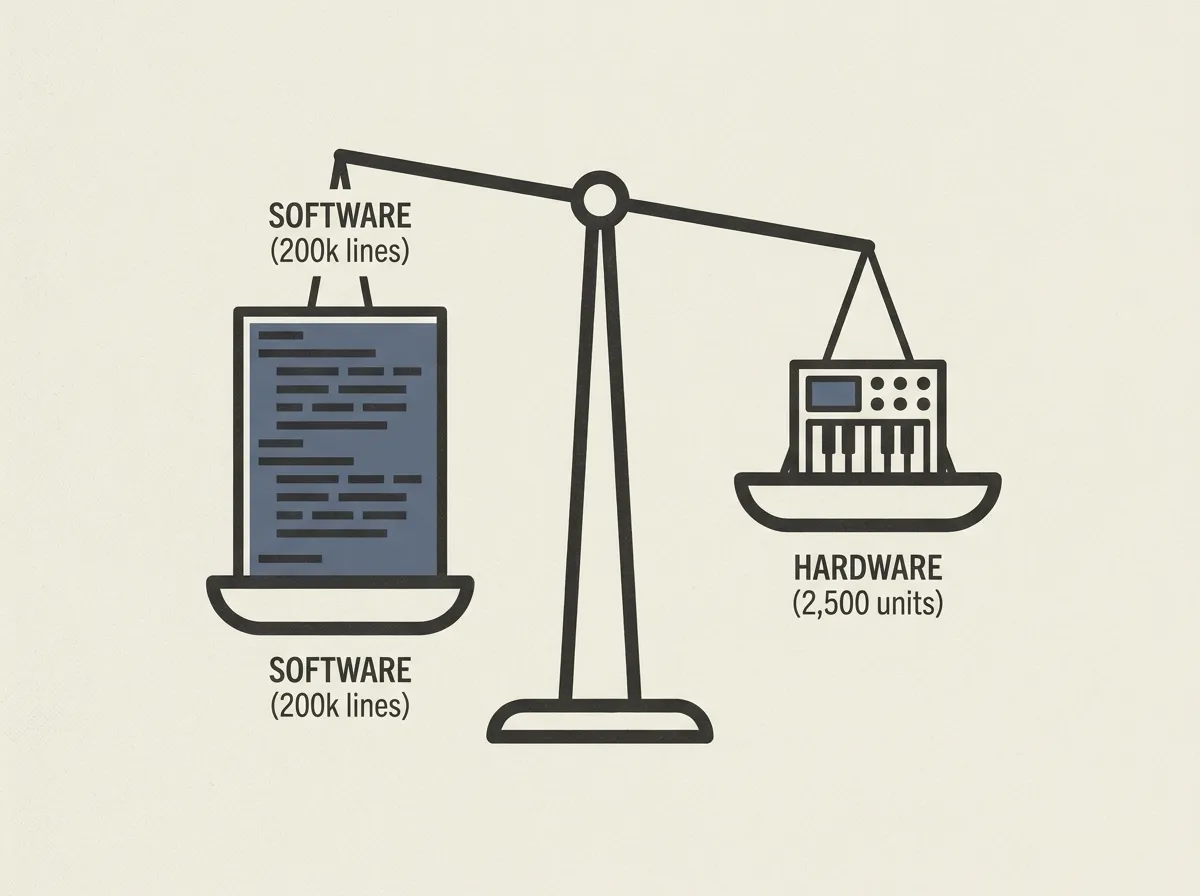
For many software engineers, the world of hardware development feels daunting and complex. But one engineer, after successfully building and selling 2,500 MIDI recorders, found a surprising truth: hardware was “not so hard.”
His experience reveals that the most challenging part of the entire project was the 200,000 lines of firmware, app, and manufacturing tooling software. This flips the common narrative, suggesting that the well-understood complexities of software often outweigh the perceived difficulties of electronics and manufacturing.
This insight is a valuable lesson for any engineer contemplating a venture into a new technical domain, reminding us to critically assess where the true challenges often lie.
AI Mania Is Eviscerating Global Decision-Making
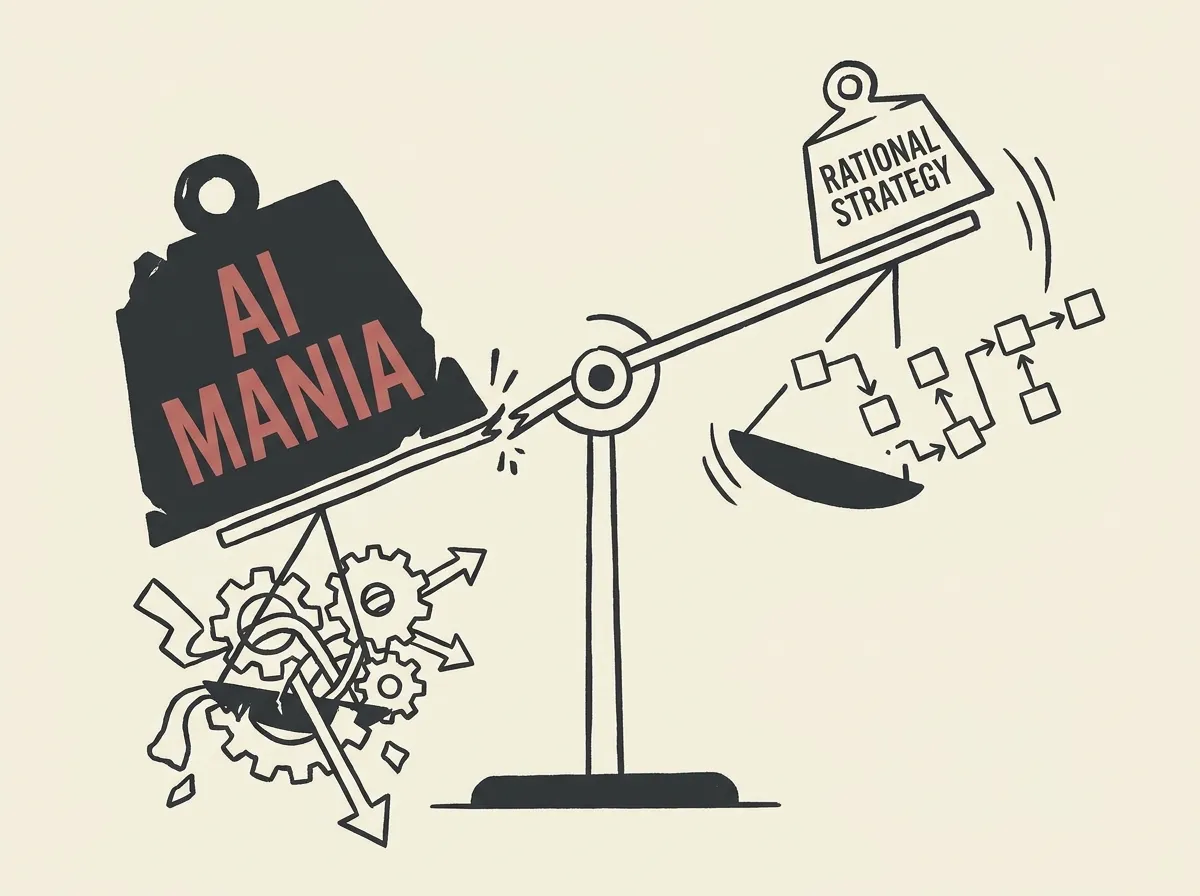
The current “AI mania” is not just about innovation; it is also “eviscerating global decision-making,” leading to irrational investments and “mass psychosis” in many organizations. This critical perspective challenges the unbridled enthusiasm often seen in the industry.
Drawing on personal observations and industry voices like Mitchell Hashimoto, the author argues that companies are making poor choices, often driven by fear of missing out rather than sound strategy. This results in failed AI investments and a difficult environment for rational conversations.
For senior engineers, understanding this counter-narrative is crucial for navigating organizational AI strategies and making truly effective technology choices, rather than succumbing to hype.
Minecraft 26.3 Snapshot 4 switches to SDL3 for window management
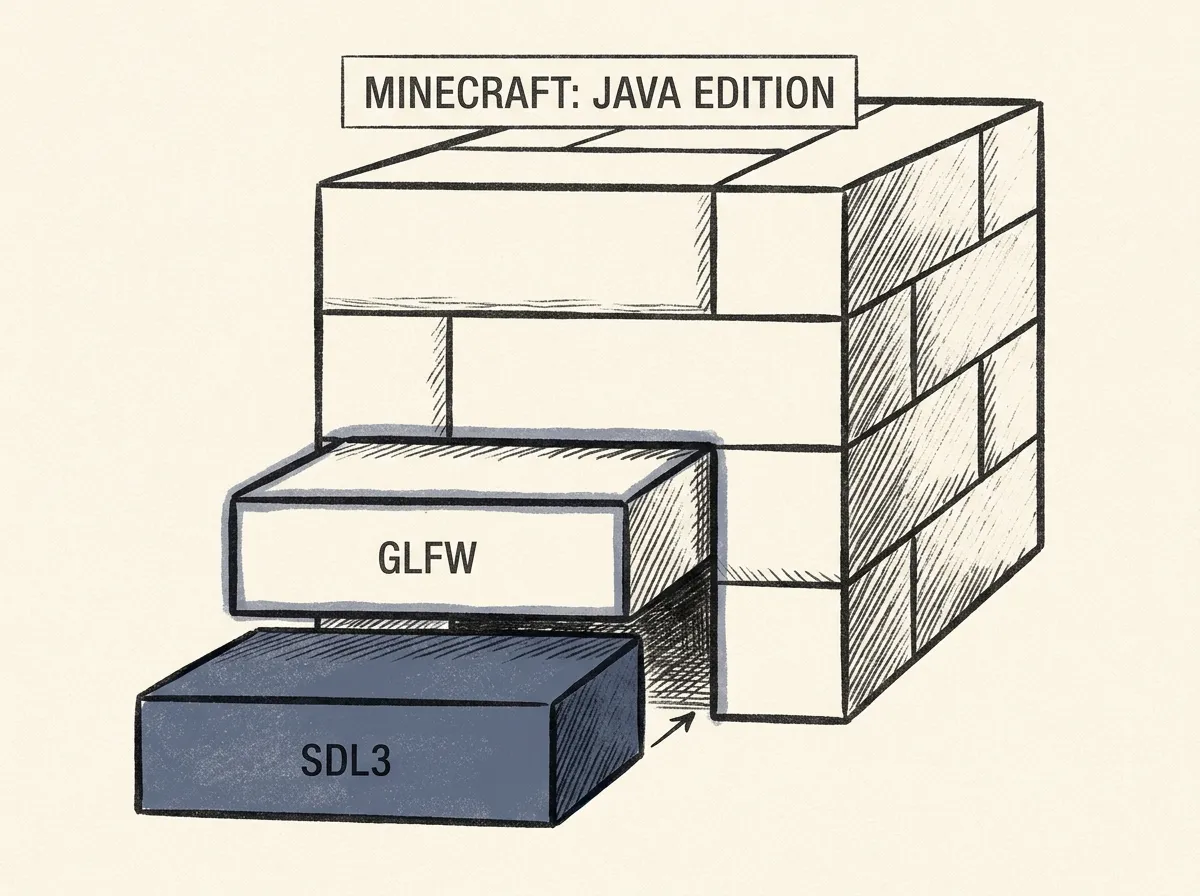
Minecraft: Java Edition has undertaken a substantial architectural change, migrating its core window management, input, and platform integration from GLFW to SDL3. This is not a trivial upgrade for a game with its scale and history.
This shift addresses fundamental platform layer challenges, impacting everything from fullscreen modes on various operating systems to key binding logic. It demonstrates how even mature, widely-adopted software must continuously evolve its foundational dependencies to improve performance, compatibility, and user experience.
It is a compelling case study for engineers considering large-scale library migrations and the complexities involved in ensuring seamless integration across diverse environments.
Castor casts real web video streams to TVs in full quality
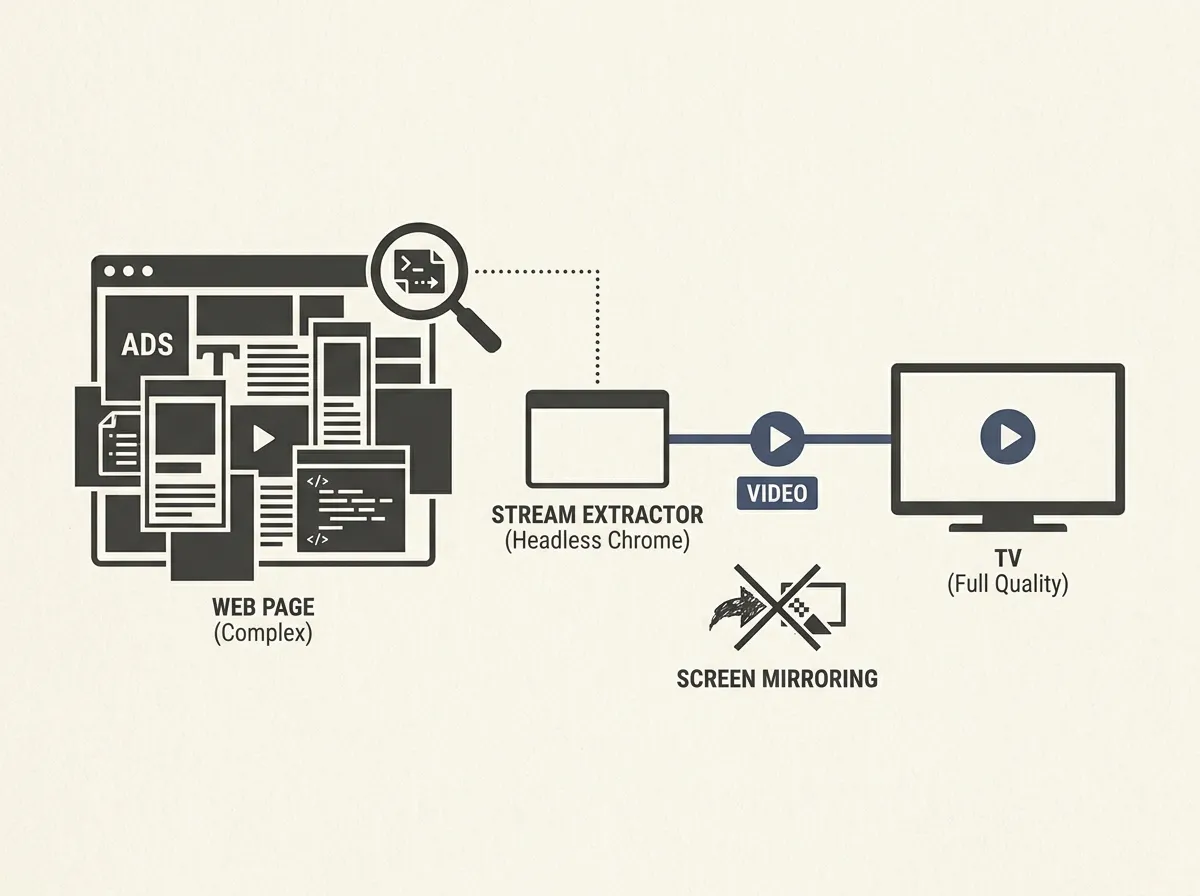
Streaming arbitrary web video to a TV often involves clunky screen mirroring or limited native support. The open-source Castor project offers an ingenious solution by leveraging headless Chrome and the DevTools Protocol to extract, transcode, and cast real video streams.
This project demonstrates a smart way to bypass content restrictions and optimize streaming quality. By programmatically interacting with web pages and monitoring network traffic, Castor can identify the actual video stream, allowing for full-quality casting and even on-the-fly subtitle burning.
It is a fantastic example of using existing tools in a creative, powerful way to build a robust media streaming utility.
Kimi K3 Pauses New Subscriptions Due to High Demand
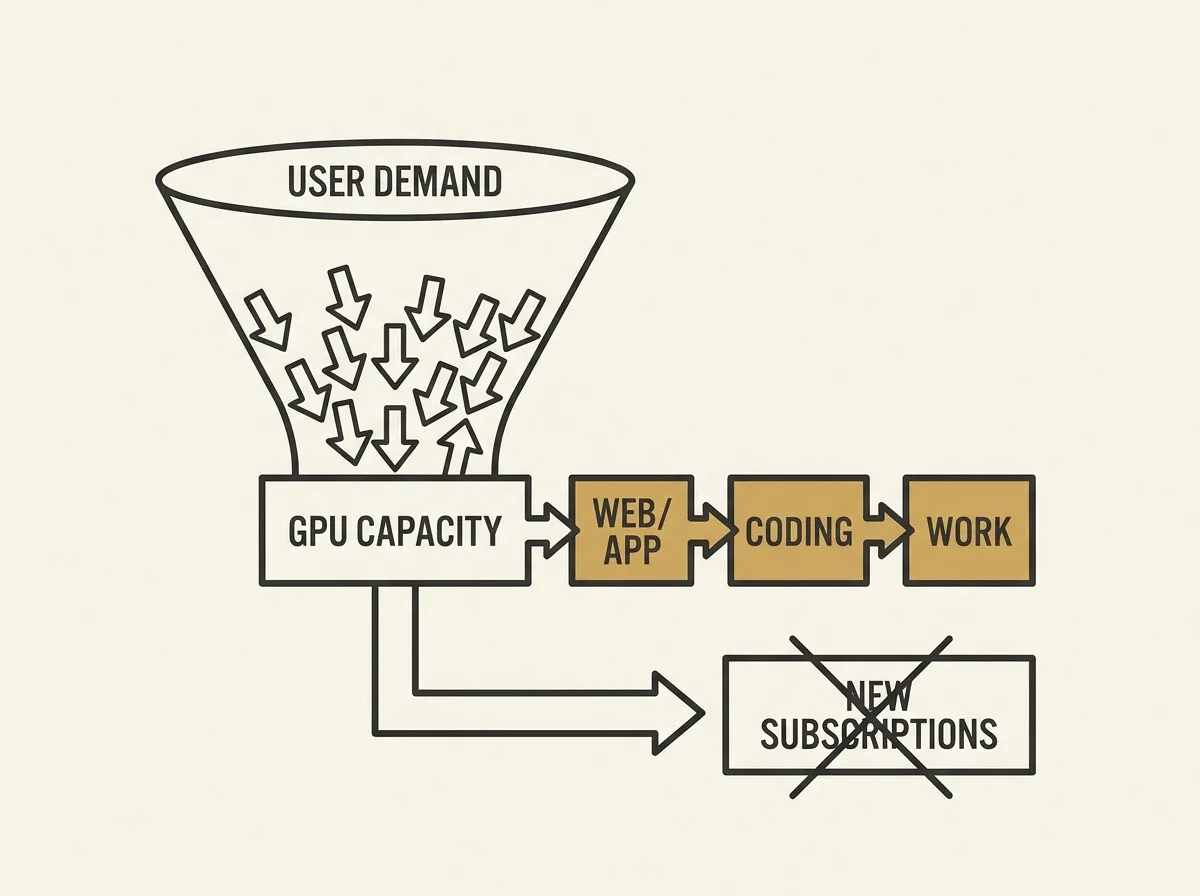
The compute crunch for AI models is very real. Moonshot AI has had to temporarily suspend new subscriptions for its Kimi K3 model because demand outstripped their current GPU capacity.
This is not just a marketing stunt; it is a clear signal about the intense infrastructure demands and scaling challenges involved in running large language models in production. Companies are literally running out of GPUs to serve user requests.
Their solution includes pausing new users and splitting memberships into focused plans (web/app/work vs. coding workflows) to better manage compute allocation. It is a pragmatic approach to ensure service quality for existing users while scrambling to add more capacity.
This situation underscores the critical role of efficient LLM infrastructure and resource management in applied AI, offering a candid look at the challenges faced by even major players in the field. The scaling problem is far from solved.
Clever hacker fits 537,000 domains in tiny ESP32 ad-blocking dongle
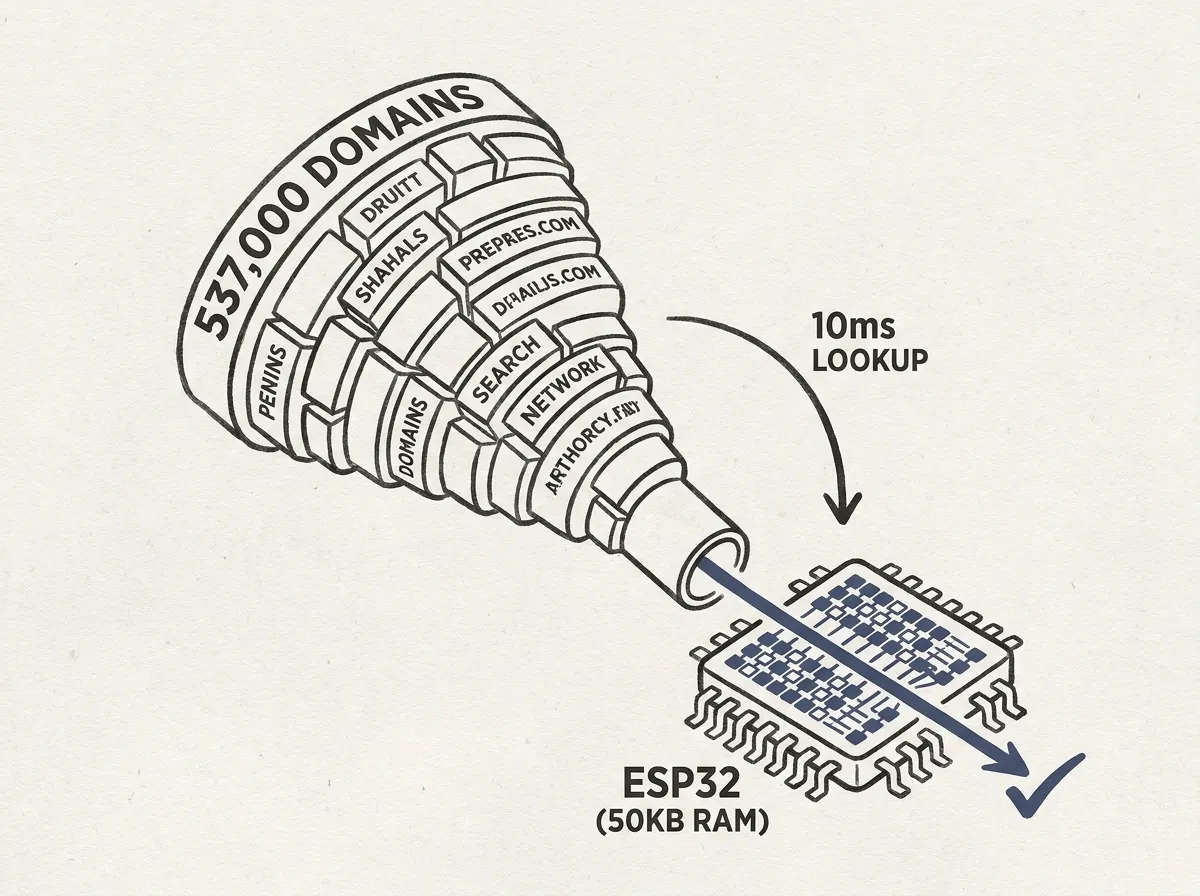
Imagine fitting half a million domains into a $5 device, performing ad-blocking lookups in just 10 milliseconds, all while consuming a mere 50KB of RAM. This is not a fantasy; it is what one clever hacker achieved with an ESP32.
This project is a masterclass in extreme optimization and efficient engineering. It demonstrates how intelligent data structures and algorithms can overcome severe hardware constraints, a valuable lesson for any system designer or embedded engineer.
For those building scalable systems or working with limited resources, the techniques employed here - like highly optimized hash tables or compression - offer actionable insights. It makes you reconsider what is truly possible with minimal hardware.
Resourcefulness and efficiency remain paramount.
Biggest Probabilistic Computer Turns Noise Into Answers
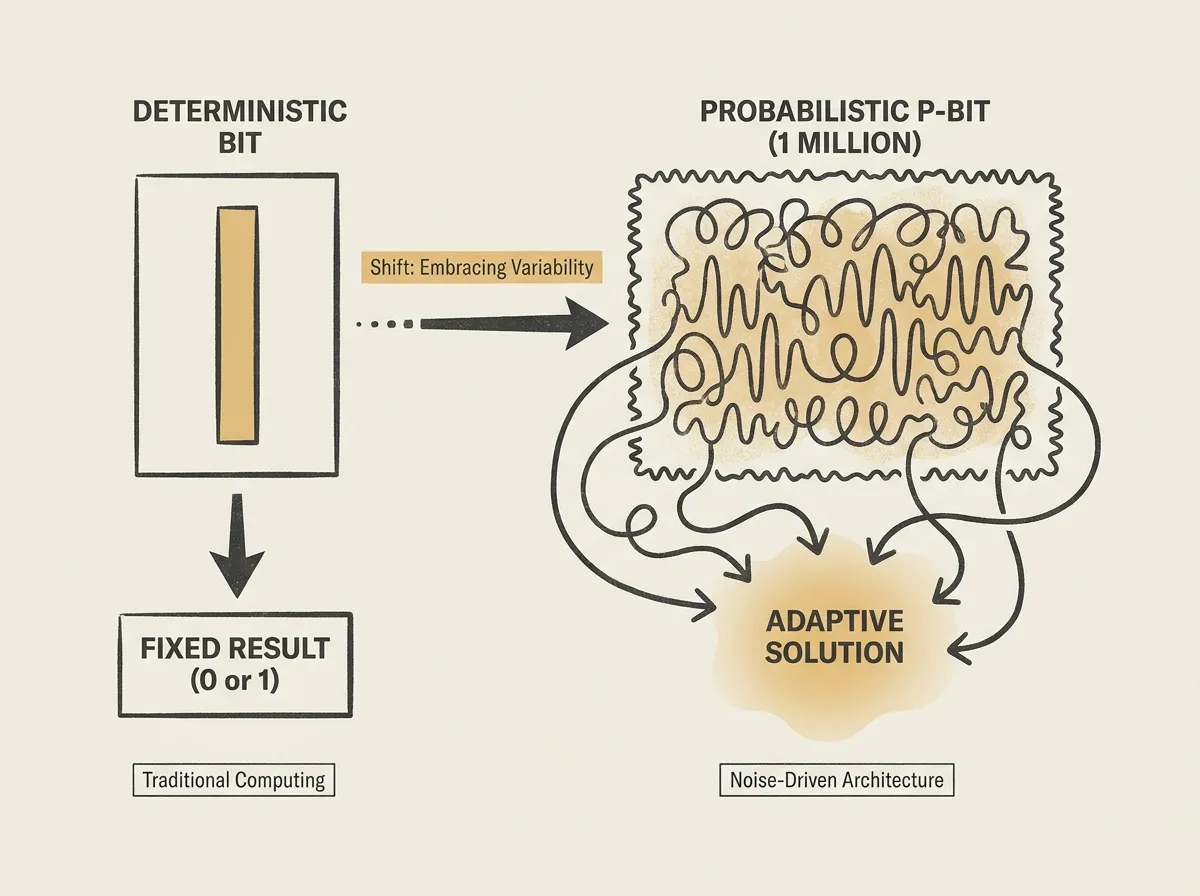
The world’s largest probabilistic computer just hit 1 million p-bits, demonstrating a radical shift in how we might tackle some of computing’s toughest challenges. Instead of fighting noise, this architecture embraces it to find solutions.
This approach moves beyond the deterministic bits of traditional computing, leveraging probability and inherent randomness. Imagine solving complex optimization problems or designing new AI hardware where inherent variability is a feature, not a bug.
This development could open doors to entirely new classes of algorithms and systems, fundamentally altering our approach to certain computational tasks in the applied AI landscape.
An Intel Itanium emulator successfully boots Windows operating systems
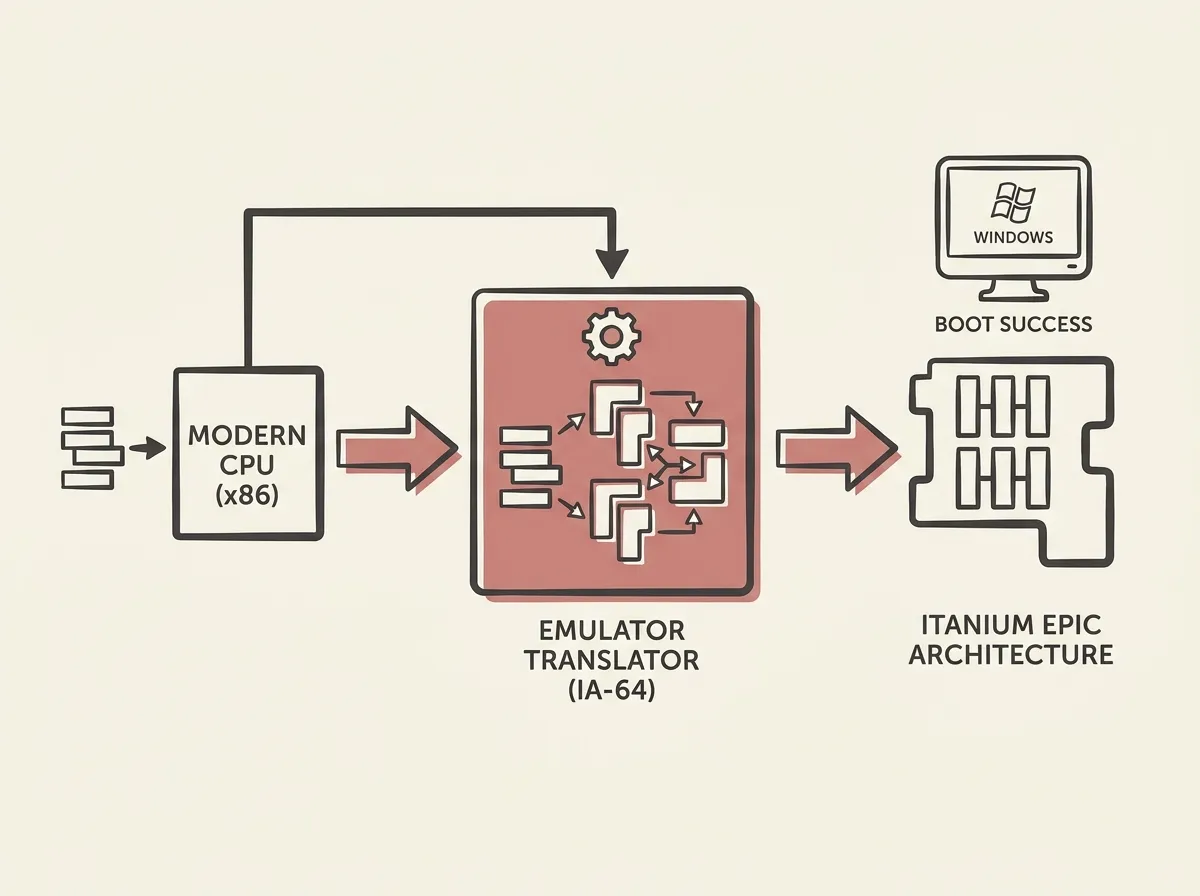
A new emulator can now boot Windows on an Intel Itanium (IA-64) machine, a remarkable feat of systems engineering given the architecture’s complexity and historical obscurity. This is not just a throwback; it is a deep dive into emulation mechanics.
Successfully emulating a highly complex, non-x86 architecture like Itanium with its unique EPIC (Explicitly Parallel Instruction Computing) design reveals significant challenges in instruction set translation, memory management, and peripheral emulation. It offers a rare look at how historical hardware interacts with operating systems at a low level.
Understanding such emulation efforts can deepen your appreciation for modern CPU design, hypervisors, and the intricate dance between hardware and software, even if Itanium itself did not achieve widespread success.
Apple M-chip strategy shifts to M7 for major AI acceleration
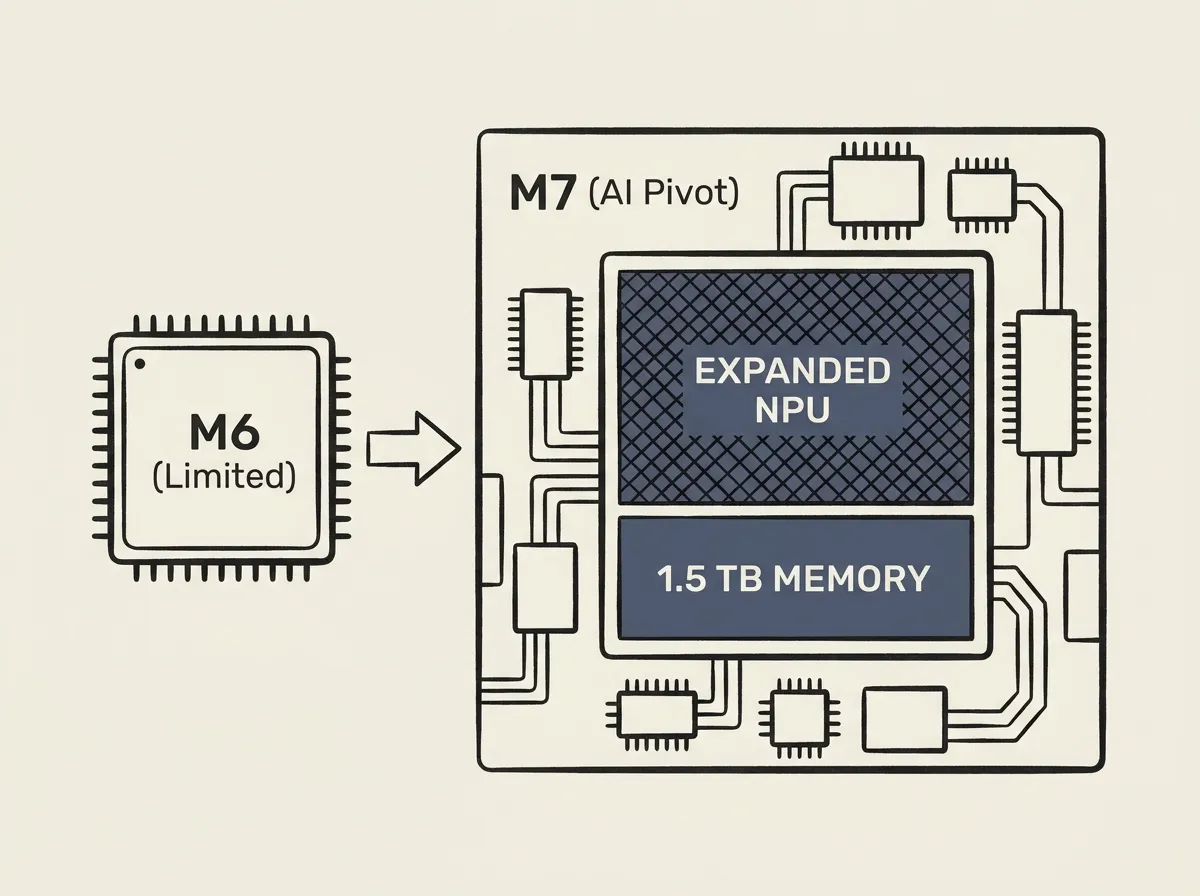
Apple is reportedly skipping the M6 chip generation to jump straight to the M7, signaling a major architectural pivot towards on-device AI. The forthcoming M7 series is expected to support an unprecedented 1.5 TB of unified memory, a capacity not seen since the Intel Mac Pro.
The core innovation lies in significantly accelerated local AI capabilities, with substantial improvements to the integrated Neural Processing Units (NPUs). This strategic move aims to bring Apple’s local AI performance closer to what is expected from dedicated AI hardware like Nvidia’s Blackwell chips.
This shift highlights the growing importance of powerful local inference for AI applications and could profoundly influence how future client-side AI is designed and deployed.
Google's Gemini 3.5 Pro AI model faces delays from internal struggles
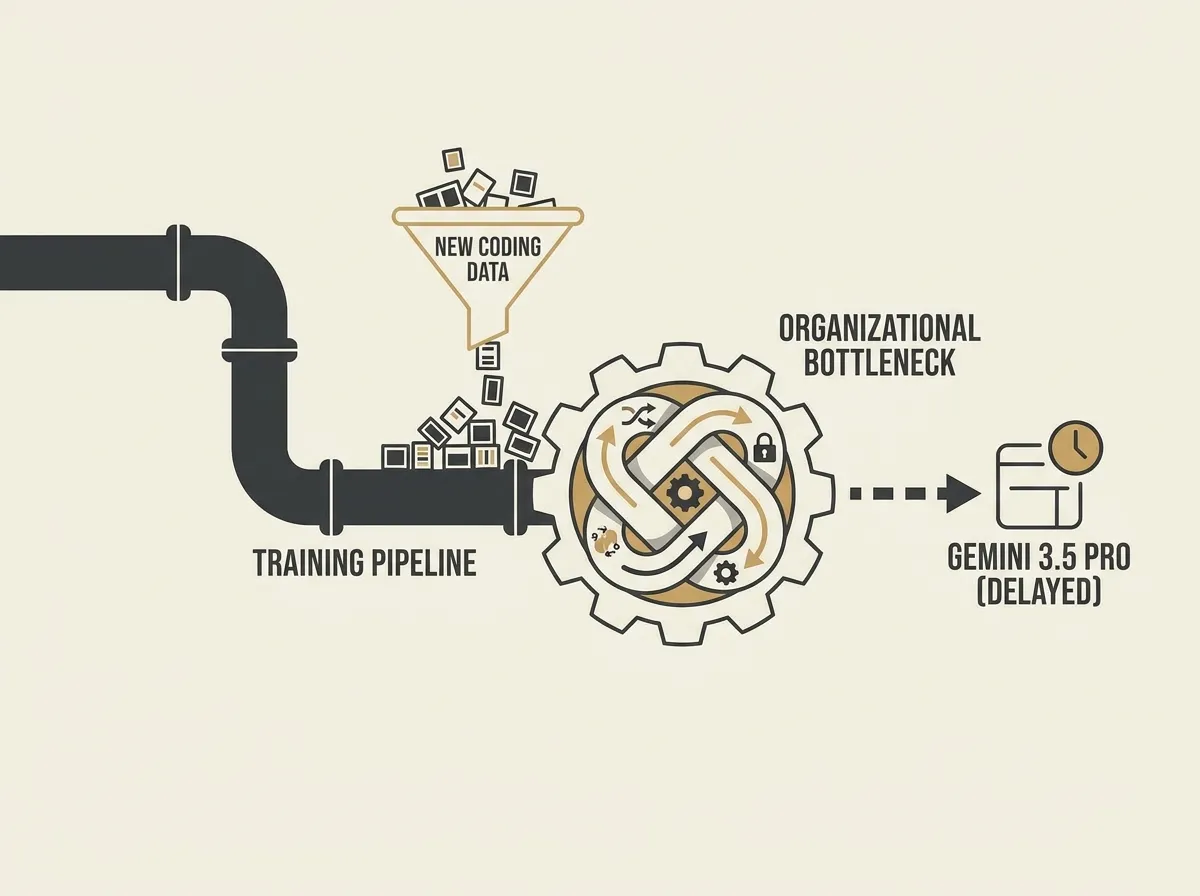
Google is reportedly facing significant delays with Gemini 3.5 Pro, and the reasons highlight real-world struggles in large-scale AI development. Apparently, coding capabilities are a major hurdle, with internal teams clashing and engineers expressing frustration.
This is not just about a technical snag; it is a window into the organizational complexities of building foundational AI models. The article points to multiple layers of stakeholders and a vast product portfolio that complicates release cycles, echoing challenges many senior engineers face when integrating new tech across established systems.
Interestingly, Google reportedly updated training data for coding skills, but the results were disappointing. This suggests that simply feeding more data is not always the solution, and model capabilities can be harder to improve than anticipated.
These are the unseen realities of the AI race, showing that even industry giants grapple with fundamental issues in applied AI and engineering execution.
Paramount-Warner Bros Merger Delayed by Antitrust Lawsuit
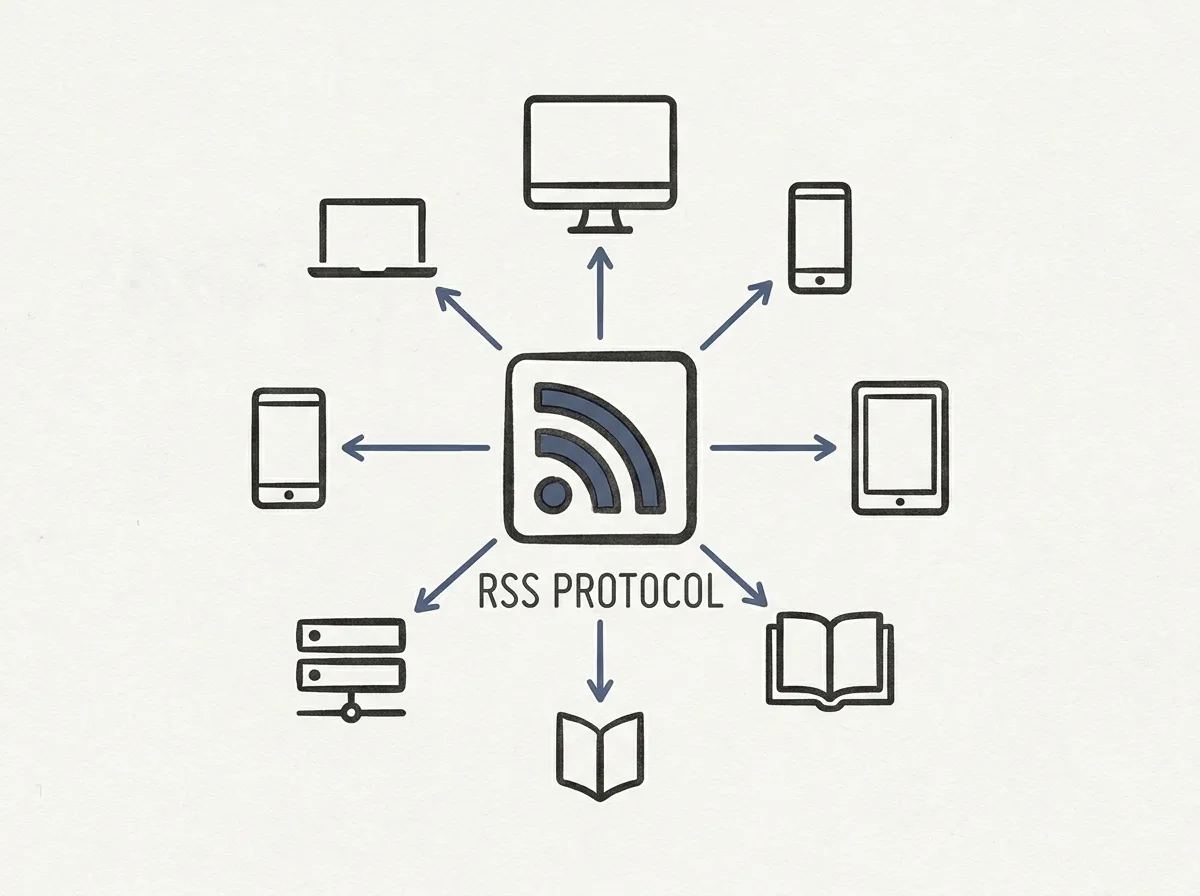
Imagine a social network where the underlying protocol is simply RSS. That is precisely what Textcaster aims to deliver, demonstrating a remarkably clever approach to building distributed communication.
Instead of custom APIs and centralized infrastructure, Textcaster leverages the ubiquitous RSS standard for content sharing and interaction. This design choice simplifies the technical stack significantly, promoting interoperability and decentralization by default. It means your content is already in a format that can be consumed by a vast array of tools.
For senior engineers, this is a fantastic case study in leveraging existing, proven standards to solve modern problems, rather than always building from scratch. It highlights how focusing on simple, robust protocols can lead to elegant and resilient system designs, offering a refreshing perspective on scalability and openness in social platforms.
This is smart system design using an old, reliable friend.
Setting up a self-hosted dynamic DNS with Knot DNS on macOS
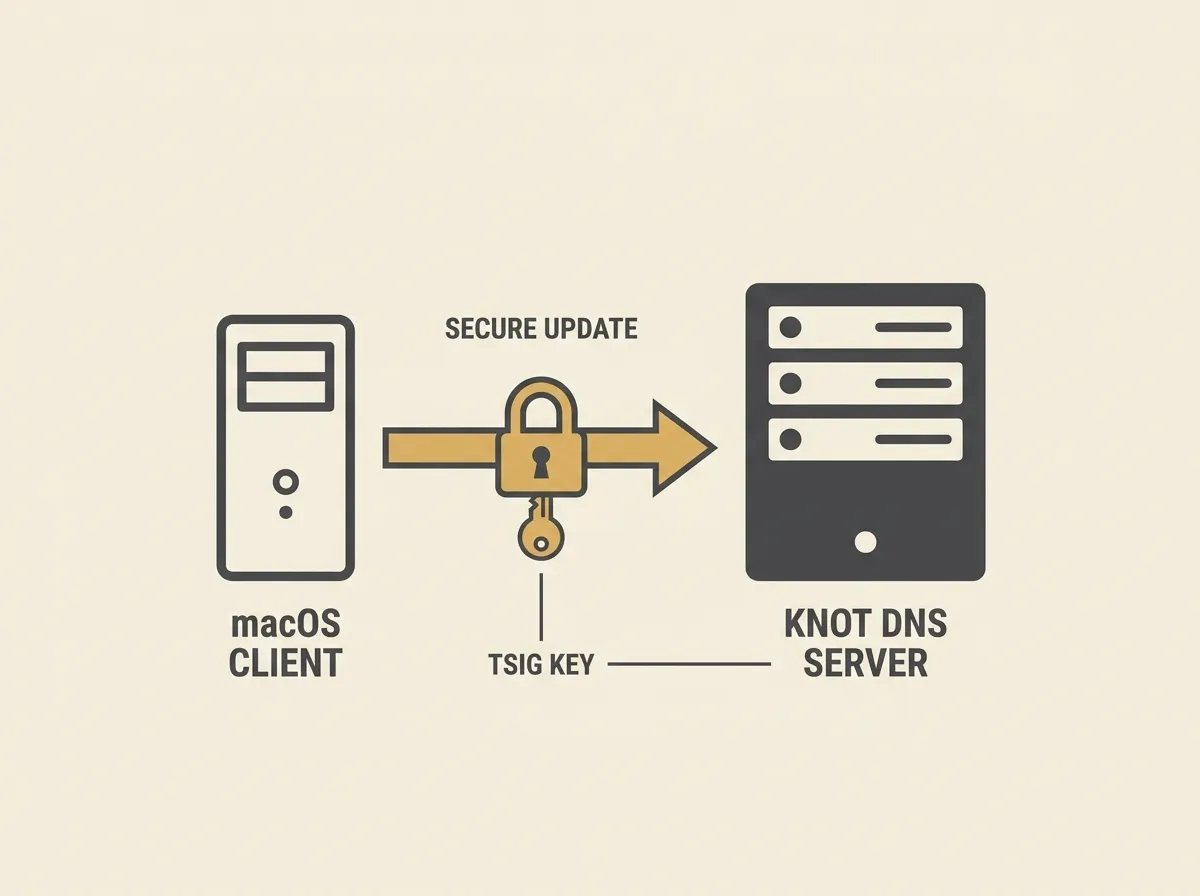
Managing dynamic IP addresses for self-hosted services can be a pain, but a recent guide offers a robust solution: setting up your own dynamic DNS (DDNS) with Knot DNS. This is a genuinely practical guide for taking control of your network infrastructure.
The setup involves using nsupdate for secure record updates, leveraging TSIG keys for authentication, and configuring ACLs within Knot DNS. The guide even covers seamless integration with macOS’s built-in DDNS client, showing you how to automatically push updates whenever your machine’s IP changes.
This approach moves you away from reliance on third-party DDNS providers, giving you full control over your DNS records and enhancing your home or small-scale lab infrastructure. It is a solid demonstration of effective engineering practices for network services. Learning to deploy and manage such a foundational service is invaluable for any senior engineer looking to deepen their understanding of systems beyond the application layer.
Empower yourself with self-hosted network control.
Akashic is a self-hosted open-source Palantir alternative

This new open-source project, Akashic, aims to be a self-hosted alternative to Palantir, tackling the significant challenge of integrating and correlating diverse public data sources. It brings together everything from satellite imagery and weather data to public radio and infrastructure information onto a single interactive map.
The project is built for active exploration and correlation, not just passive dashboards. This implies interesting architectural choices for data ingestion, indexing, and real-time analysis, especially given its privacy-first, no API key approach for multiple complex data streams.
Senior engineers can gain insights into robust system design for high-volume, heterogeneous data environments and strategies for providing powerful exploratory capabilities on top of that data.
Private AI Audio Tools Accessible Directly in Your Browser
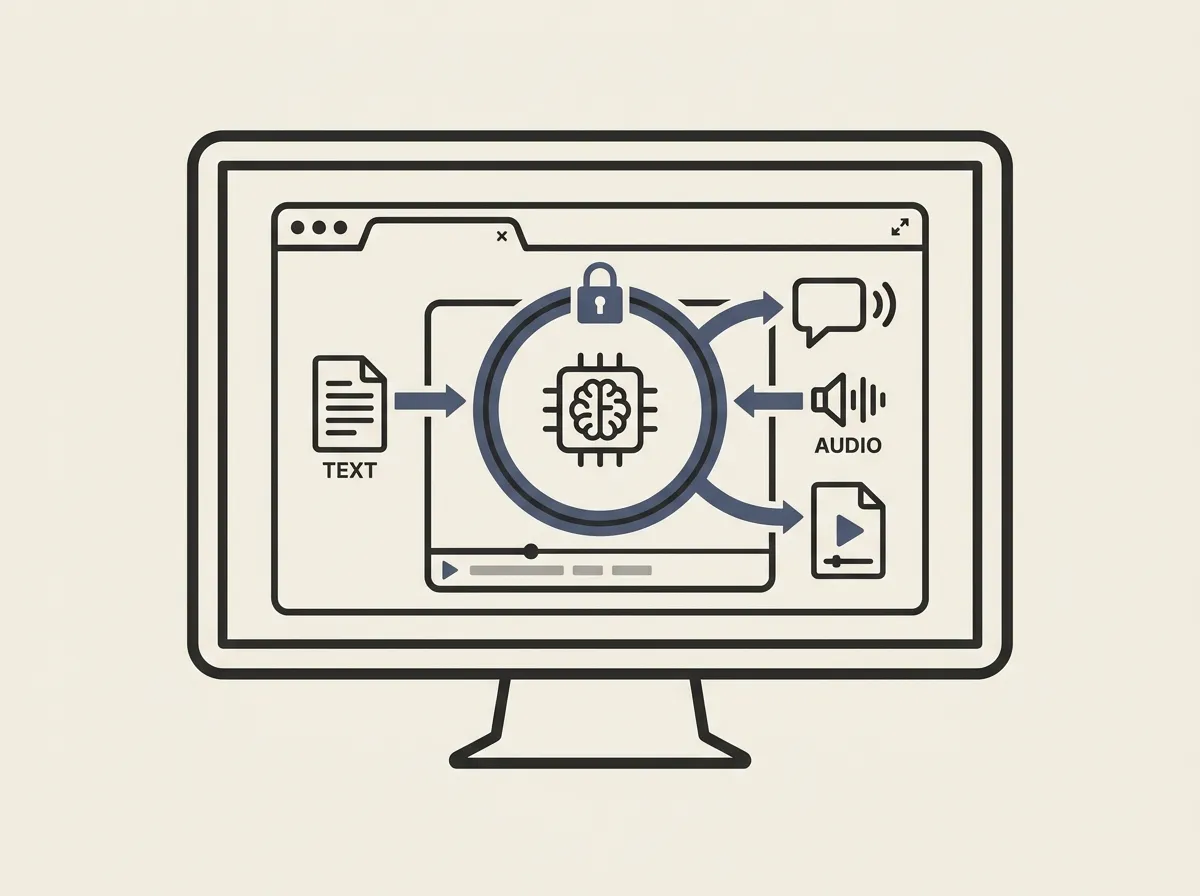
Client-side AI is rapidly evolving, and OfflineTTS showcases a fantastic example: a free, browser-based tool providing text-to-speech (TTS), speech-to-text (STT), and subtitle generation, all running entirely locally. This means zero data leaves your device, ensuring complete privacy.
Leveraging client-side ML models like Whisper directly in the browser for tasks like transcribing audio or generating speech for ebooks offers significant advantages. It cuts down on API costs, reduces latency, and addresses critical privacy concerns that many users have with cloud-based AI services.
This project offers senior engineers a concrete example of how to implement sophisticated applied AI functionalities directly within web applications, highlighting the power of modern browser capabilities for machine learning.
iOS client enables phone as remote Grok Build pager UI
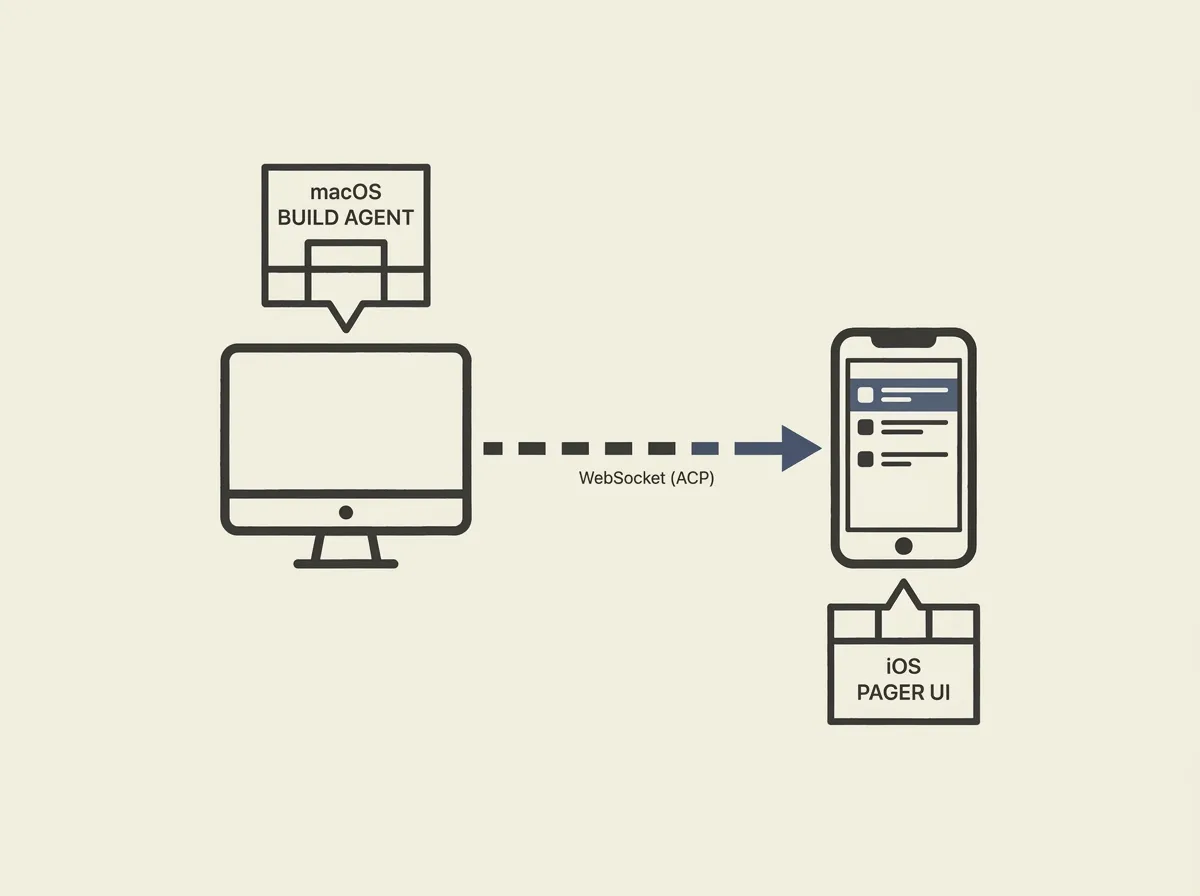
Building effective interfaces for AI agents, especially for remote interaction, presents unique system design challenges. Grok-iOS offers a compelling example: an open-source iOS client acting as a remote “pager UI” for Grok Build agents running on a macOS machine.
This project highlights the practicalities of client-server communication in agentic AI. It leverages the Agent Client Protocol (ACP) over WebSocket for a lightweight and responsive connection, allowing engineers to interact with their AI agents from a mobile device.
Understanding such implementations can provide valuable insights into designing distributed user experiences for AI applications, focusing on efficient data transfer and user feedback loops between client and server components.
Backport refreshed bundled model metadata to 0.144

OpenAI recently made a curious change: they reduced the context window for their Codex model, which powers coding assistants, from 372k to 272k. This move is significant because, in the LLM world, the general trend is often towards ever-larger context windows.
This reduction points to the practical realities and trade-offs in deploying large language models. A smaller context size can lead to lower inference costs, faster response times, and potentially even more stable behavior by reducing the “distraction” of irrelevant information within a massive context. It suggests that for specific tasks like code generation, an optimal context window might not always be the largest one possible.
For engineers working on applied AI and LLM infrastructure, this is a tangible example of optimizing for production environments. It highlights that token efficiency and focused context are critical, not just raw capacity.
ECC and DDR5 memory types practical implications
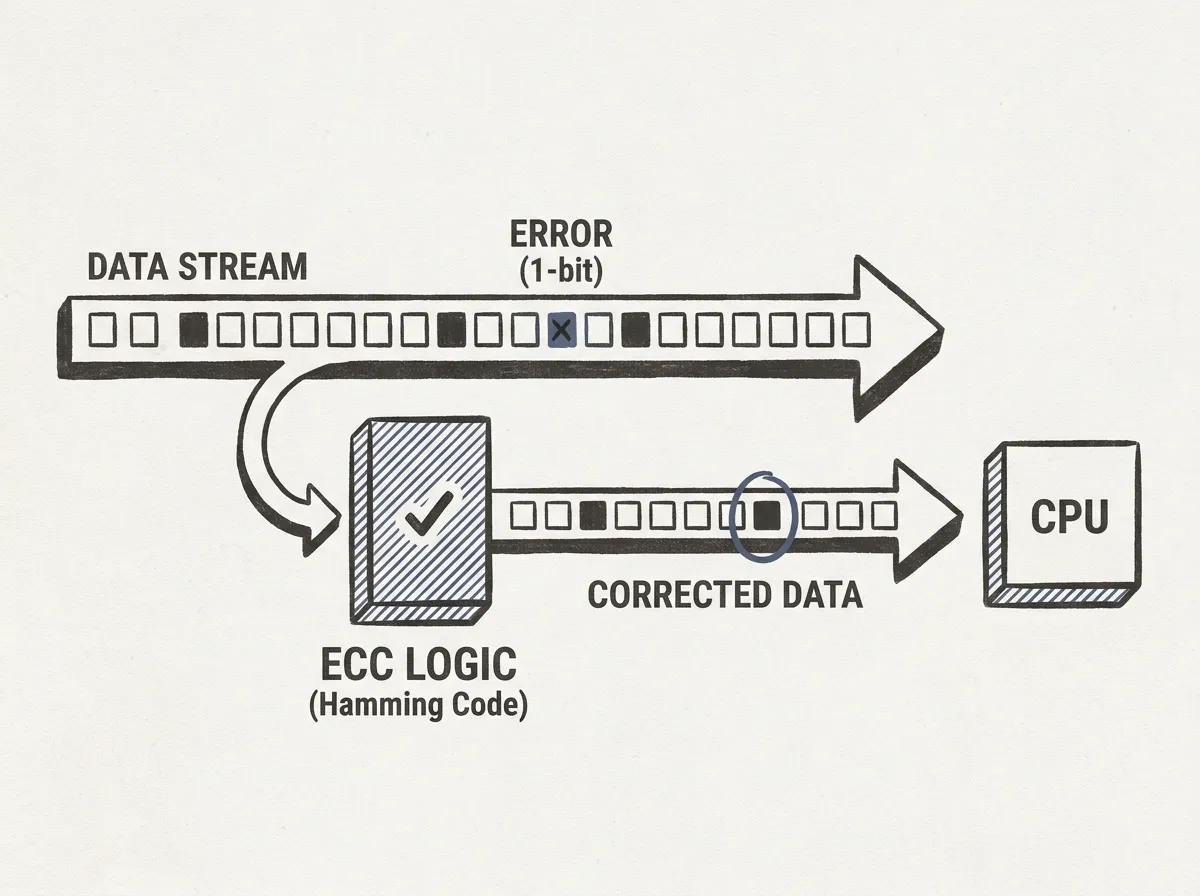
ECC RAM is more than just a buzzword; it is a critical component for system reliability, especially in servers. This post details how Hamming codes allow memory to correct single-bit errors and detect double-bit errors before data ever reaches the CPU.
You learn the nuances between Registered DIMMs (RDIMMs) and Unbuffered DIMMs (UDIMMs), and why RDIMMs are almost always coupled with ECC, offering higher capacity and stability for server environments. This distinction is crucial for understanding server-grade hardware.
It helps you appreciate the engineering trade-offs made for data integrity at the hardware level, which is foundational knowledge for designing robust software systems.
IceCream simplifies and enhances traditional print debugging in Python
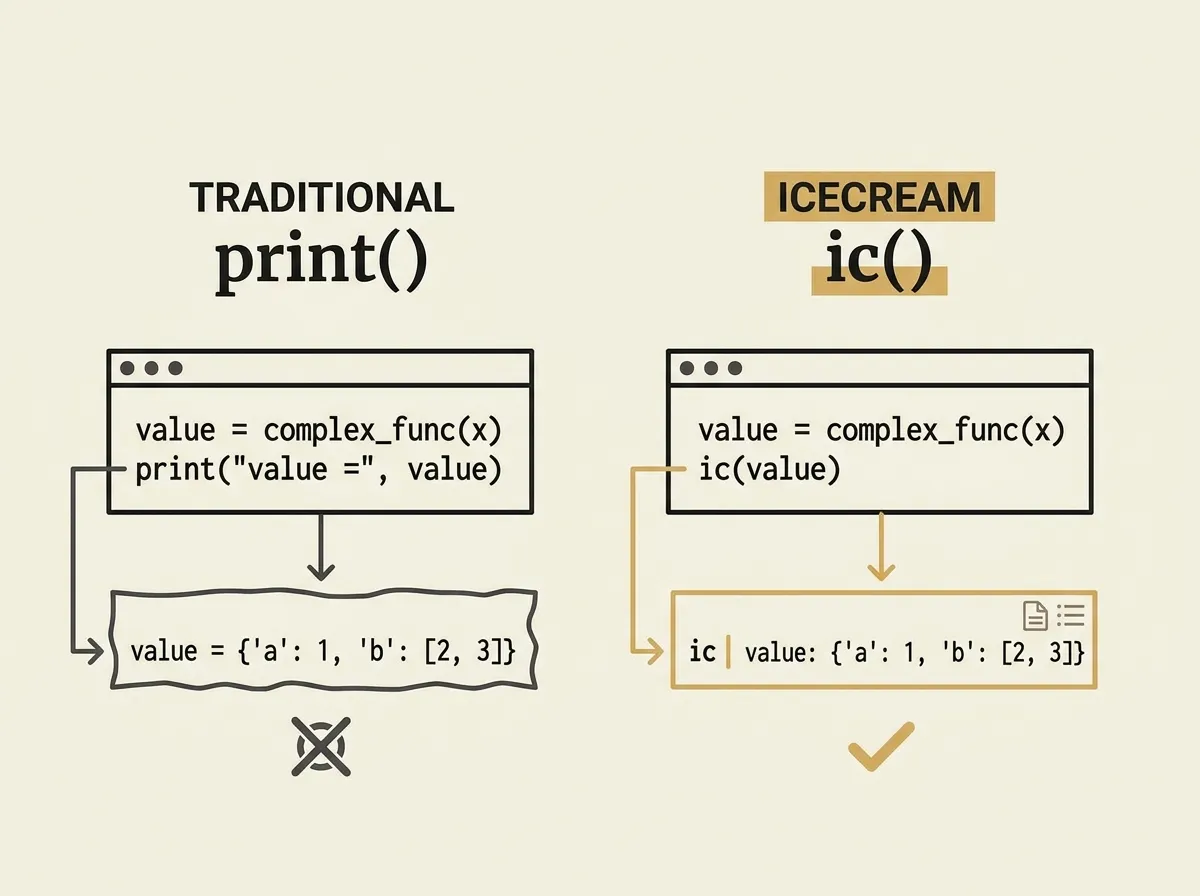
Are you still debugging Python with plain old print() statements? It is time for an upgrade. The icecream library, or ic() for short, can transform your debugging workflow.
Instead of print(“foo(‘123’)”, foo(‘123’)), you can just type ic(foo(‘123’)). It automatically prints both the expression and its value, along with the filename, line number, and parent function. This drastically reduces verbosity and mental overhead.
icecream also pretty-prints data structures and offers syntax highlighting. This small change in tooling can lead to significant gains in developer productivity, making your debugging sessions much more efficient and less error-prone. Stop manually formatting your debug output.
Key lessons from a failed property tech venture in Britain
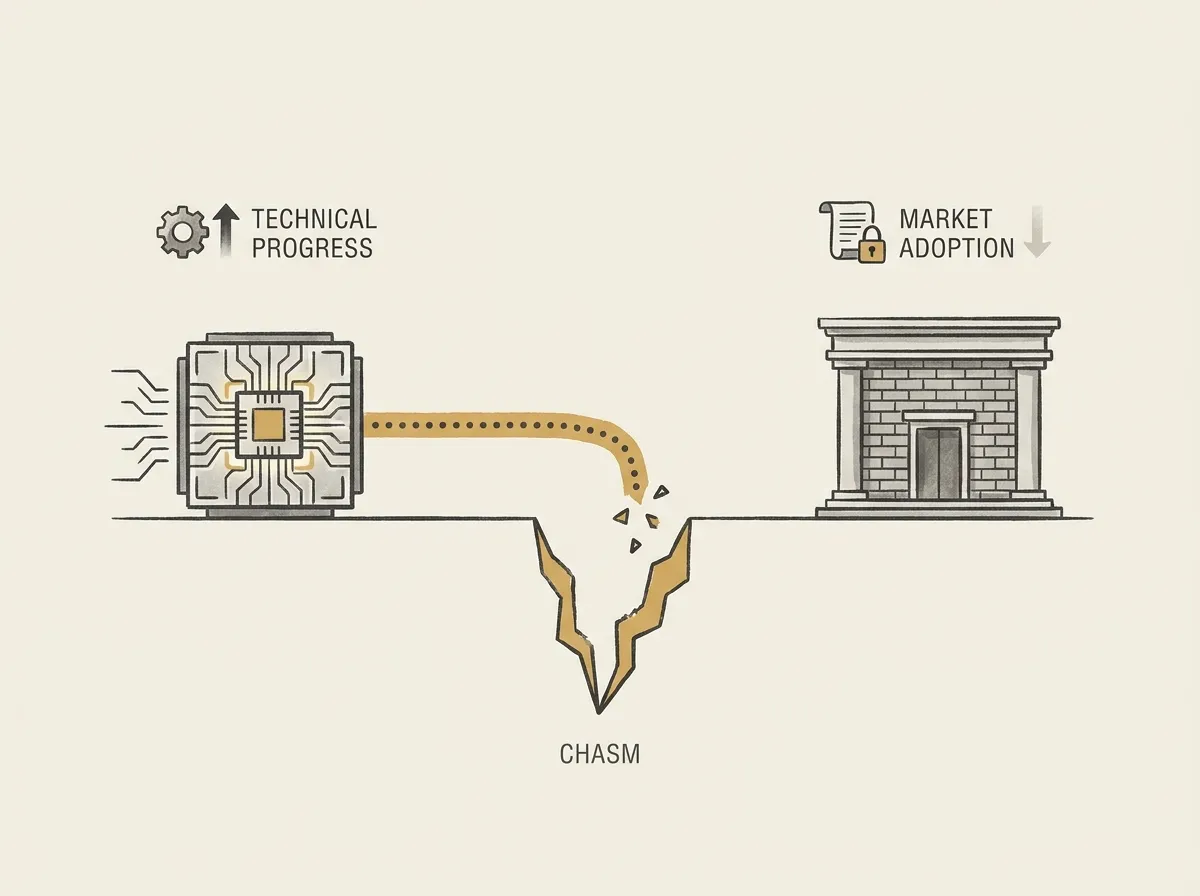
Startup postmortems are often more valuable than success stories, and the Tract postmortem is a prime example. This British startup tried to use AI to tackle the housing crisis by streamlining planning permissions, but ultimately failed despite significant technical progress.
Their experience highlights a crucial lesson for engineers: brilliant technology, including AI tools, does not guarantee market adoption. They found low willingness to pay in a conservative sector and struggled with viable venture-scale business models.
This detailed account provides practical insights into the chasm between technical achievement and commercial success. It is a stark reminder that understanding market dynamics and customer needs is as critical as engineering prowess when building and deploying applied AI solutions.
Impro is a handbook for running a cult and understanding status
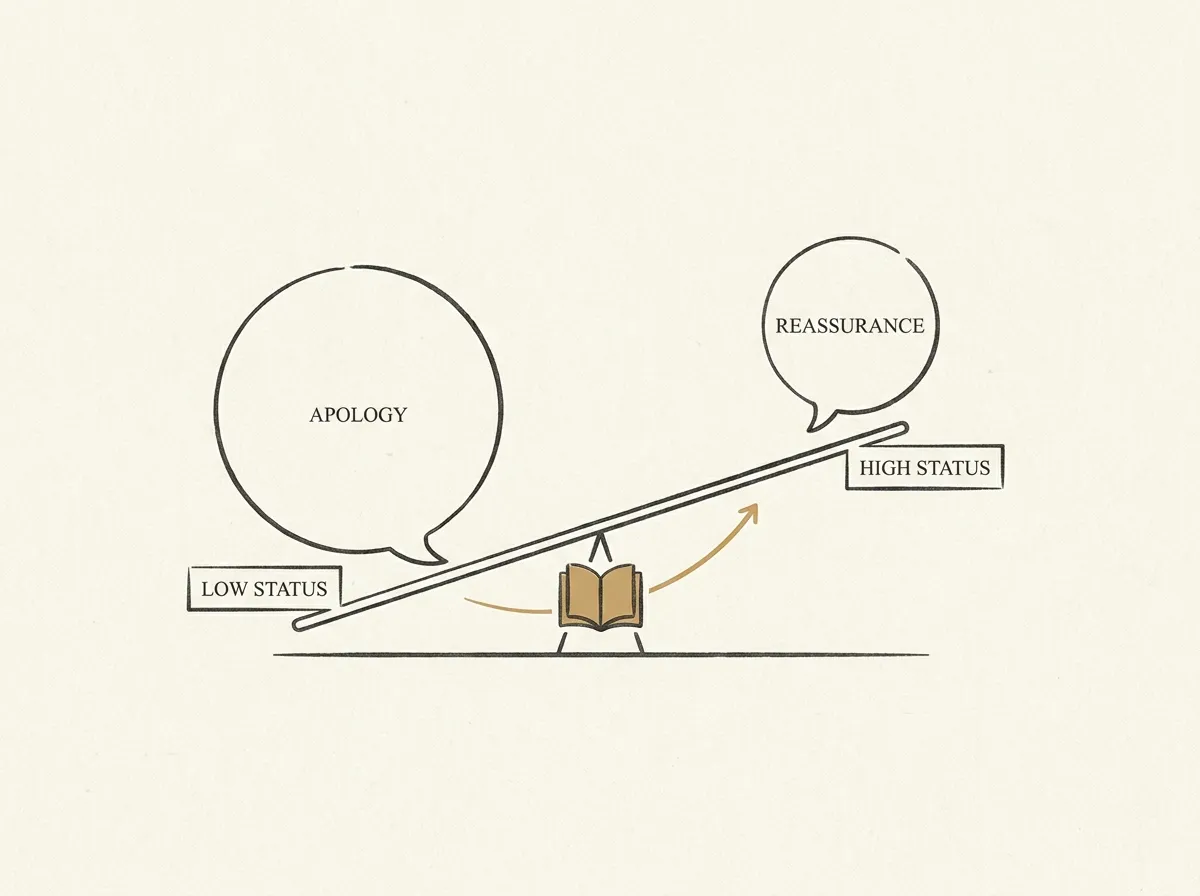
Keith Johnstone’s “Impro” is not just about improv; it is a profound text influencing Silicon Valley, particularly for its insights into social dynamics and “status games” at work. This book reveals how even innocuous conversations are bids for status.
Understanding these unspoken dynamics can significantly impact your career. For example, apologizing too often signals low status, while reassurance can signal high status. Learning to deliberately adjust your status performance can make you a more effective communicator and leader.
This is not about manipulation, but about conscious communication. It helps you navigate team interactions and leadership roles with greater awareness, ultimately fostering more effective collaboration.
Calculate your fair share of employer profits

Ever wondered how much profit your employer generates per employee? A new tool, yourfairshare.info, lets you find out by analyzing public SEC filings for US-listed companies.
You can input your compensation and see your company’s profit per employee, offering a clear, data-driven perspective on your value. This transparency can be a game-changer for salary negotiations and career planning.
Understanding your company’s financial output on a per-employee basis provides leverage and context that is often missing from compensation discussions. It is a powerful way to assess if your share truly reflects your contribution.
Apple is angry OpenAI broke Silicon Valley's unspoken rule
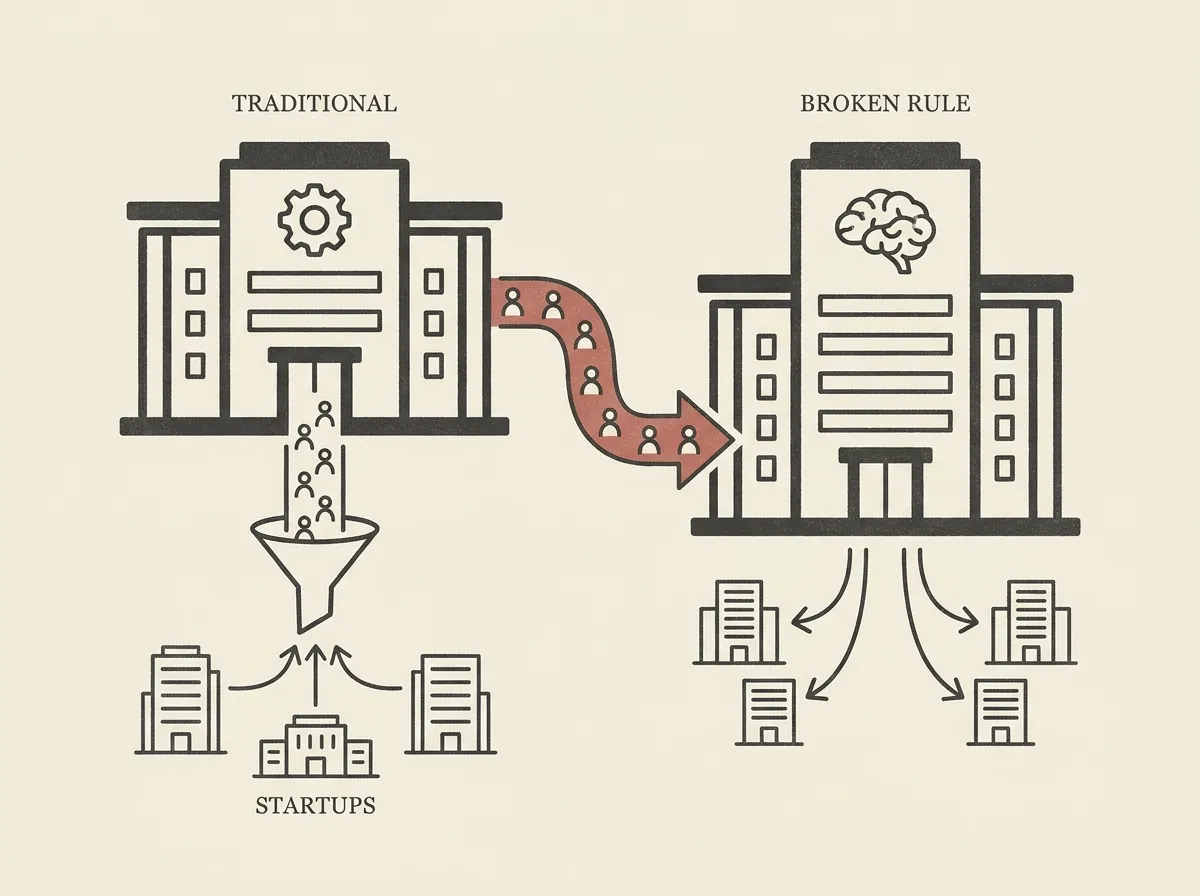
OpenAI is shaking up Silicon Valley by challenging its long-standing “unspoken rules” for startups and talent, a move that is visibly upsetting established giants like Apple. Traditionally, successful startups either remained niche suppliers or became acquisition targets, funneling talent back into Big Tech.
OpenAI, however, is charting a different course. It is aggressively poaching top talent and developing foundational technology that directly competes with existing ecosystems, rather than merely supplementing them. This breaks the implicit agreement that startups largely feed into, rather than fundamentally disrupt, the dominant players’ control.
This shift in strategy highlights the intense competition for AI talent and foundational models. For senior engineers, understanding these industry dynamics is crucial for career planning, identifying genuine innovation hubs, and recognizing where future opportunities and challenges lie.
The Valley’s old guard is realizing the game has changed.
Inkling release causes B200 GPU shortage, Kimi K3 will be a disaster
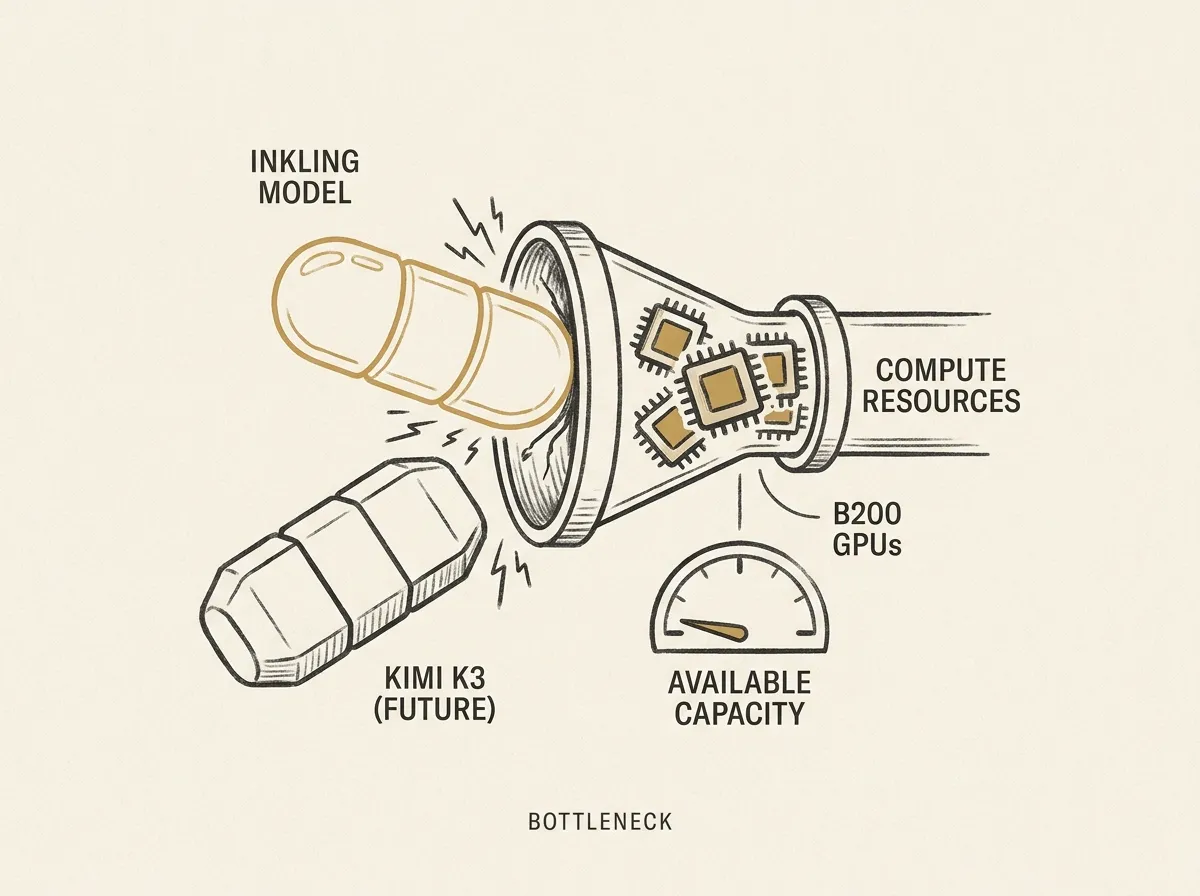
The Inkling AI model release has apparently triggered a complete sell-out of B200 GPUs across all major cloud providers. This is not just a market blip; it signals a fundamental constraint in scaling advanced AI.
For senior engineers building or deploying large language models, this extreme scarcity means planning for infrastructure is more critical than ever. The tweet mentions anticipating a “huge disaster” with the upcoming Kimi K3, which underscores the escalating competition for compute resources.
Understanding these real-world bottlenecks directly impacts strategic decisions, from model training to production deployment. This is the new reality of high-performance AI.
Generated AIBOMs from ML repositories have limited AI documentation completeness

Transparency in the AI supply chain is not just a buzzword; it is a critical engineering practice. This large-scale study on Hugging Face models reveals a significant gap in Artificial Intelligence Bills of Materials (AIBOMs) completeness.
The research examined nearly 100,000 artifacts and found that while AIBOMs structurally exist, the AI-specific documentation - covering model cards, responsible use, limitations, and environmental impact - is often weakly represented or entirely missing. This creates substantial transparency and governance issues for engineers deploying these models.
For example, essential fields like dataset declarations, safety risk assessments, and meaningful descriptions are frequently absent. These omissions make it incredibly challenging to understand model provenance, potential biases, or suitability for specific applications.
This study is a call to action for improved model-card practices and automated AIBOM validation. Ensuring complete AIBOMs is paramount for building robust, ethical, and trustworthy AI systems.
Speculative decoding boosts LLM output under batch-parallel verification
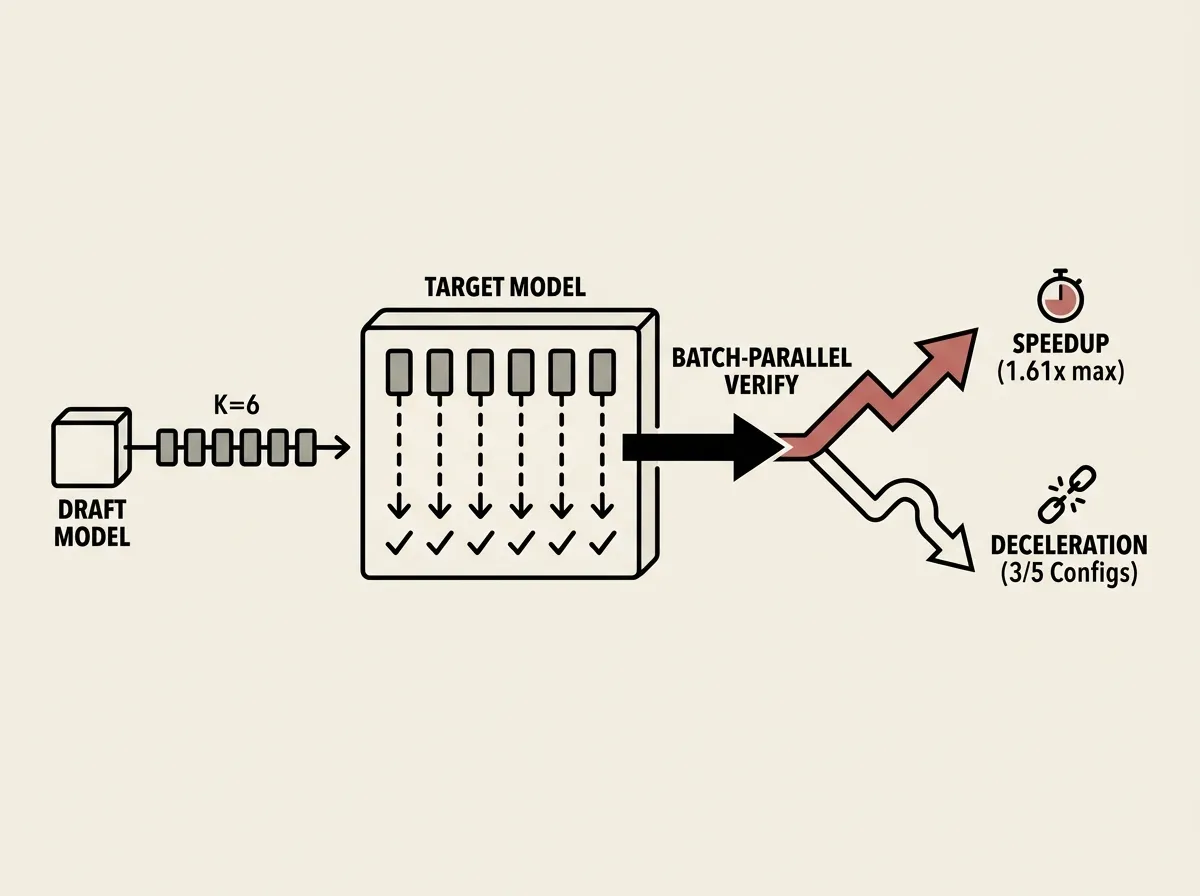
Speculative decoding is touted as a game-changer for LLM inference speed, but its ‘lossless but not free’ reality is often overlooked. This empirical study on consumer hardware provides critical insights into when it actually delivers.
The research shows a maximum 1.61x speedup at a draft length of K=6, with an acceptance rate dropping from 69.7% to 37.8%. Crucially, it found that three out of five configurations decelerate.
The key takeaways: speculative decoding pays off only when the verification process is genuinely batch-parallel and there is a significant latency gap between the draft and target models. This analysis is essential for anyone optimizing LLM deployment.
Throughput-adaptive perception strategy saves energy for autonomous systems
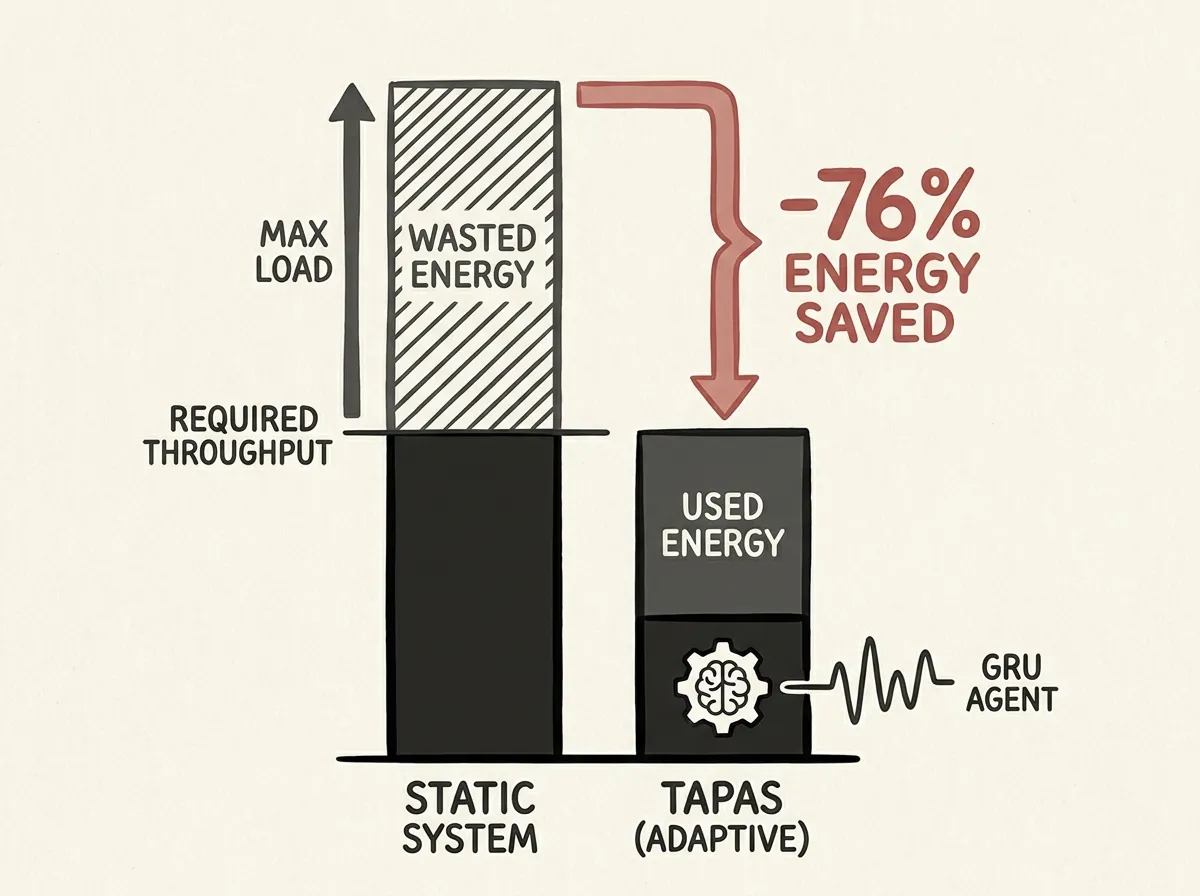
Autonomous systems struggle with perception modules that have dynamic throughput needs, often leading to over-provisioning or wasted energy. This is a common challenge when deploying AI at the edge.
A new paper introduces TAPAS, a throughput-adaptive perception strategy that uses Reinforcement Learning with a GRU agent to dynamically adjust resource allocation based on scene complexity. This intelligent approach ensures the required throughput is met while minimizing energy consumption.
Evaluated on Jetson Orin NX across KITTI and nuScenes datasets, TAPAS achieved 93-100% throughput met rates and an impressive 76% energy saving. For engineers building real-time AI systems on mobile or edge platforms, this work offers a valuable blueprint for efficient resource management.
Language Models Contribute to Mathematical Discovery with Human Verification
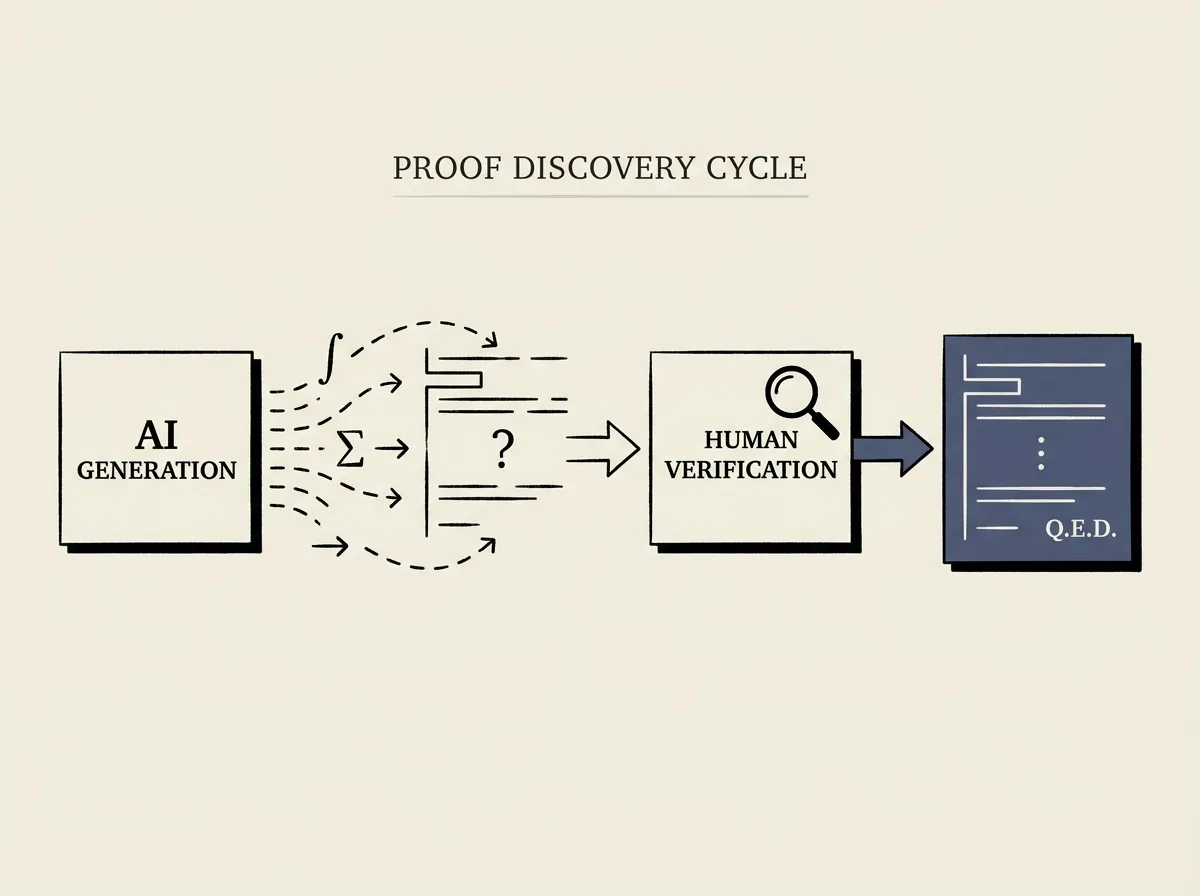
Can LLMs truly contribute to scientific discovery, or are they just sophisticated autocomplete? A new paper suggests the former, showing AI systems generating novel mathematical proofs.
In the complex field of Banach space theory, AI systems generated key ideas and proofs for five new results, which were subsequently verified and refined by human mathematicians. This is not about solving known problems, but genuinely discovering new knowledge.
The researchers also developed an automated system to search the literature for open problems and attempt solutions at scale. This work highlights the growing potential of language models as powerful assistants for intellectual discovery, pushing the boundaries of what applied AI can achieve in scientific research.
Phased development framework enables scalable AI data center deployment
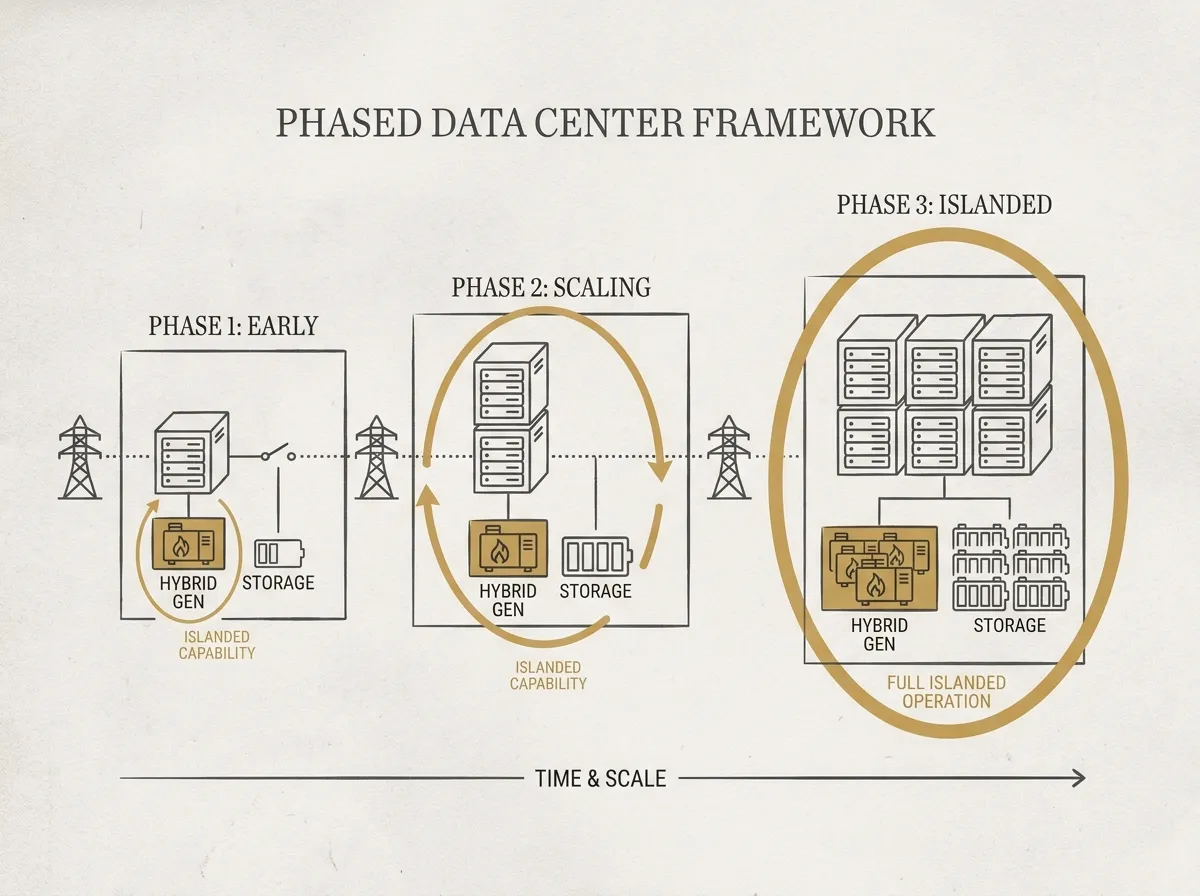
Hyperscale AI data centers, often 500MW to 2GW, present immense challenges to the electric grid. How do you deploy them scalably and ensure resilience? A new phased development framework offers solutions.
This framework tackles the multi-year constraints of grid interconnection and component procurement by proposing modular construction with hybrid on-site generation and grid-forming energy storage. The goal is enabling “islanded operation” during grid disturbances, a critical feature for AI infrastructure.
Electromagnetic transient simulations validate the system’s performance, showing how on-site natural gas and grid-forming energy storage can reliably support data center operations even in early deployment phases. This is essential reading for any senior engineer involved in the infrastructure powering the next generation of AI.
OrderMoE framework accelerates edge MoE inference via expert similarity
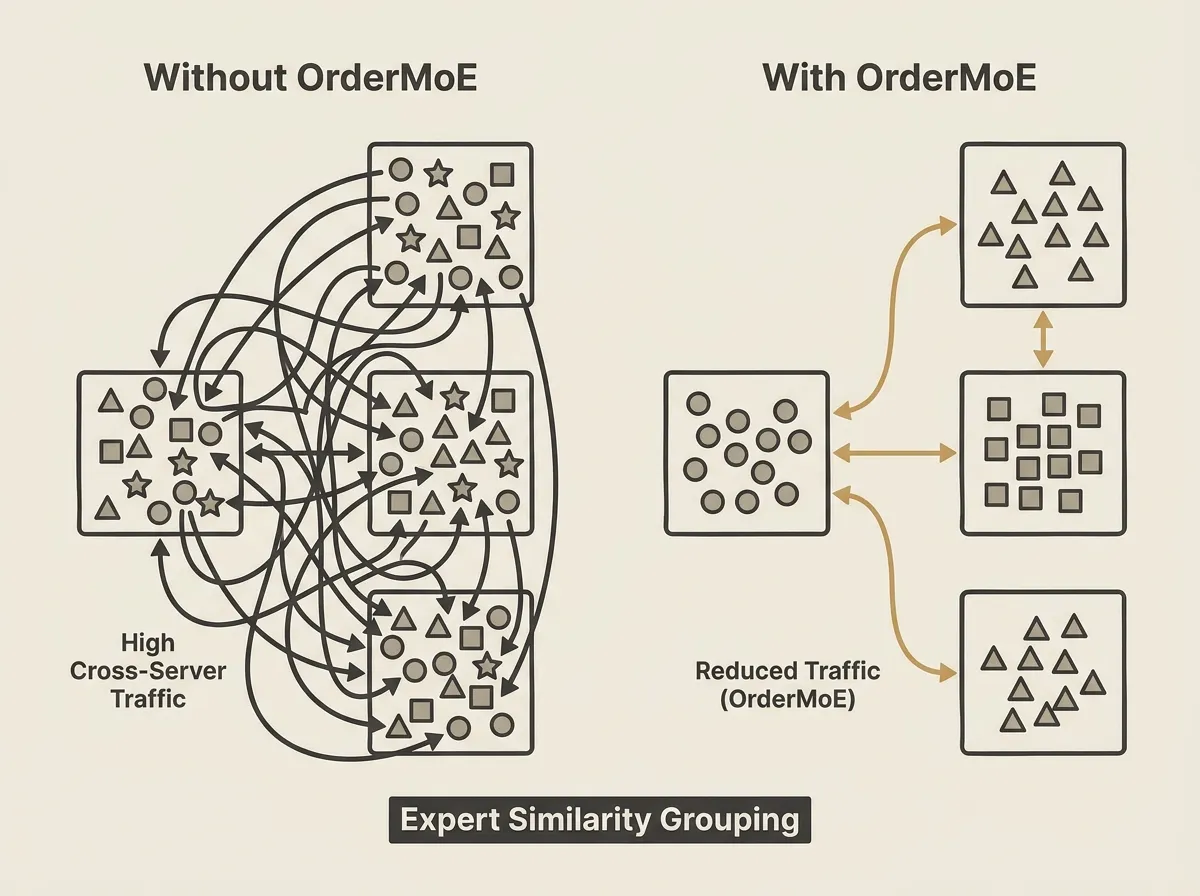
Mixture-of-Experts (MoE) models are powerful, but their deployment on bandwidth-limited edge infrastructure is a challenge.
OrderMoE introduces a novel approach: it recognizes that not all experts are created equal, and some share functional similarities. By constructing an expert similarity model and grouping experts accordingly, it dramatically reduces cross-server token transmission.
This similarity-aware allocation and a quality-aware runtime selection algorithm reduce average and tail latency, cross-server traffic, and remote expert invocation, with only minimal and controllable quality degradation. This is a smart way to get MoE models working effectively at the edge.
SynH-Rank improves code reranking by synthesizing data and hierarchical training
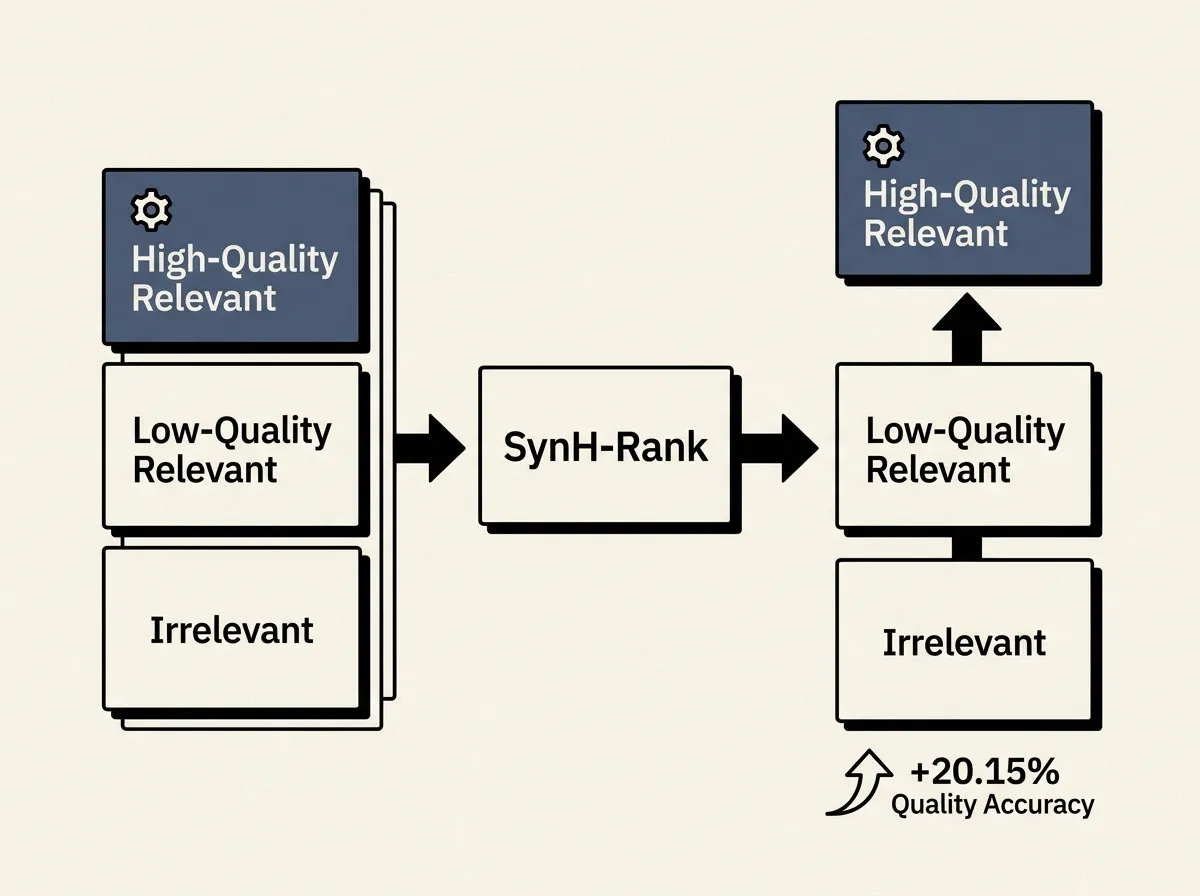
Most code search systems prioritize semantic relevance but completely overlook crucial non-functional qualities like execution speed, memory usage, and maintainability. Developers, however, desperately need high-quality, resource-optimized code.
SynH-Rank tackles this by using LLMs to synthesize diverse, quality-annotated data. It then trains a hierarchical reranker using a three-level labeling scheme: high-quality relevant > low-quality relevant > irrelevant.
This approach improves Quality Preference Accuracy (QPA) by 20.15% over backbone models and outperforms standard relevance-only contrastive training by 15.80%. It is a significant step towards code search that genuinely meets engineering standards.
Sparse Embeddings Improve Cold-Start Recommendations Over Dense Vectors
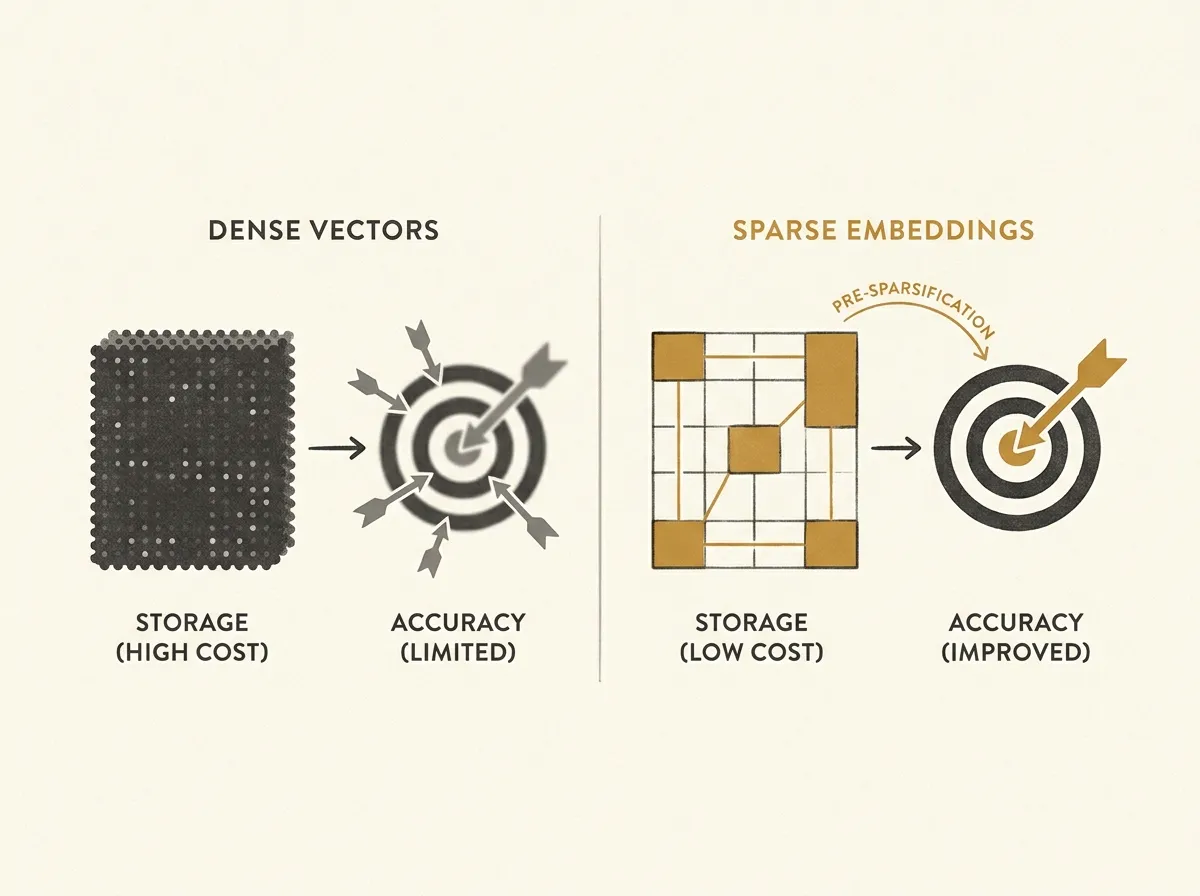
Scaling recommender systems often hits a wall with dense embedding storage and retrieval, especially for cold items that lack historical data. This paper highlights a compelling alternative.
It argues that sparse embeddings have notable advantages over dense vectors for content-based cold-start recommendations. By adapting existing training regimes and introducing a pre-sparsification activation technique, the researchers achieve significant improvements in cold-start accuracy.
Crucially, these sparse embeddings come at considerably lower storage costs and demonstrate robustness, particularly for users with diverse interests. This offers a practical path to more efficient and scalable multimodal recommender systems.
If you are dealing with large-scale embedding storage or cold-start problems, this could change how you approach your architecture.